
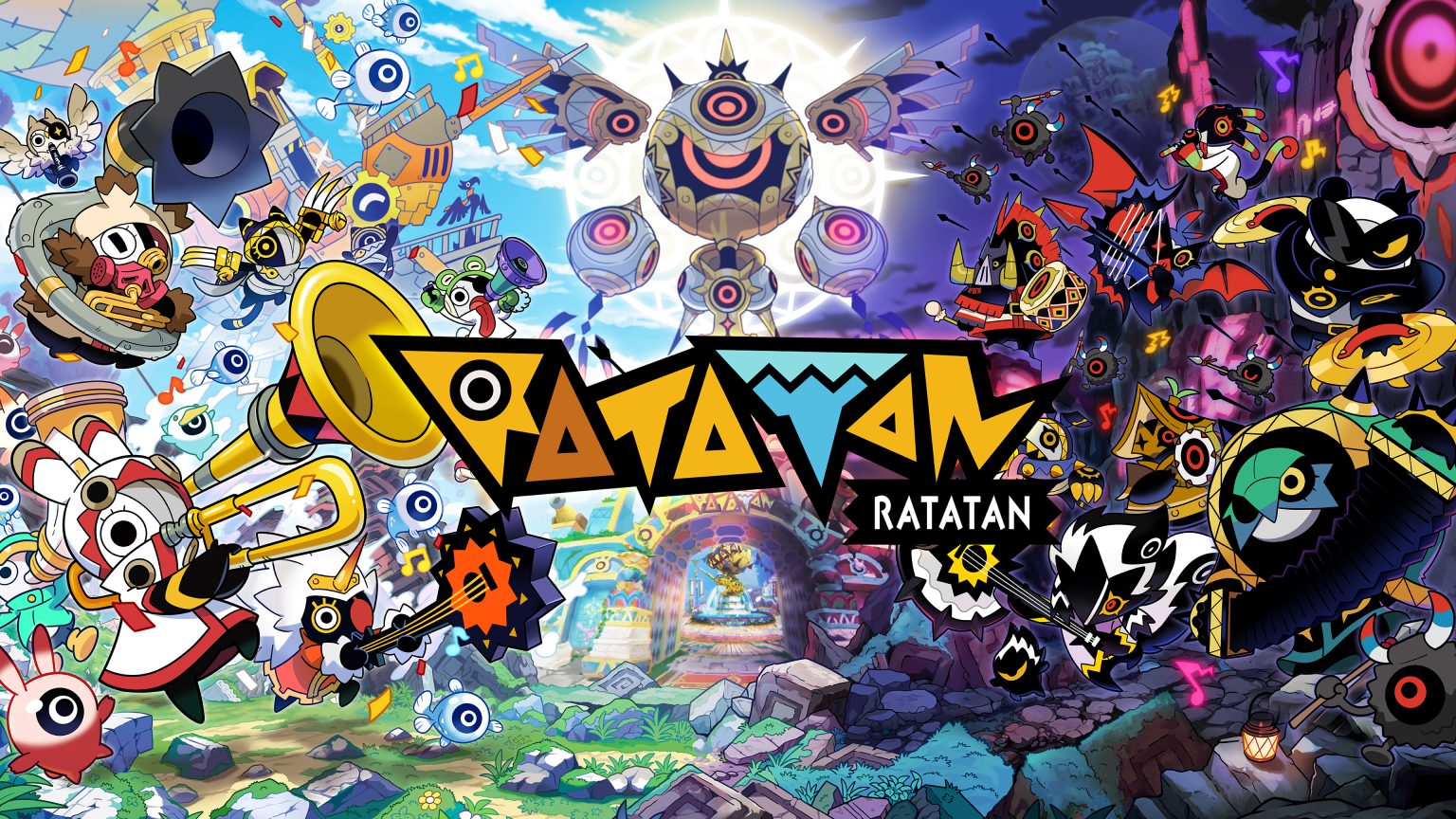
The PSP saw around 2,000 releases during its ten-year lifespan, the vast majority of which remain trapped on Sony’s humble handheld. Sure, many of these were merely bespoke versions of popular multiformat games, but you won’t have to look far to find an exclusive that has never been re-released. One franchise that managed to make the jump was the rhythm action series Patapon, which recently returned alongside its sequel through Bandai Namco. Now we have Ratatan, a spiritual successor that brings the band back together. By that, we mean some of the original developers are behind it.
This isn’t simply a retread of old ideas, though, or even a remake in disguise. What we have here is a fresh roguelike take on Patapon’s concept, now with permanent upgrades and random, stackable cards that bestow all manner of temporary perks and elemental abilities, potentially greatly increasing your chances of survival. A complete run entails a trek across five themed worlds, each taking 8–10 minutes before ending with a particularly challenging boss fight. Every boss slain represents a milestone victory. And in typical roguelike fashion, you get just one shot at a run before having to dust yourself off, upgrade and try again.
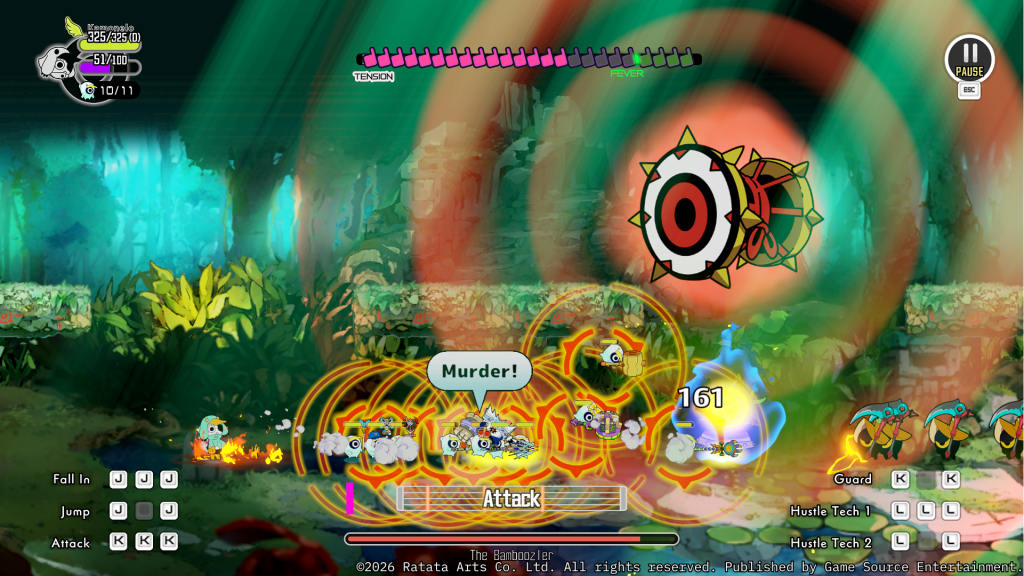
The core gameplay is mostly unchanged: your chosen leader (Ratatan) marches along with a troop of hardy warriors (Cobun) clutching primitive weapons such as spears, scythes, hammers and swords. They won’t even move of their own accord – it’s up to you to press buttons in time with the beat to command them to attack, perform special moves, fall in, guard and occasionally jump out of harm’s way. These actions require no more than four easy-to-remember button presses, which never change from one Ratatan to the next, allowing you to get into the swing of things as soon as the tutorial ends. Button prompts remain on screen, too, should you need a reminder during the heat of battle.
Having to press multiple buttons to attack and move your Cobun feels a little alien at first, but soon resembles performing special moves in a fighting game: repeatedly punching in commands to trigger actions. Here, though, those commands must be in time with the beat. Mess up the timing on even a single note, and the Cobun won’t react. Each successful action is complemented by cutesy melodic warbles, lending the experience a great deal of whimsy. This ties into the music, too, which features warbled battle cries alongside catchy melodies.
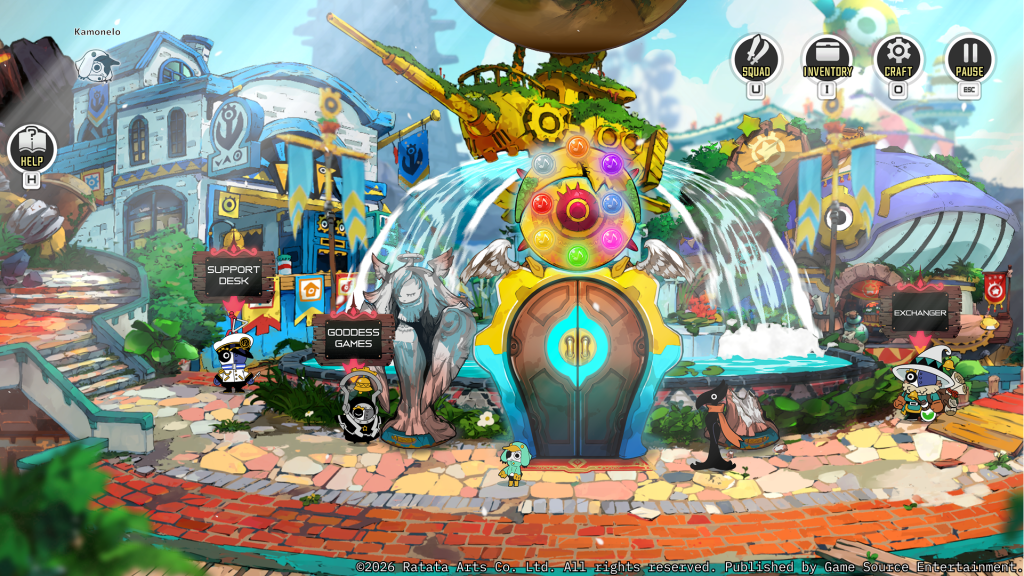
Upon defeat, you’re cast back to a colourful dockland hub to upgrade gear by consuming surplus weaponry, improve the dock’s services, purchase perks such as more health and status blockers, and turn in on-the-fly quests. There’s a little strategy involved in arranging the Cobun, with the strongest placed first and ranged units positioned either behind them or at the front. They can be kitted out with stat-boosting novelty headgear, too. Each Ratatan’s unit can only carry two weapon types, so you may find yourself switching your main character once you start gaining Epic and Legendary drops that your current Cobun can’t use.
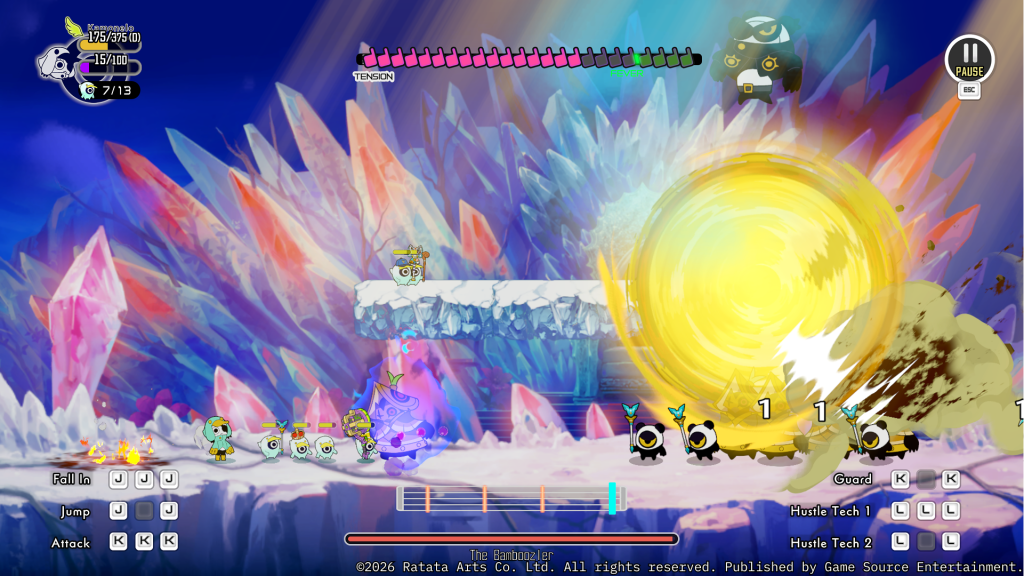
Stages appear in a fixed order, going from beachside ruins to a desert wasteland, then into a dense jungle and beyond. They scroll from left to right and are split into short segments: battle scenes that pit you against common units, special types and fortified towers, and intervals where you can either heal or pray to a goddess for rare gear or cards. Before a segment starts, you’re able to choose between two types of reward. The game is pretty generous with random loot drops, too, including the ability to add 50 extra HP to your Cobun.
It isn’t long before stacking and balancing cards becomes critical, choosing and mixing ice, wind, fire, electric and poison damage. A few of these effects are passive, while others cause lasting or consistent damage. Over time, it becomes possible to create a special move – known as a Hustle Tech – that causes significant damage, poisoning enemies and setting them on fire in one swift and stylish blow. The Hustle Tech uses MP, which must be restored by performing several standard three-button attacks in time with the beat. The same goes for the temporary bubble shield, which will fend off incoming damage if activated in good time. Cobun can be knocked out, but this isn’t too detrimental, as they soon respawn. If your Ratatan dies, though, the run ends, and you’re cast back to the docks.
It’s the bosses that pose the biggest challenge, taking the form of giant crustaceans, charging bulls and ghostly mirrors – most of which have at least one attack that’s critical to avoid. Chances are you won’t be strong enough to beat them on your first try, meaning you’ll need to grind for better gear and more perks. That’s to say, nobody is going to jump into Ratatan and blitz through it; it has been designed to be replayed several times over, getting a little further each time. This grind is a point of contention. While skill is involved, you also need to accumulate random high-end gear through repeated play. It always feels rewarding, though, showering you with praise and loot, while giving you help when it’s needed. No run ends up being entirely unsuccessful.
There is another layer to the experience – an endgame, if you will – which sees you returning to past worlds to discover how to enter the afterlife. This is the crux of the storyline and the reason the Ratatan are on their battle march to begin with. Once this section starts, a bunch of new things become accessible, including the ability to raise certain weapons to level 100 by collecting more resources. You’re looking at a good 15–20 hours to see everything; the developers have definitely managed to get the most out of those five worlds.
If you’re of the opinion that originality in gaming is dead and that roguelikes have ‘run’ their course, Ratatan may well change your mind. It doesn’t take long for Ratatan’s fever to take hold, and once it does, you’re likely to be in for the long haul. This is a pleasingly light-hearted experience with polished presentation (outside of a couple of typos) that’s curiously compelling once you realise exactly what’s needed to succeed. The grind is very real here and, despite the obvious repetition, rewarding. Still, it would have been neat to see rhythm action expertise rewarded more directly, too.
Ratata Arts’ Ratatan is out now on all formats. Published by Game Source Entertainment.