
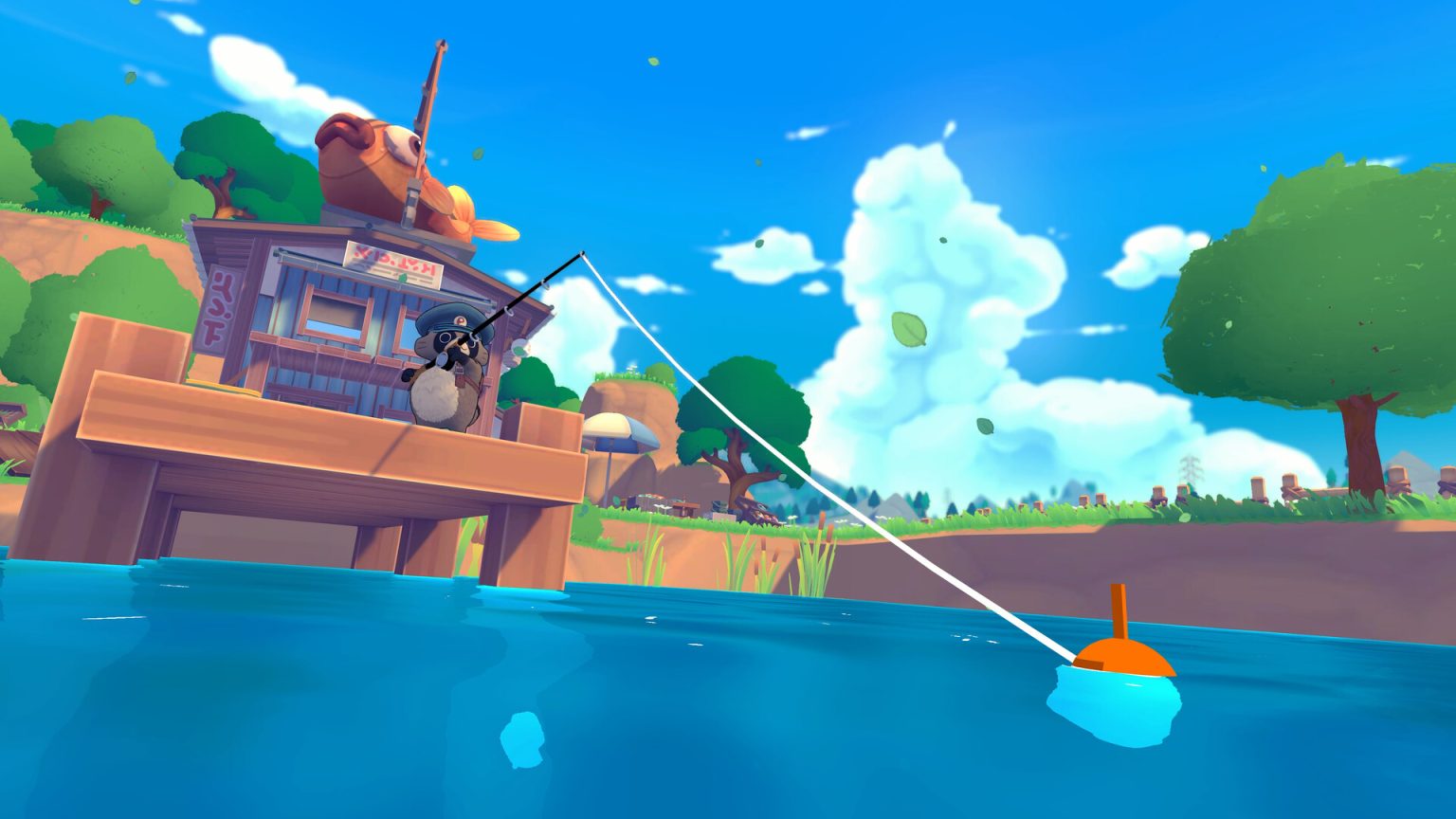
Featuring a premise that’s oddly relatable despite starring a Japanese raccoon, Pon is forced to spend his summer not wastefully sitting around playing video games and napping, but rather working part-time. Less relatable is the fact that it isn’t a well-meaning father stopping him from being a slob, but rather an ancient spirit residing within a shrine. Said shrine has fallen into disrepair, and to continue staying in the annex, Pon must pay for its overhaul – all while discovering the satisfaction that comes with working. Don’t worry, as there’s time for the occasional late-night gaming session too, helping to make Pon all the more relatable.
The opening of Pon’s Summer takes around an hour, outlining its premise, introducing us to its welcoming Japanese island setting and the eccentric cast of characters who reside there, while giving ample time to get to grips with travelling around the town. See, Pon owns a BMX, and the vast majority of this 10-12 hour adventure is spent riding around, grinding rails, and leaping off ramps. There’s a combo system in play, and numerous optional challenges to take part in, including checkpoint races. The bike itself is weighty and easy to keep upright, effortlessly grinding long rails and overhead power lines. Handily, it can be respawned at the push of a button, preventing a trek back to where you left it when journeying on foot.
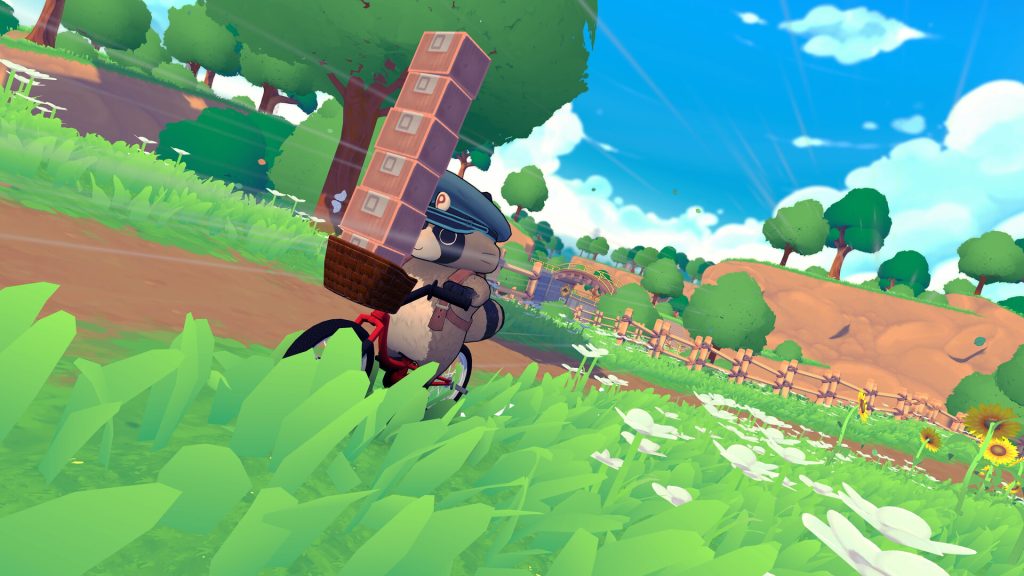
Pon’s BMX skills eventually land him a job at the post office, situated a short ride from home. Things then quickly settle into a routine of journeying to the post office, filling Pon’s container with parcels via a brief Tetris-esque logic puzzle, and heading across the town – from its sandy shores, cave complexes, and rolling meadows – to deliver parcels. Once the day’s deliveries and any refurbishments on the agenda are complete, the shrine’s spirit summons Pon home so they can rest and reflect. Pon has around a month to get the shrine ready, with key events panning out in a linear, unmissable fashion. You’re still able to boost your reputation by decorating areas around the shrine with benches, plants, statues and more.
The shrine has four major areas in dire need of repair, each requiring several steps. Through making deliveries, Pon becomes acquainted with the town’s carpenter and stonemason, teaching him the basics of their professions. From there, Pon must gather and prepare resources before assembling new structures and placing them accordingly – including one instance of using a crane. Repairs mostly pan out through button-matching mini-games that involve hammering stone slabs, sawing wood, cutting trees, and precariously rolling around on large boulders.
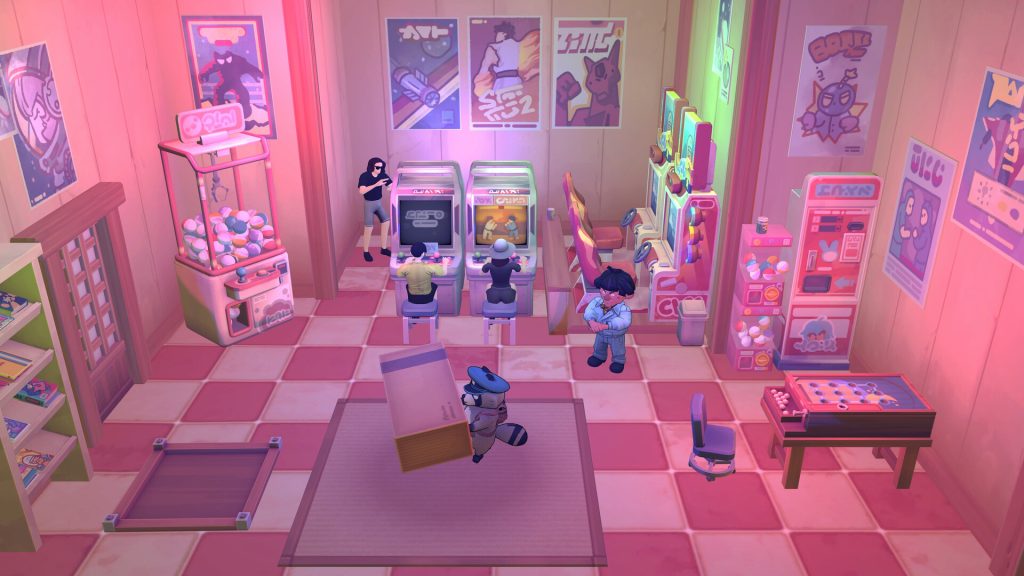
Around a dozen other mini-games feature, including serving drinks and ice creams – each with a degree of mastery involved. Not only this, but there are golf and baseball matches to win, likely requiring a retry or two. These sporting endeavours are more involving but slightly finicky, especially golf, which lacks a putting mechanism – resulting in bouncing off the flag repeatedly due to overshooting. Indeed, not every mini-game is a winner. Scanning groceries at the local convenience store felt more like a chore than anything. Also of note is that some mini-games cannot be paused – which seems like an odd decision.
Each mini-game only features once, though, and by being used sparingly, each day feels different from the last. In addition to the BMX challenges, there are a few other diversions, with Pon periodically gaining new playthings, including a fishing rod, bug-catching net, and a camera. Fish and bugs are ranked in rarity, appearing at different places across the town – with some only catchable in the beach location that becomes accessible halfway in. Running around with a net and a rod is enough to invite comparisons with Animal Crossing, and both tools are used similarly, with bugs found sitting on trees, and fish visible in the town’s numerous lakes, ponds, and rivers. To find and catch ‘em all will far exceed the 10-12 hours the main quest takes.
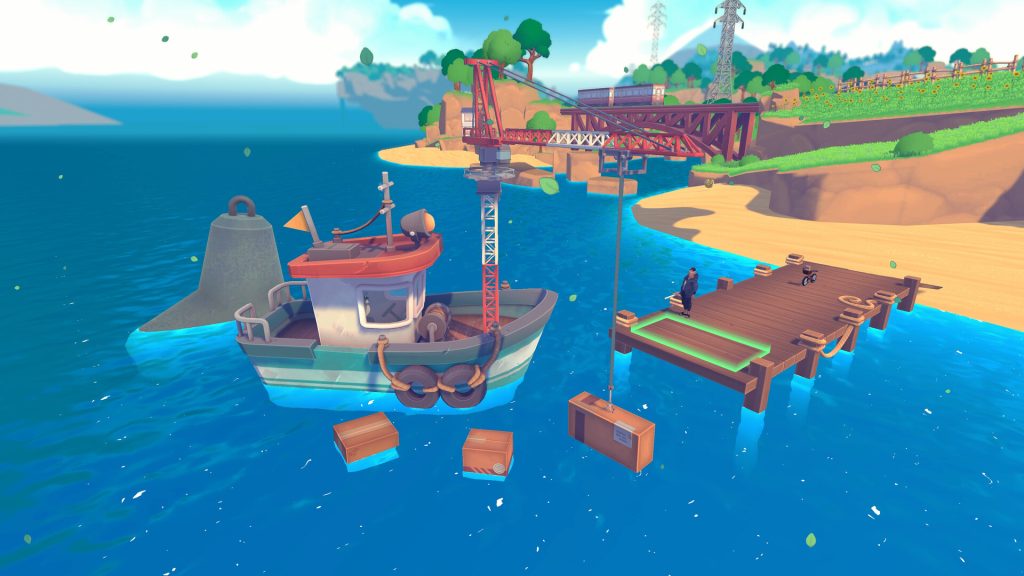
But while Pon’s Summer has a similar daily routine to a typical life sim – heading out at the start of a day before clearing off a list of chores, and perhaps spending time exploring or bug hunting – it’s never quite as compelling. The main goal of fixing the shrine is a pretty good motivator to keep playing; everything else less so. Delivering packages isn’t particularly thrilling or satisfying, simply seeing you head to far-flung locations to drop off items. Although there are payoffs of sorts, usually in the form of seeing a situation pan out, these can be dialogue-heavy. The pacing throughout is also a bit unpredictable, with a lot of time spent fixing the shrine’s torii gate early on, lots of mini-game filler, and then just a couple of days spent fixing up the rest of the shrine. During the final hours, the music started to grate too, never changing a great deal despite altering in tone depending on whether you’re riding or on foot.
Tanuki: Pon’s Summer still makes good on a few of its promises though, being very welcoming, playful and relaxed. The theme of spending a summer reuniting an entire town and working towards an ultimate goal that requires hardship and toil is endearing. And yet, I can’t see myself wanting to experience it all over again. It can occasionally feel chore-like, from hammering nails into wood to cutting out dozens of identical plaques with a saw. These are, at least, just small parts of something much larger in scope. The relaxed tone and ease of performing BMX tricks make this an easy recommendation for both younger gamers and those looking to idle away a dozen hours or so with something relatively stress-free. Xbox owners hankering for something Nintendo-esque would do well to investigate too. If the chance ever arises to spend another season with Pon, though, I’d certainly expect more job satisfaction.
Denkiworks’ Tanuki: Pon’s Summer is out now on all current formats. Published by CRITICAL REFLEX.