
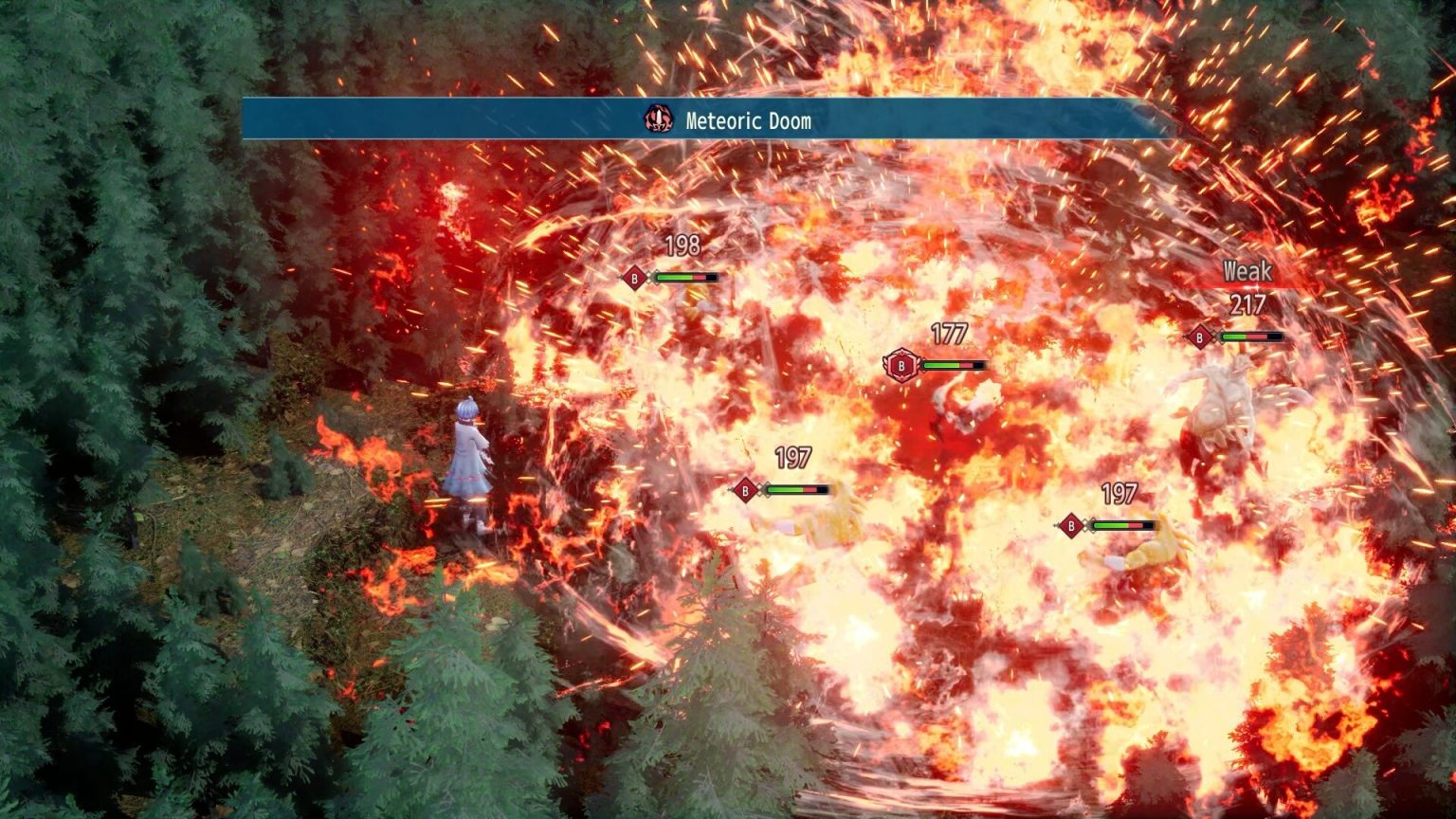
Some games hand you the reins. Brigandine Abyss hands you a rulebook, points at a warring continent, and expects you to get on with it. It’s very enjoyable once it clicks, but getting there took hours of playtime and a couple of YouTube sessions. Reviewing games is only a hobby for me, not a career, and so there’s a limit to how much studying I want to do before the fun begins.
There’s just so much accumulated crust from decades of design work, and I don’t think developers even notice. Let’s take Brigandine Abyss as an example. Essentially, it’s a fusion of Risk and Fire Emblem with anime tropes. You play as one of six factions, trying to conquer the continent of Forsena and defeat the Abyssloa Empire. This is achieved by managing troops during an ‘Organisation Phase’ and attacking adjacent kingdoms during an ‘Attack Phase’. Attack you must, as this isn’t Civilization. You aren’t here to take it slow, building up troops and then attacking; you’re here to expand as far as possible, and as quickly as possible. By defeating adjacent empires, they become allies, available to become part of your empire.
After typing that out, there’s more than a whiff of the infamous Mitchell and Webb ‘Are we the baddies?’ sketch about the entire premise.
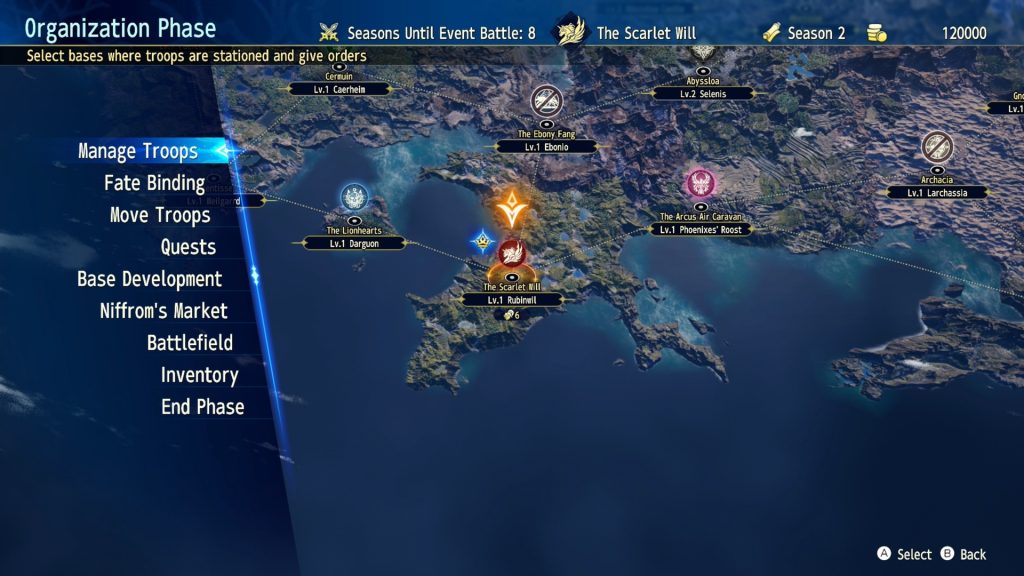
Now listen carefully, because many of the ensuing parts of Brigandine Abyss I only ever glanced over, suffering as a result. Troops can be divided into two broad categories: Leaders and Monsters. Leaders take Monsters onto the battlefield to fight with them. Defeating Leaders kills all the Monsters they control, so you really don’t want to waste your time attacking them individually. Instead, you ideally need to get rid of Leaders at the first chance.
Each Leader has a certain amount of command points, specifying how many Monsters they can bring along. You’ll need to max this quota out. One way is to recruit Monsters by paying money into something called ‘Fate Binding’ – because using the term “recruitment” would be too obvious. You need to watch out for allies that you recruit to your cause, as they might not have Monsters associated with them — and it’s hugely important to catch this. Also, there’s a need to shuffle troops around, as if they stay in one place, they’ll be attacked. Luckily, you can use the Switch 2’s mouse mode to shuffle them around, which is neat. There’s still too much menu jumping, though.
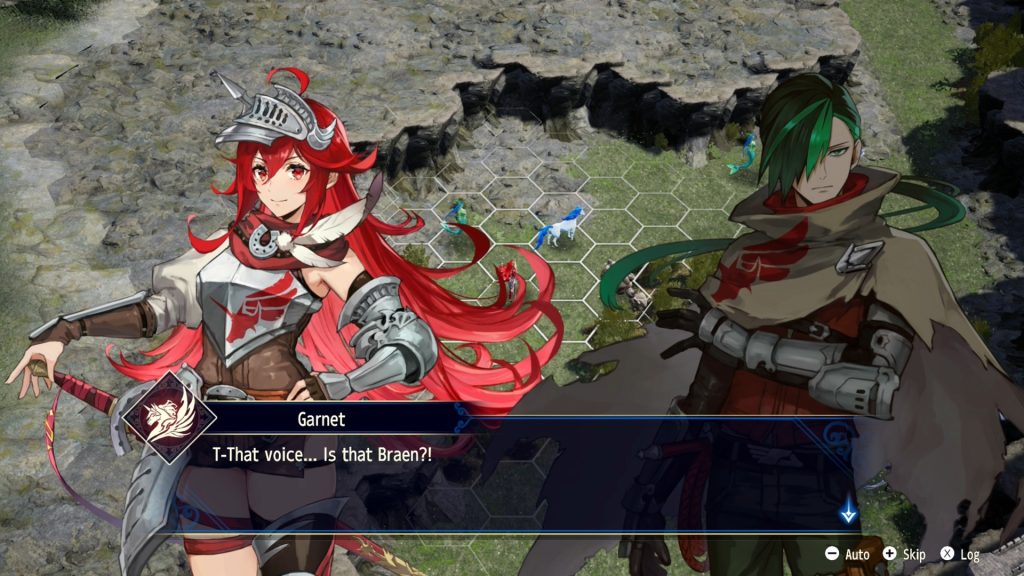
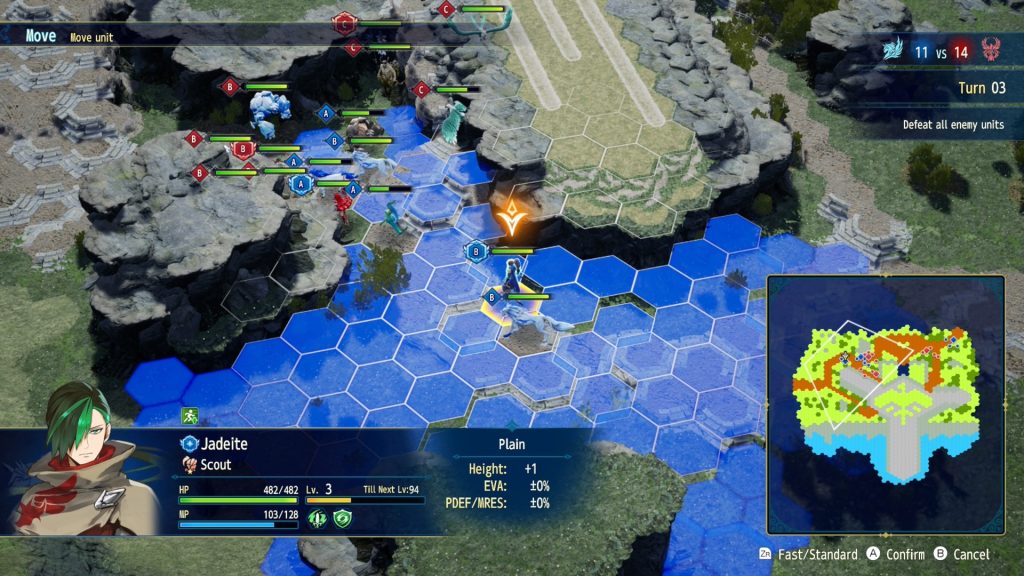
Once you’re done organising, it’s off to the attack phase, where you choose which troops to send to the adjacent warring factions. Once you do so, the game suddenly shifts into a tactical RPG, where you get to select fighting commands yourself. In my first few attempts, I sent my troops on quests to grind for experience points and level up, rather than attack. This was a mistake. It’s always better to attack than go questing.
The shifting perspective is useful, as you can make up for a lack of preparation by fighting proficiently. Battles can be automated, but this isn’t ideal due to inconsistent AI.
There’s a certain flow to everything, and a need to be on your toes. At normal difficulty, the game is no walkover, and each battle requires attention to the placement of troops, especially those with ranged attacks. This is definitely something that rewards players well, with loads of systems to dive into. Praise be for YouTube guides, helping to highlight the finer points.
It adds up to a package that really justifies its reason for existing. Brigandine Abyss is different enough from other tactical RPGs to be interesting. It’s just a shame that it doesn’t extend itself further. I’d love to see more base building and management, and a little less story. The tactical RPG elements are very well developed, but the grand strategy components are less so. It would have benefited from richer world building to help Forsena feel like a real place too, with characters that go beyond generic minotaurs, vampires, dragons and mermaids.
For someone, this is going to be a GOTY candidate, relishing the chance to see what the six factions have to offer while exploring its multitude of systems. Hundreds of hours could potentially be lost to it. That someone wasn’t me, however, making me realise that I no longer enjoy being thrown into the figurative deep end and forced to figure things out. Because of this, I was never fully compelled by it. At the same time, though, I can appreciate that it’s trying to do things a little differently, and that a tactical RPG fan may find something to enjoy here. In short, it’s always interesting, but never too welcoming.
Happinet’s Brigandine Abyss is out now on all formats. Published by NIS America.