
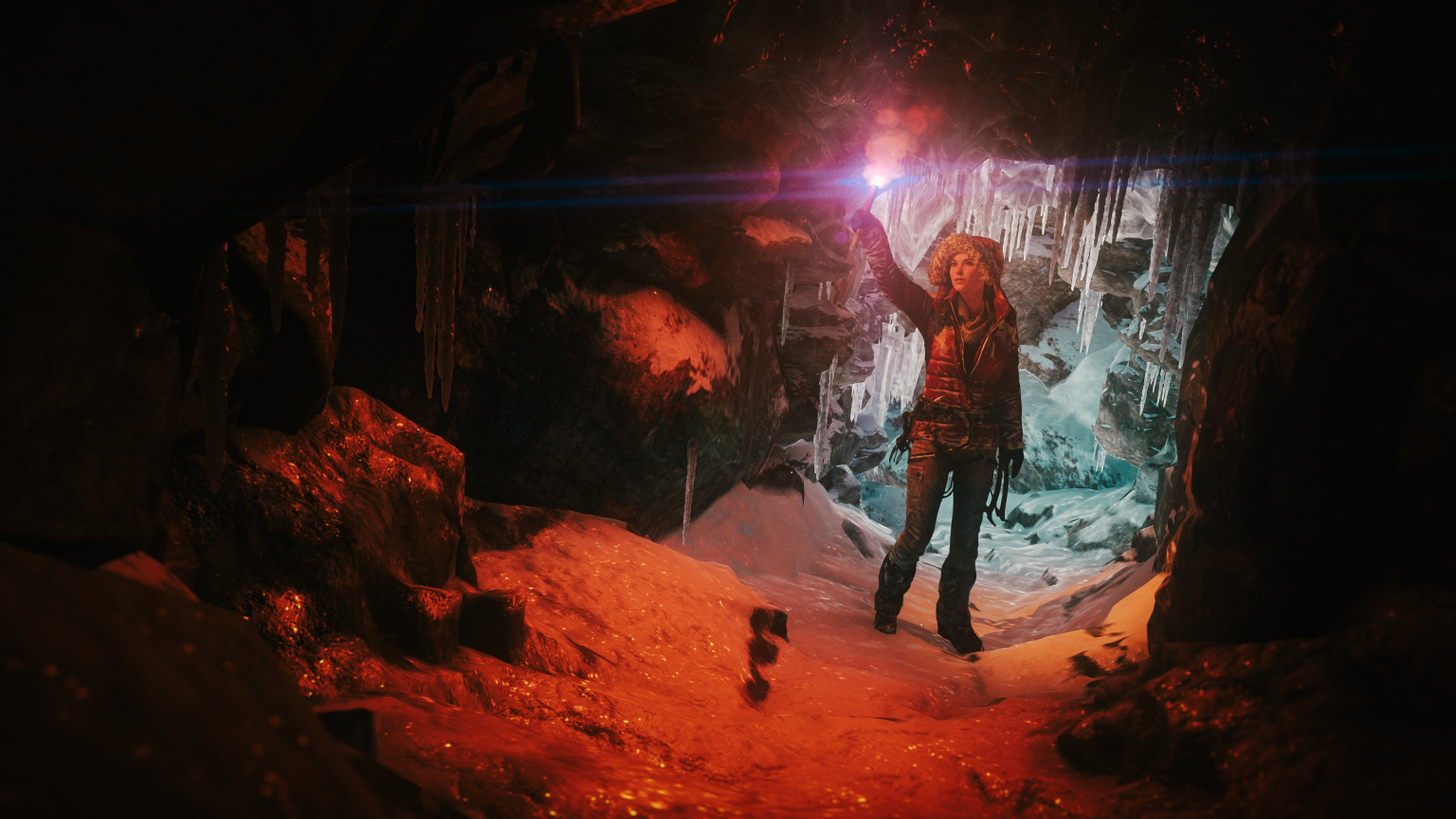
Now is a great time to own a Switch 2. In addition to Nintendo putting out new releases regularly, publishers are porting the cream of the past generation’s crop to the system, often at enticingly low prices. Rise of the Tomb Raider is a great example: a rich and varied third-person narrative adventure, with a huge amount of content and extras for a penny under £25. If you overlooked this entry at launch, it’s an absolute no-brainer.
For those not keeping track of modern Tomb Raider’s naming conventions, this is the sequel to 2013’s Tomb Raider reboot, which tried to modernise the series. It succeeded in some areas more than others, arguably leaning far too hard into narrative and mindlessly gunning down legions of enemies. Ironically, and more crucially, it had a noticeable dearth of tombs to raid.
Rise of the Tomb Raider represented a course correction. Although it’s combat-focused still, it reintroduces tombs (hurrah!) and adds open areas. These are places where you feel like you are left alone to explore, puzzle solve, and traverse terrane to overcome challenges. For something that came out only two years after its predecessor, the evolution is remarkable.
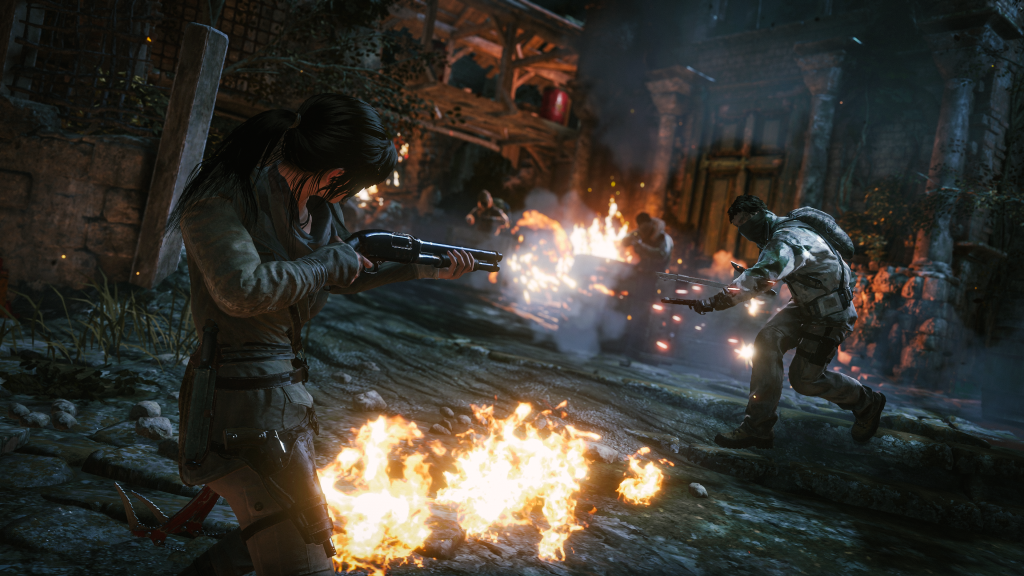
What’s also remarkable is that this eleven-year-old game doesn’t feel like it has aged. I’m not sure what this says about the current state of the industry, but if you released Rise today, the only thing that anyone would question is how Crystal Dynamics managed to pack in so much content. It looks phenomenal on the Switch 2. Lara’s animations are smooth; the vistas are gorgeous, and the intricate close-up detail means that this is immediately one of the best-looking games on the system. Add to this the rich soundtrack, and Rise of the Tomb Raider still feels lush, polished and handsome today.
If you wanted, you could play Rise like a linear, thrill-a-minute movie. There’s some nonsense plot about Lara seeking the Divine Source and battling an evil organisation in Siberia. I’m not a big story-in-games guy, and Rise certainly didn’t change that, but the story does its job of shunting you between spectacular set pieces. They’re generally fun, although they do overuse the trick of the path in front of you exploding as you try to escape something. On the other hand, I’m a sucker for a Soviet setting.
Quite often, though, it’ll drop you off in an open area and ask you to find your way to the next story beat. You could go straight to the exit. However, open areas are absolutely stuffed with secrets, challenges and collectables. There are journals to find, treasure chests to loot and animals to hunt. I’m quite a completionist, so I ended up getting massively distracted by these additional pursuits. There’s just so much to do. You could feasibly spend hours hunting wildlife to gather the materials needed to upgrade every piece of equipment. Some of these things are in the open, but some of the optional challenges require you to make the best of Lara’s moves.
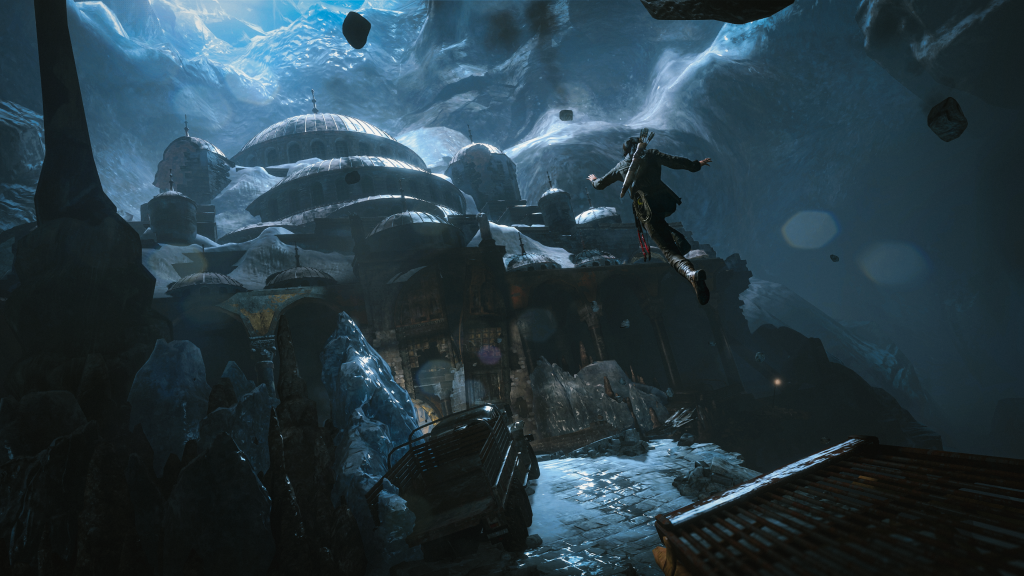
Lara’s move set hasn’t changed much from the previous outing. She can jump, climb, swing and scramble. But what has changed is how the game ties all these moves together in much more elaborate and challenging areas. It feels like the developers have had time to think about how to chain all of Lara’s abilities together and have crafted some really awesome challenges, particularly in optional challenge tombs. Some tombs play with moving carts and dabble with water levels, while others introduce pulleys and levers. The best challenge tombs feel like they’re designed in the same way as the most memorable Zelda shrines. I just wish that the developers had dared to realise that this was where the fun was, and to jettison some of the combat in favour of more off-track adventuring.
There is still quite a lot of gunplay, mostly in the form of cover shooting. I personally didn’t love these sections, but the developers have at least given players the tools to go about them in a variety of ways. Lara can stalk and stealth-kill, craft explosives and use her bow to silently take out enemies. Sadly, there are still too many sections where that choice is taken away, and it becomes a little bit Virtua Cop. One thing to note: there’s no gyro aiming here.
Things aren’t perfect with Lara, either. As a bit of a Tomb Raider-head, I never really felt like these mid-2010s games nailed Lara’s persona. Whilst this is supposed to be a prequel to the original games, showing how Lara became the Lara Croft of tight-shorts-and-sunglasses fame, I still find it difficult to link the two iterations. I think Lara has always been defined, for better or worse, by a British ladette sauciness. All lads’ mags and Britpop. Whilst I can see why that would not work with a modern audience, she has also been defined by a ballet-esque athleticism. In the original games, Lara could do a cartwheel handstand for no reason whatsoever. In these games, she feels a little too much like she’s snapping between predefined animations. It’s a way to make the action feel more spectacular, pulling the camera back and slowing things down to make jumps seem even more precarious and exciting, but it also means that I was never quite sure if Lara could make a jump or not.
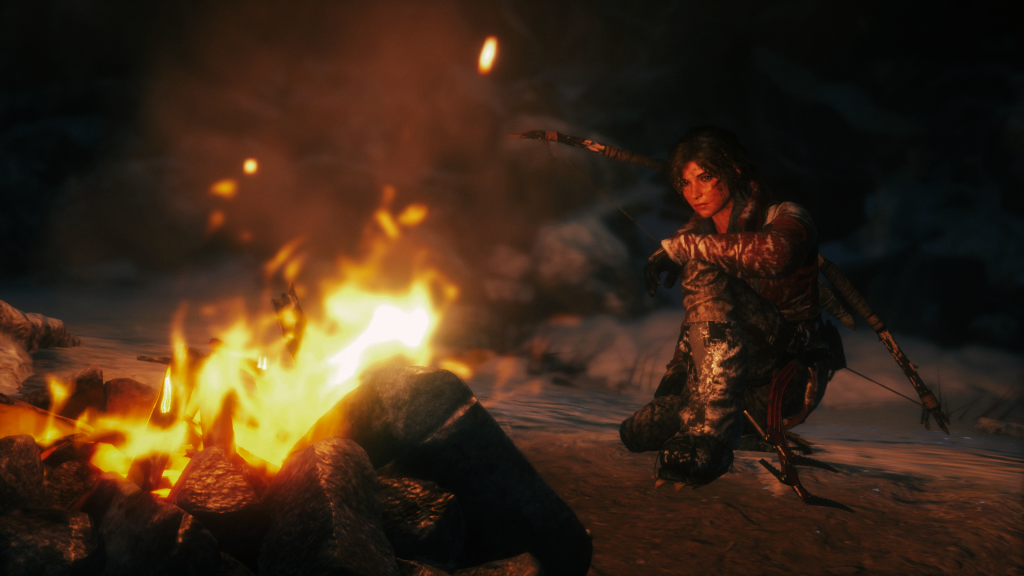
Another downside is that the amount of signposting becomes patronising. White paint can be seen everywhere, showing exactly which surfaces you can interact with, and Lara sometimes tells you how to complete a puzzle before you’ve even started it. I’m also not sure about Lara’s ‘survival instinct’. This is a mode like Batman’s detective vision in the Arkham series, which you can activate to highlight objects of interest. I ended up using it all the time; it’s incredibly useful. But it’s also a bit of a fudge. There is no reason why Lara should be able to tune the world out and get interesting objects highlighted in bright orange.
But all of these are, quite frankly, quibbles. What you’re getting here is, in my opinion, the best Tomb Raider game. Not only that, but this is the 20th Anniversary edition (confusingly, it is now the 30th anniversary), which means every DLC and update are present. Some of the DLC is awesome. For instance, ‘Baba Yaga’ is a story quest in which Lara is poisoned and starts hallucinating, leading to a completely different visual experience. Not only that, but it’s intertwined into the main storyline masterfully, like it wasn’t a mere afterthought. There’s even a roguelike mode if you want to spend more time with Lara once the story is concluded.
It has something for everyone, and I cannot praise the immediacy of the experience enough. If you die, you’re back in the action in seconds, with no time lost or backtracking. This is something that knows how to keep you gripped, forever ushering you forward. A high-budget, high-octane thrill ride, with loads of optional areas to explore if you want to go off course. It’s one of the best action adventures from the last generation, and now you can play it anywhere.
Crystal Dynamics’ Rise of the Tomb Raider: 20 Year Celebration is out now on Switch 2, published by Aspyr.