

Even as a console owner in the ‘80s and early ‘90s, I knew that the Last Ninja trilogy was held in high regard amongst owners of the C64 and ZX Spectrum. It was often championed in the multiformat magazines of the era and could be seen riding the UK sales charts high. Even when the 8-bit micros were put to rest in the mid ‘90s, you could still find references to the trilogy when it came to top 100 lists and such. A full-on revival has been attempted several times in the past, but these projects have always failed to get off the ground. Presumably to keep the trilogy’s spirit alive, fans are instead being treated to this rather exhaustive collection.
To appreciate Last Ninja, it helps to know more about its conception. Martial art films were popular in the ‘80s, and System 3 – who were very well versed with the C64 – set about making the ultimate ninja action game. They had a very specific idea in mind; an isometric adventure with combat, platforming, exploration, and puzzle elements – all wrapped up with some of the best music and visuals on the C64 to date. Developers approached by System 3 baulked at the idea, claiming that it was impossible. Nevertheless, after two years in development – roughly double that of the average C64 title – Last Ninja emerged in 1987 and made a huge impact, swiftly becoming the best-selling C64 game of all time. A multi-million seller.
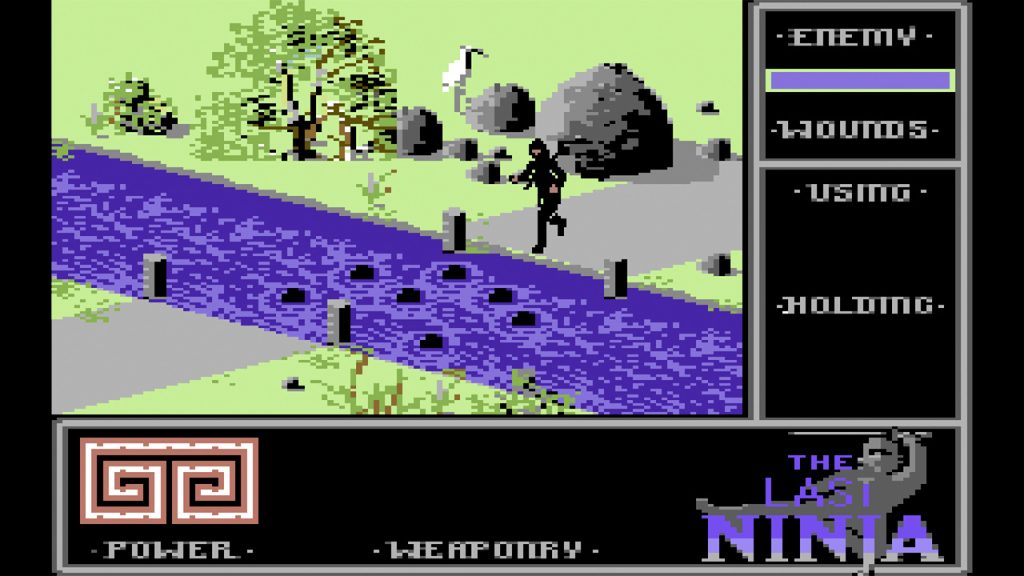
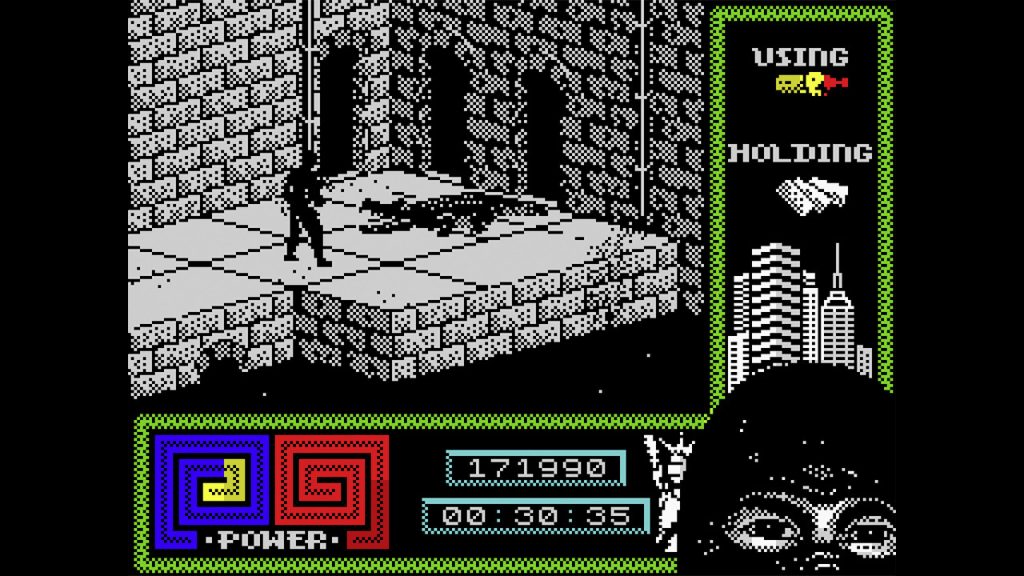
This success led to conversions, two sequels, and revised ‘remixed’ versions of the first two games – one for C64, and one for Amiga. The standout feature of this collection is that numerous versions of all four games are present, allowing you to jump in and out to discover their quirks and boons. It has been said that the C64 versions are the ideal way to play, forming the blueprint for every conversion thereon, but you may appreciate the superior visuals of the Amiga conversions. I found solace in the ZX Spectrum version of Last Ninja II, as the simplified monochrome visuals – a tactic used to eliminate colour clash – are very easy to read, removing some background clutter. I also found that Last Ninja Remix was the easiest to get into as interactable objects flash when entering a location, minimising aimless wandering.
The control schemes for all four games are almost universal. Their host formats all originally used single button joysticks, and so here every action is mapped to a single button and direction. This isn’t as cumbersome as you may expect. One direction is used to attack with kicks ‘n punches – with enemies taking a few hits to defeat…before they peskily get back up – pressing up makes the ninja leap, while holding down is used for collecting items – with a small inventory to cycle through. Every game has a digital manual along with a breakdown of the controls, should you need a memory jog. It’s also worth noting that every version (save perhaps for the humble ZX Spectrum version of Last Ninja II) has a banger of a soundtrack, along with brief intros to outline the plot. 1988’s Last Ninja II famously relocated the action to New York City, while 1991’s Last Ninja 3 reverted to a more authentic oriental setting.
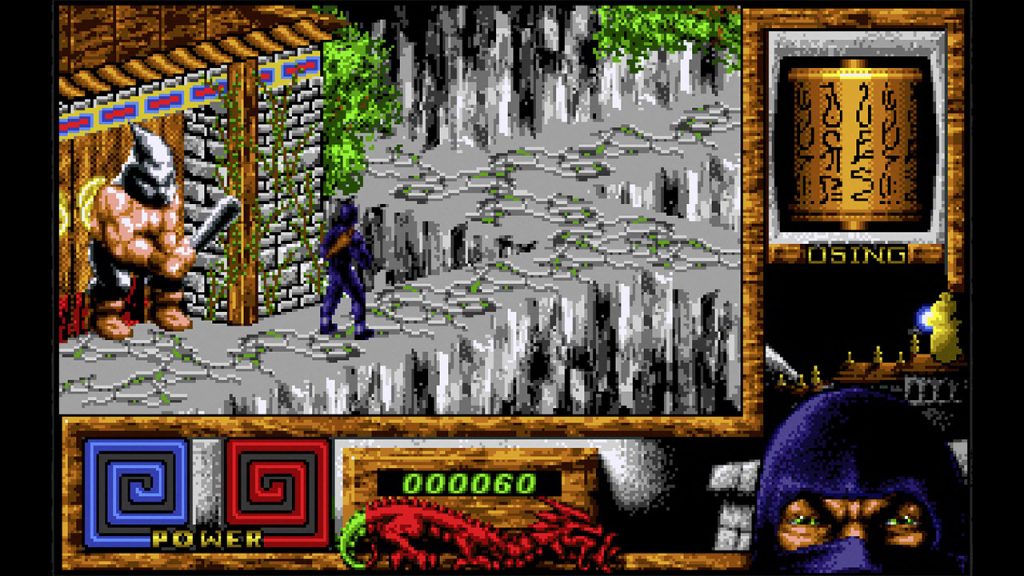
Going into the Last Ninja trilogy today is a little difficult. These were games designed to test gamer’s skills and take weeks of practise to beat. There are no clues or puzzle prompts, and platform jumping is extremely finicky – literally pixel perfect. Being able to save anywhere helps massively though. It’s a shame that a cheat menu or a few more quality-of-life features aren’t present. And while a remake of at least one game would have been appreciated, like Digital Eclipse did with Karateka and Gridrunner, it’s understandable that this would have been a tall order. Just getting this collection made in the first place required a Kickstarter campaign.
Helping to give this package a slighter wider appeal are the bonus games, which shouldn’t be considered as throwaway extras. Included are the C64 and Amiga versions of Bangkok Nights, the ZX Spectrum and C64 versions of International Karate, and three versions of IK+. Bangkok Nights is a one-on-one brawler that existed long before Street Fighter II set the standard, featuring large sprites and the ability to roam around a small area. It controls similar to Last Ninja, with kicks and punches performed by holding ‘A’ and pressing a direction. Luck seems to play a large part here, as sometimes you’re able to land several blows in quick succession and score a victory. International Karate goes for a single screen side-on view, and true to its name, plays by traditional karate rules. A swift leg kick or a foot to the face can earn you a point instantly. Matches are brief, which is part of the appeal – one false move can cost you a point.
IK+ is even more fondly remembered, bolstered by better presentation and the addition of another fighter – it’s now a three-way battle! You can even step aside and let the two CPU players duke it out, although the ref will probably criticise your performance. It has some fun touches and comical sound-effects, making it entertaining even today.
To say anything more about The Last Ninja Collection + Bonus Games would be to simply reiterate. The four mainline games were all influential for their time, with the original maxing out the C64 as early as 1987. Going back to them today, though, requires a lot of patience, so only go into them knowing that you’re going to be saving and reloading often – and maybe even resorting to playthroughs to discover how to progress. The bonus games are more immediately accessible, with IK+ being the highlight. It’s no surprise that even the PS1 saw a re-release, and as late as 2003. Newcomers ideally need to know what they’re in for with this collection, then, but if you grew up with these games, you’re likely going to reacclimatise with them quickly. You may even find it easier than falling off a log.
System 3’s The Last Ninja Collection + Bonus Games is out now on PC and Switch. Versions for other formats are planned.