
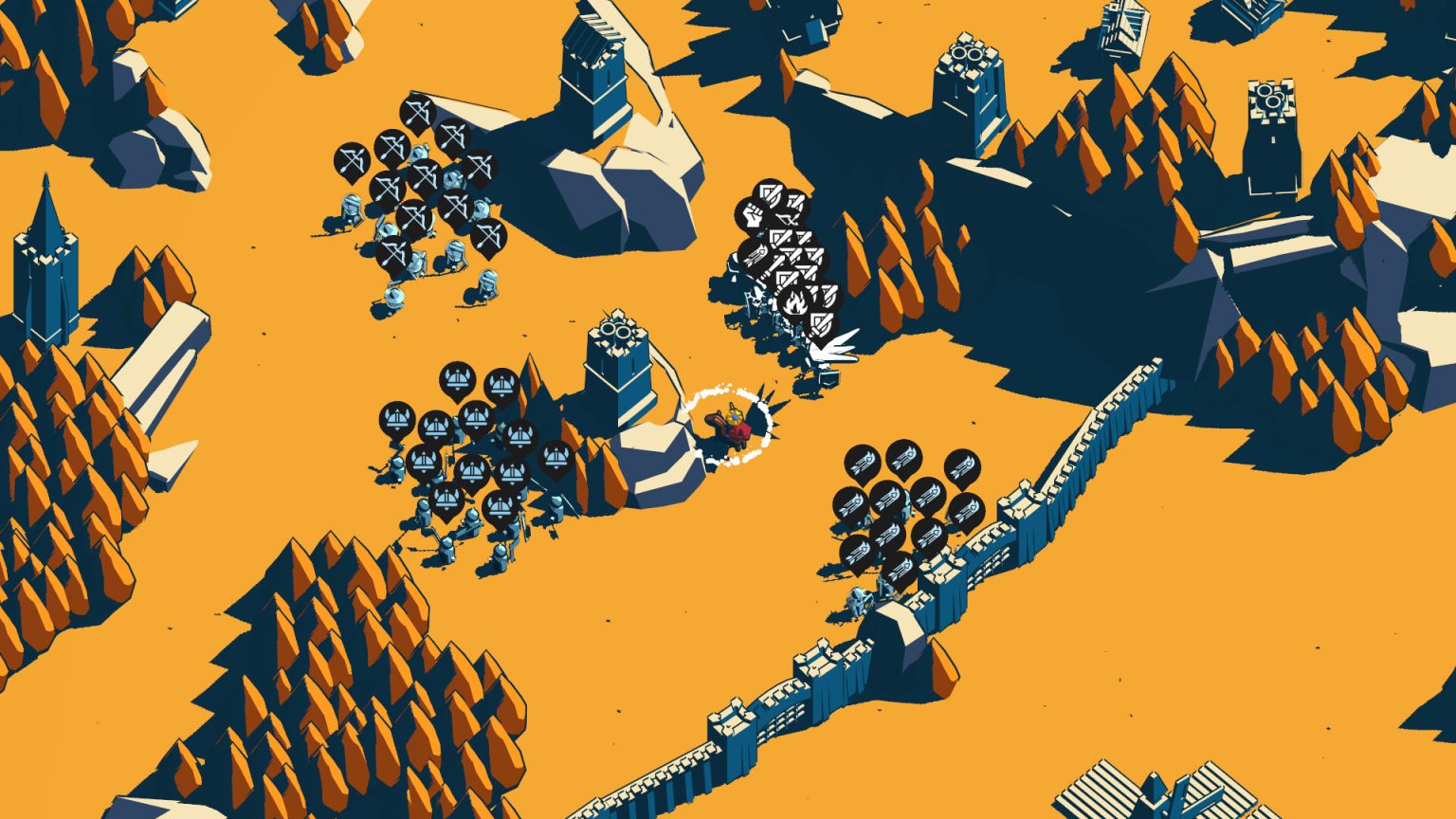
History reveals that kings often rode into battle with their armies during great wars. Sometimes these were brief appearances to help spur on weary troops, but there’s evidence to suggest that they weren’t afraid to get their hands dirty either, clashing with their adversaries. Thronefall draws from these historic acts of bravery, seeing you play as a monarch defending their lands by any means possible, even confronting huge sea creatures. Sure, it may be historically inaccurate in places, but when has that ever stopped anyone from having a good time?
This is a minimalistic tower defence strategy game, in more ways than one. Firstly, it has been designed to be easy to play, using just a couple of buttons on the joypad to perform actions and giving you control of your customisable monarch instead of using a cursor. By the time the tutorial ends – taking the form of a short skirmish – you’ll have a firm grasp of how to order troops, attack enemies directly, and build structures. Secondly, it bears a low-poly and flat-shaded visual aesthetic that’s accompanied by soft lighting and other modern effects, giving it much appeal. These simple visuals remove much clutter, making the action readable, while also keeping things smooth – even when the screen is awash with enemies.
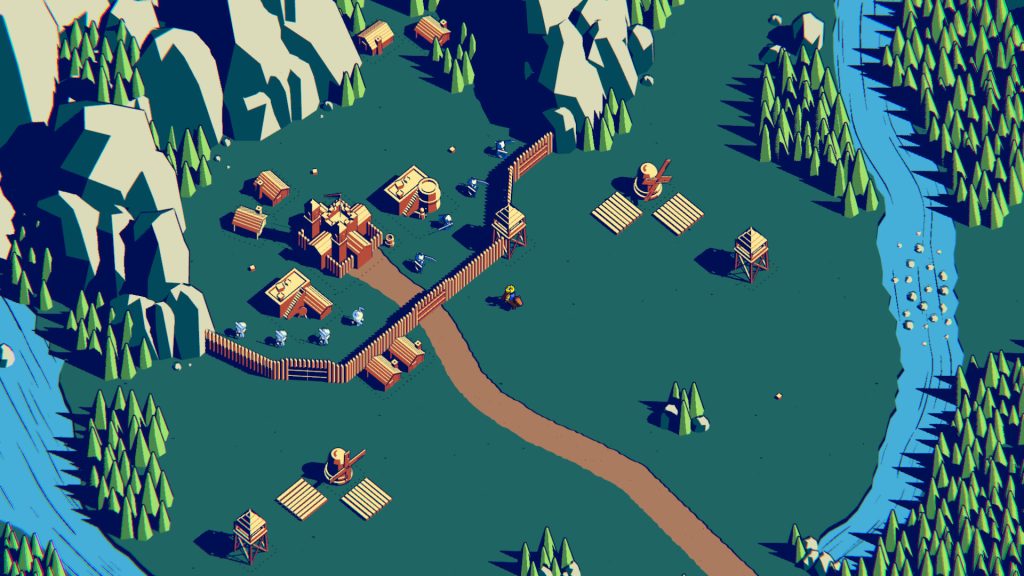
A day/night cycle is in place, and each realm you protect – ranging from dry deserts to haunted woodlands – has 12–15 waves to endure, each bigger than the last. During the day, you build using the limited funds available. In keeping with the minimalist theme, structures can only be placed on designated spots, whether they’re defence towers that fire arrows or mines that bring in gradually decreasing stacks of gold. Farms, harbours and houses also generate gold. Got to get those taxes in. Also keeping things swift, everything destroyed during battle magically reappears the next day, removing the need to prioritise repairs.
It’s at night when enemies attack, with helpful indicators showing where they’ll advance from, giving you the chance to prepare. You’re up against both man and beast, with some taking to the skies to attack from above. Ranged and melee units respawn at barracks and can be positioned before a battle starts or ordered around mid-battle with no more than two button presses. Troop AI is mostly competent. They’ll head towards enemies if they’re nearby, yet you may observe ranged units aimlessly wandering along battlements, torn between shooting from afar and joining the rest of the squad on the ground, calling for intervention. You’re able to attack enemies directly too, blessed with an auto-attack and a special, with weapons including swords, poison vials, bear traps, and magic wands. Mostly, though, you’re relying on your defence towers, which must be strategically placed and come in a few different varieties, from short-range bunkers to sniper towers. One can even pour hot oil onto enemies below.
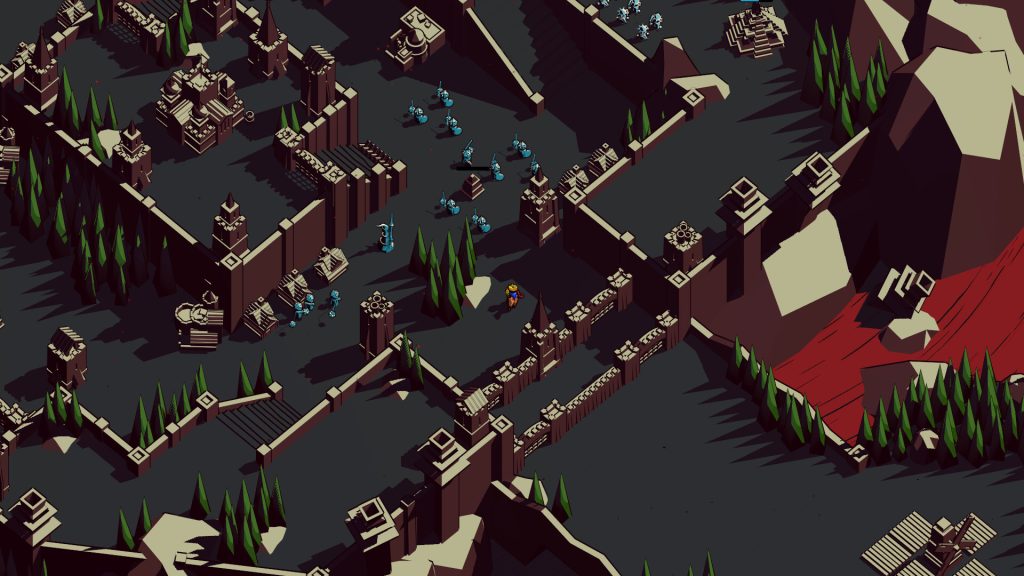
If you die in battle, you’re able to respawn after a ten-second wait. The only downside to this, apart from not being able to assist in battle, is that it harms your final score – with online leaderboards being part of the experience. If your castle is destroyed, a battle will end in defeat. This isn’t too disastrous, though, as you’re able to restart from the previous day, allowing you to make changes to your strategies, perhaps by spending gold on reinforcements rather than towers and vice versa. On a couple of occasions, though, I did reach a late wave only to be defeated several times over, with no strategies working. The solution was to start anew and choose a different selection of perks, favouring ranged attack bonuses over the melee boons I had previously selected. Up to five perks can be chosen, with more unlocking through levelling up. These allow for more health, stronger towers, a glut of gold during the final three waves, et al. For those who want to be tested and climb the leaderboards, modifiers are also present.
There’s quite a bit to get into here. The main objective is to conquer ten realms, each generally taking around an hour. Most end with a boss fight that may require a retry or two. Head to the right of the world map, and you’ll additionally find a bunch of bonus missions and endless modes, which see you take on stronger variants of bosses, win battles without infantry, and become a one-man army protecting a realm with neither towers nor troops. To complete Thronefall fully will take a considerable amount of time, especially if you go ‘all in’ with the bonus challenges. Otherwise, you’re looking at 10–12 hours to tackle the main objectives, and it’s able to maintain interest throughout by introducing new enemies and bigger bosses, while adding a new weapon to your inventory after every successful conquest. The only tedium came from the music, which, while not bad, doesn’t change a great deal throughout.
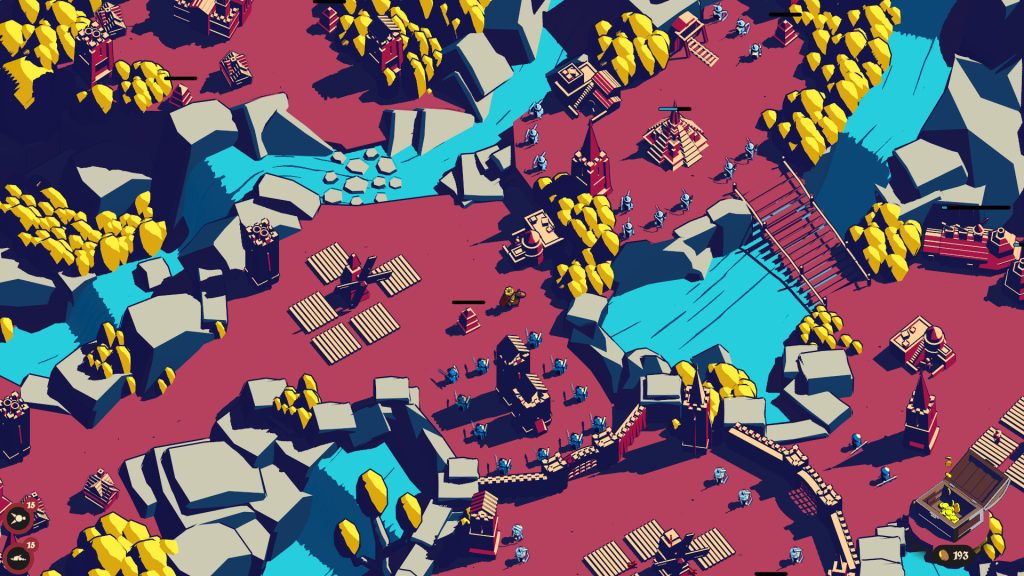
If you’re wondering if Thronefall is too simplistic for its own good, you raise a good point. Restricting defence towers to designated spots does mean it loses a degree of strategy when it comes to thinning out waves of enemies. Logic dictates that you’re always going to build towers near the castle to protect it, along with fences to delay, and barracks to deal with waves as they emerge. There are points where it feels like you’re simply going through the motions. There is still scope to think freely, though, prioritising money-making over defences, and upgrading your castle early to unlock more building options. Blacksmiths allow for further options, researching upgrades over 2-3 days. To complicate the experience further would tarnish its main selling point: to deliver an accessible strategy game that strips back bloat and focuses on the essentials. It makes good on that promise, and the extra layer of polish doesn’t go unnoticed.
GrizzlyGames’ Thronefall is out on 11th Nov for PS5 and Xbox Series. It originally released in 2024 on PC and Switch. Published by Mythwright.