
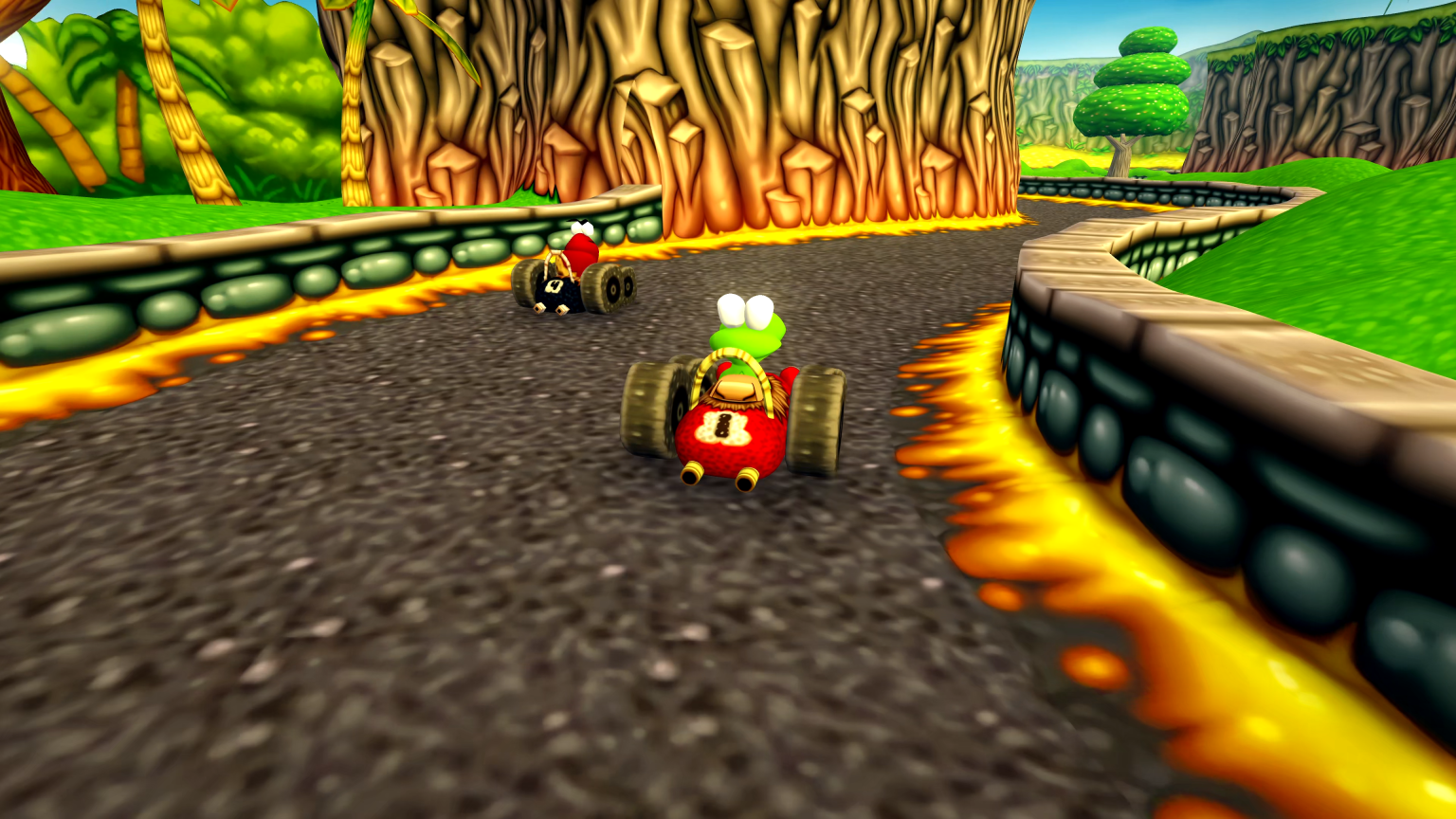
Did you know that Croc 2 was once planned for the SEGA Dreamcast? It was announced not long after the system’s launch but never materialised. Word has it that the PC version from 2000 would have formed the basis of the port, only with superior visuals. According to various SEGA fan sites, work never even began, as Argonaut chose to focus on their Dreamcast tank shooter Red Dog instead. This remaster of Croc 2 gives us a glimpse of how the Dreamcast version might have looked and played, improving textures to make Croc’s world all the more cartoony, but keeping things just as they were at the turn of the millennium.
Croc 2 was originally released on the PS1 in 1999 – a time when the console had already been pushed to its limits, with most developers having three or four 32-bit games under their belts by that point, if not more. The platforming market was looking pretty saturated too. By 1999, all three Crash Bandicoot games had been released, and the third Spyro was imminent. Ape Escape also arrived the same year as Croc 2, providing even more competition. With the original Croc already pushing the PS1 relatively hard to allow for more open environments, this sequel sought to add variety while improving the formula. The result was more boss battles – two per world, no less – along with a few racing mini-games, minecart sections and a level based around hang-gliding. The story, meanwhile, saw Croc head off on a grand adventure to find his missing parents, only for his nemesis, Baron Dante, to follow his trail.
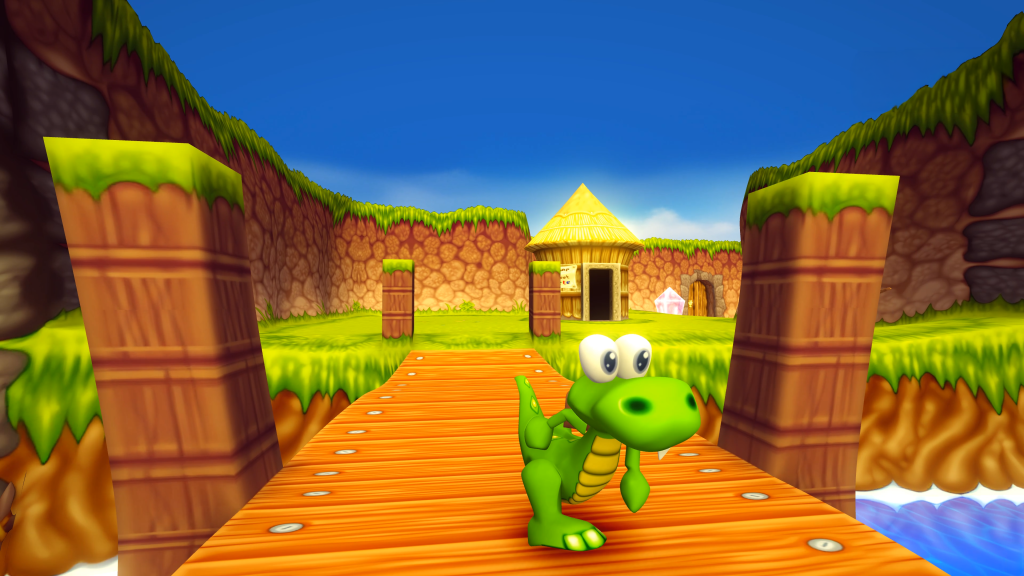
The story – to use the term lightly, as the premise isn’t exactly expanded upon – is spread across four worlds: a sailor village, an icy realm, a lost prehistoric world and Inca-themed ruins. Each has a hub and half a dozen stages, a mid-world boss fight and a final boss, after which Swap Meet Pete transports Croc to the next world. Pete happens to run the only shop in Croc’s world, selling single-use consumable items. These include bouncy gummy rings and clockwork Gobbos, both of which are required to reach every collectable gem within a stage. Unless you want to achieve 100% completion, however, they aren’t essential to carry. On that note, there is a lot to collect on the way to that milestone, including jigsaw pieces and golden Gobbos. The only other new addition is Croc’s triple jump, which sees him jump, perform a ground pound and then spring high into the air. It mostly comes into play during the final world, particularly in the stage based around climbing a waterfall.
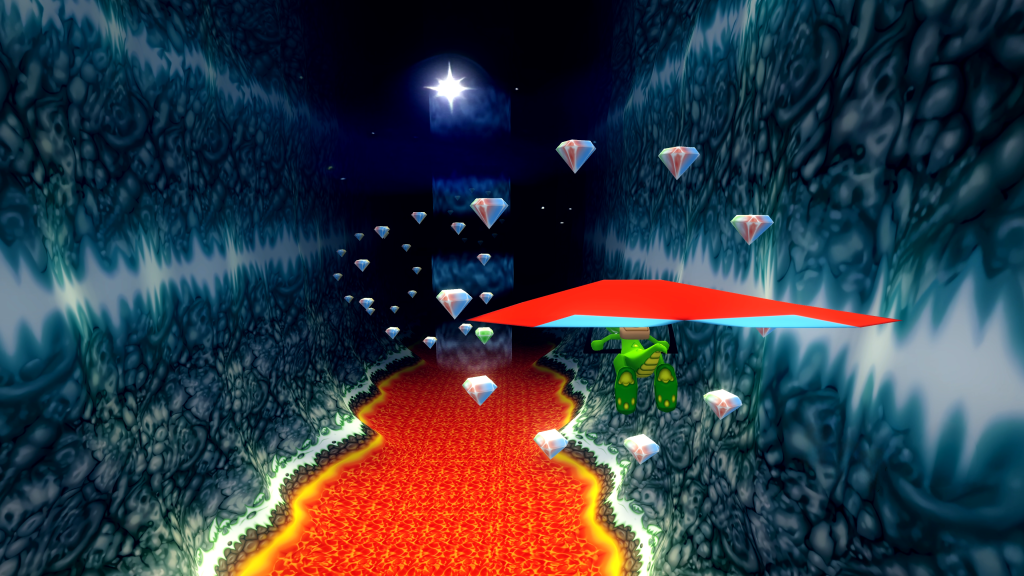
With all these new diversions, Croc 2 sounds promising. Sadly, it doesn’t take long to discover that none of these additions are particularly deep or noteworthy. Take the three-lap racing section, for instance. There are no power-ups, speed boosts or anything of the sort. You don’t even need to brake; simply take the corners tightly, and you’ll win. The same applies to a motorboat race. The hang-gliding stage, meanwhile, lasts all of two minutes, requiring the analogue stick to be gently nudged only a handful of times before landing. The bosses fare better and showcase some creativity, although, just as before, a Gobbo explains how to win each fight before it has even begun. Bosses require only three hits and can therefore generally be beaten on the first attempt – especially if you have purchased extra health pots.
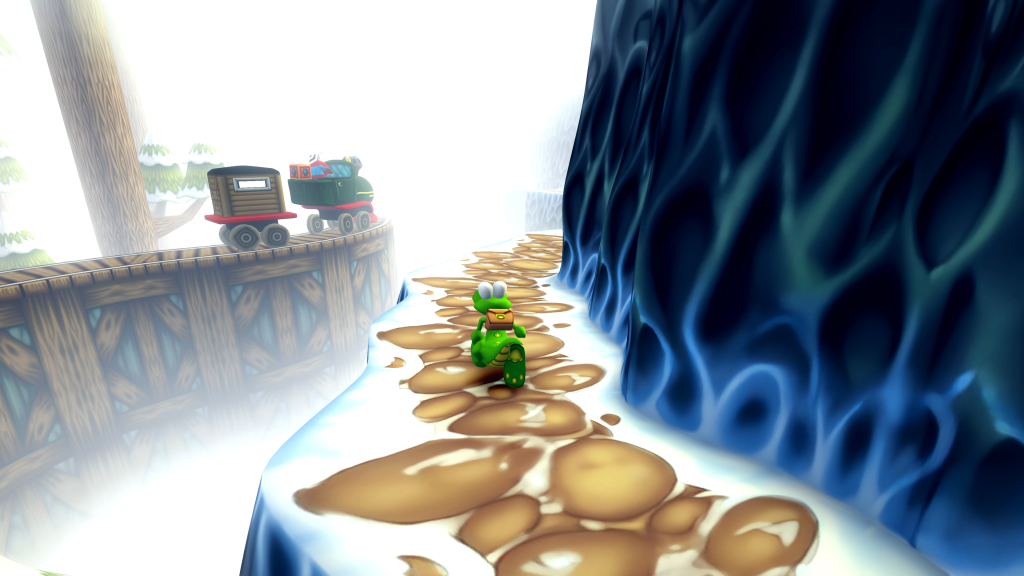
Together with dialogue that is incredibly babyish (Croc and the Gobbos converse using irritating broken English), this suggests the game was aimed at an even younger audience than the original. Had I owned it in 1999, I would probably have been a little embarrassed to play it in front of my teenage friends, such is its overly twee and cutesy nature. One stage is even called “Chase the Choo Choo”, without the slightest hint of irony.
There are a few fun stages here, though, and this is where much of Croc 2’s merit lies. One entails pushing an ice block through an entire level, freeing Gobbos along the way so they can activate switches and the like. Another involves collecting water to put out fires, while later there is a large Inca village to explore, with 30 baby Gobbos to find, retrieve and carry back to their playpens. This is one of the more involved affairs, calling for thorough exploration. A Monkey Ball-esque rolling challenge features too, requiring careful movements. As no two stages are alike, you cannot say the developers ran out of ideas or resorted to recycling content, because that simply wasn’t the case. One stage did throw me for a loop, though: it features two go-kart wheels to collect, yet happily lets you complete the stage with just one, leaving you oblivious to your mistake. I have a feeling other players will be caught out here.
If you played the Croc remaster from a few years ago, you will know what to expect. This is not a remake packed with new content and a lavish graphical overhaul; it is the original game with new, high-quality textures and the ability to switch back to the original graphics at the push of a button. You can choose to play renditions of either the PS1 original or the slightly improved PC version, or opt for a new ‘remastered difficulty’ mode with autosaving and tweaks that make progression smoother. There is no rewind tool and no save state feature – it’s intended to be played the old-fashioned way, restarting stages if you happen to lose all your lives. That said, cheats from the PS1 version are recognised, although they disable achievements and trophies.
Helping to complete the package is the new Croc2pedia, which includes FMV documentaries featuring people who worked on both the original and this remaster, detailing the technical hurdles the two teams had to overcome. There’s also a wealth of concept art, unused level designs and promotional images, including TV adverts and pictures of merchandise only available through competitions. The jukebox has music from the Game Boy Color version, which is a nice surprise. If you are a Croc diehard, you will likely enjoy seeing what was left on the cutting-room floor back in 1999, even if some of the unseen content amounts to little more than unused 3D boulders and character models minus their hats.
Although it feels a little sterile in places, this is a decent remaster that preserves the original and presents it in the best possible light. The problem is that it’s a decent remaster of something rather humdrum. Croc 2 was never the cream of the PS1 crop, let down by its paper-thin plot, bare-bones mini-games and general lack of pizzazz. A handful of well-designed stages prevent it from falling fully into the realm of the middling, but it is a close call. If you have nostalgia for Croc 2, I’m sure this is already on your wish list, ready to take you back to 1999. If you are hoping to leap in fresh and expect a smorgasbord of 3D platforming action with large worlds, dozens of engaging diversions and challenging boss fights, you won’t find that here. I fail to recall Croc 2 being anyone’s favourite 3D platformer at launch, and the new coat of paint doesn’t do much to sway things – it’s just as it was back then, only slightly shinier.
Titanium Studios’ Croc 2: Kingdom of the Gobbos is out on 29th October for PS5, PS4, Xbox Series, Switch and PC. Published by Argonaut Games.