
In 1994, the arcade scene was enjoying a resurgence, fuelled by a double whammy of the monster success of one‑on‑one fighting games and the advent of 3D polygon‑pushing technology. Step into any arcade around this time and you’d doubtlessly be greeted by the likes of Daytona USA and Ridge Racer, along with the first entries in the Tekken and Virtua Fighter franchises. No doubt there would be a well‑worn Street Fighter II machine too, and perhaps a few old yet timeless Atari cabinets.
If you grew up in Europe, you may have been additionally treated to a random assortment of games from Gaelco, an arcade developer originating from Barcelona. Only around half of their catalogue made it to the US, mostly their later releases with more desirable 3D tech.
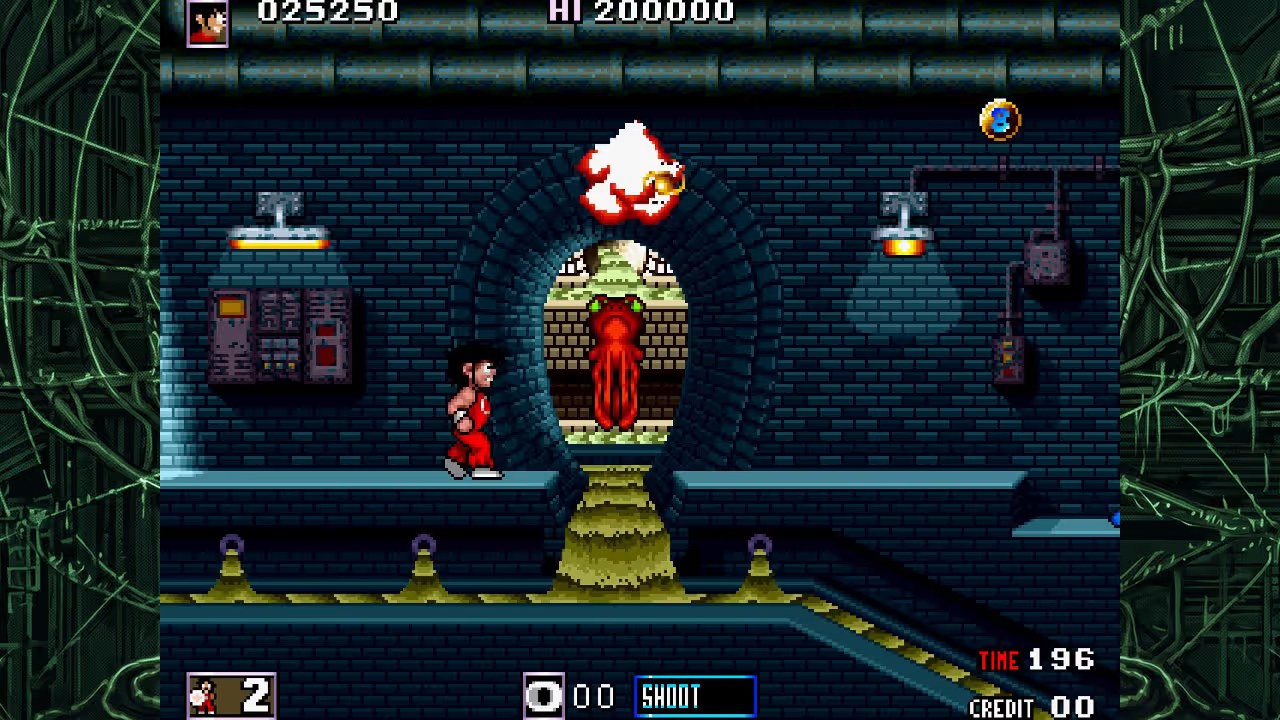
This new collection from QUByte gives players the chance to experience two of Gaelco’s earlier 2D games. Thunder Hoop dates back to 1992, while Thunder Hoop Returns made its arcade debut in 1994. It’s presented in a similar fashion to their Biomechanical Toy re‑release from earlier this year, and it manages to address the main criticism we had — that £8.99 was a lot to pay for a single arcade game conversion. Now, we have two games for the same price, both of which complement each other well and are suitably different.
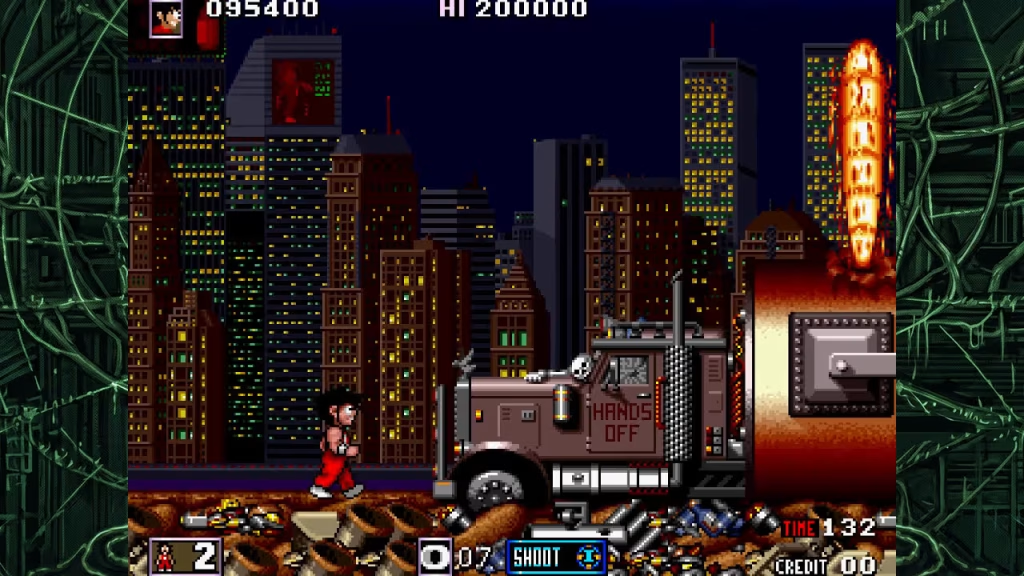
Thunder Hoop sports 16‑bit‑style visuals and sits halfway between a platformer and a run‑’n’-gun, both looking and playing like a lost Amiga 1200 title from around the same time. You play as a hero not dissimilar to Dragon Ball Z’s Goku — likely not a coincidence — and make your way through levels filled with crushers, conveyor belts, and moving platforms while shooting peculiar ghost/alien hybrids. Your main fireball weapon can be upgraded, resulting in a beefy shot that’ll tear through an end‑of‑stage boss’s health bar quickly. It’s possible to fire in multiple directions, even while climbing ladders, and the game makes good use of this, often positioning enemies to require diagonal shots.
It controls well, and things can become quite chaotic when several enemies appear, forcing you to stop and methodically think through a safe path. Swimming stages also feature, helping to break up the action momentarily. It is still a coin‑guzzler at the end of the day, with more than a few sneaky tricks to catch players off‑guard. The most egregious of all are the explosive barrels, which emit projectiles when shot. There’s no getting around them safely, as even standing on top of them causes an explosion. The third boss sees a minor difficulty spike too — a grotesque trash monster that lobs wreckage which shatters into smaller projectiles that can be hard to avoid. The rewind tool proved invaluable here.
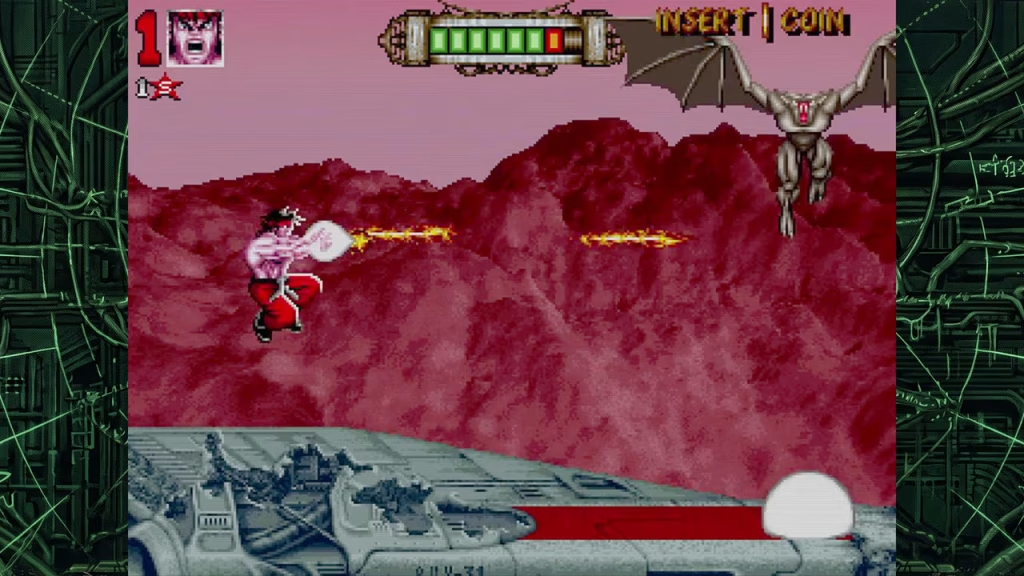
Technology was rapidly improving in the ’90s, and the sequel Thunder Hoop Returns is proof of that. It no longer resembles a console game, exceeding what was possible on the likes of the SNES and Mega Drive at the time. The action is faster, and the screen is generally busier with more enemies present. Visuals are more detailed and impressive, with our hero looking far less cartoon‑like than before. Swimming stages have been ditched in favour of minecart‑style rail riding, complete with a few tricky jumps. Another difference is that bosses take longer to defeat, encouraging you not just to fire constantly but to land a few hits by jumping on their heads. It doesn’t shy away from violence either, with spurts of gore frequent and one boss nothing short of repulsive.
Neither game will take much longer than 30 minutes to complete, especially given the ability to add extra credits. While they last, though, they’re good fun, with the sequel having the edge over its predecessor. You may want to return with a co‑op buddy for an additional playthrough while tackling the hard mode. Outside of this, reasons to return are few unless you have a desire to chase your own high scores. That’s not to say there aren’t a few extras to peruse, including a text‑based history of each game, scans of the operator instructions, and a jukebox. A few random facts for each are also present, which, if anything, help to put the two into better context.
If you’ve never even heard of the Thunder Hoop series before, let alone played either of them, I think you’ll be surprised not just by how well they control but by how goofy they are. They’re unabashedly ’90s — something that could only have come from that era — with the added bonus of being European‑developed software attempting to mimic the typical output of a Japanese studio. We saw a little bit of this on the Amiga, and it’s interesting to see that some of it spilt over into the arcade scene too.
Thunder Hoop Collection is out 8th October on all formats, published by QUByte Interactive. Original games by Gaelco.