

The impact of the N64’s still lauded Zelda: Ocarina of Time continues to be felt, with this 3D side-scrolling platformer brazenly borrowing OoT’s musical instrument playing element. It’s a magical flute that the minuscule elf-like hero Nai carries here, also doubling as a melee weapon. OoT may be fast approaching thirty years old, but we’re pretty sure Link didn’t go around clobbering Moblins with his ocarina. So, there are some not-so-subtle differences.
Featuring a European folklore inspired theme, Manairons takes place in a small quaint village. A maniacal land baron has summoned tiny hard-working creatures for an industrialised revolution, but during the village’s makeover – which sees humble shops turned into mass-scale production lines – a tiny but mighty rebel stands alone. After seeing the impact industrialisation is having, such as the toy shop’s new line of mass-produced dolls being more creepy than cute, they set about restoring the village to its old ways, destroying machinery and overthrowing the baron in the process.

Each stage is set within an industrialised location, varying from a chicken farm with cramped coops to a bakery with flaming ovens. By playing as a thimble-sized hero, we’re up against everyday objects that wouldn’t be deemed dangerous for regular-sized folk, such as drawing pins, loose nails, dripping oil, mousetraps and burst water pipes. This set-up also extends to moving around tin cans to create makeshift platforms, and ferrying batteries to use as power sources. Pointy eared elf-like enemies often block the path ahead too, some of which lob patches of sticky honey, and must be defeated using a basic three hit melee combo or by locking-on and flinging a projectile.
Using a save point – a ‘pouf’ beanbag chair with a gramophone to replay the soundtrack – will restore health, while consumable mushrooms let our hero heal mid-stage. More mushroom slots unlock over time, helping to overcome a stronger enemy presence during the final few stages, going from dealing with 1-2 adversaries at once to 3-4. Upon dying, you’re placed back to the last beanbag chair, with any completed puzzles remaining solved, allowing you to get back to where you died relatively quickly and easily. You may have to re-collect collectables however, with each stage having several buttons and postcards to find.
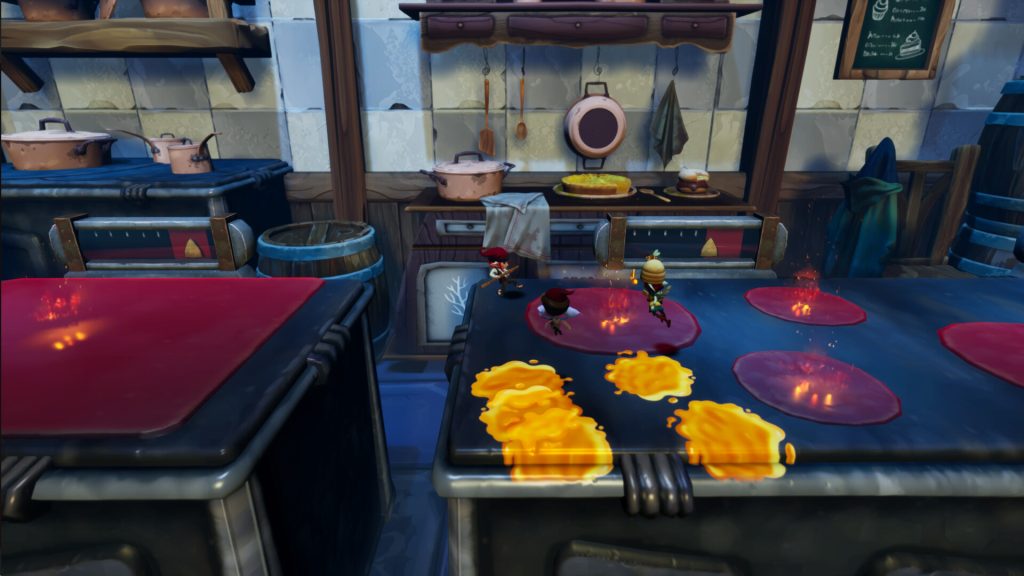
Puzzle solving plays a key part, mostly being a mixture of creating electrical grids by swapping batteries/fuses around, and flicking switches in the correct order to activate platforms. Nothing likely to tax, yet pleasurable enough hurdles to overcome. Melody making ties into puzzle solving too. There are five songs to learn in total, at a rate of around one per stage, all of which must be played by matching button inputs while standing on glowing markers. The first song makes floating music notes appear that can be latched onto, grappling hook style. Another automatically moves large objects to their needed location, saving you from having to grab and pull them into position, while another simply activates nearby electric generators – which could have been achieved with a simple switch flick. Later, barricaded doors can be accessed – which again, could have been achieved with a heavy hitting attack rather than a literal song and dance. Still, the musical theme does lend the experience personality, and each song only requires six button presses – with a reminder on the menu viewable at any time.
While the puzzles don’t really change a great deal throughout, there is still some variety within each stage. The toy store level involves playing mini-games, for instance, which was both a nice surprise and a welcome break from platforming. On that note, a few platforming sections did frustrate due to a combination of occasionally unpredictable, woolly, double jumping and iffy collision detection. Boss battles fare better, mostly pitting you against humans with crude mechanical tools – such as a baker with a robotic whisk for an arm – each blessed with comical and exaggerated expressions when hit. Battles do feel a little formulaic however, as each has a shield that must be depleted before draining their health bar – with just a few seconds given to do so. Most shields can be depleted by simply locking-on and firing projectiles, often while standing way outside their reach. I’d say you’re most likely to die from repeatedly falling from moving platforms rather than at the hands of a boss.
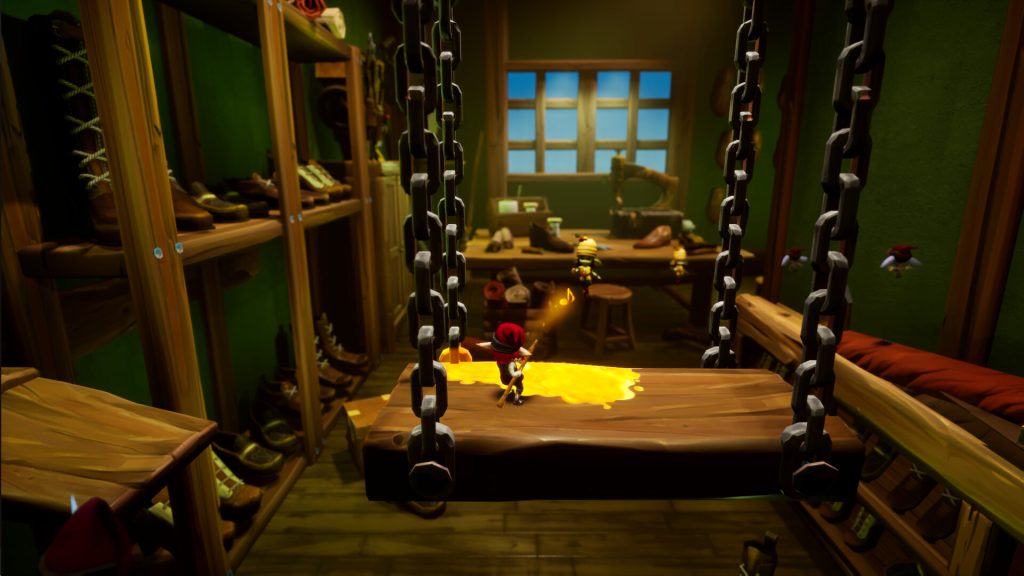
The pacing is surprisingly proficient, presenting a handful of stages with downtime spent in the village hub, with optional missions later unlocking. It rounds things off at around five hours, which is a smart move considering there are only five songs to learn, and puzzles start to become increasingly predictable at around the halfway point.
Manairons has a slight throwback feel, which I don’t think was intentional, recalling Pac-Man World in particular due to its side-scrolling nature. Aesthetically, it’s closer to a contemporary release, resembling last year’s Once Upon A Puppet due to featuring similar rickety wooden locales, loose screws and all. Games with quaint old-fashioned environments and themes of folklore tend to have a magical and whimsical vibe, but try as it might, Manairons falls a little short in that area. Basic character animation, combat that lacks flourish, and more than a few unfair deaths take away the sheen in something that has clearly been made with the best intentions, while under a tight budget. It’s all a bit workmanlike; competently put together, but you may wish someone had taken the time to sand the rougher edges.
3Cat’s Manairons is out now on PS5 and Steam with an Xbox release to follow. Published by JanduSoft.