
Being a detective must be challenging, never knowing whether your next assignment will be a straightforward case of death by misadventure or lead you down a rabbit hole involving linked murders, a family secret and experiments that could potentially change the world – for better or worse. As you can probably guess, Beyond the Evil favours the latter situation.
Set in modern times, Beyond the Evil introduces us to the mild-mannered and rational private investigator Gary Nephew. After receiving an abrupt phone call, he arrives at a rundown Pennsylvania country house to discover a murder scene. It isn’t long before a trail emerges… along with a stalker. See, after Gary partly unravels the mystery, which also entails illegal experimentation, a mysterious masked man starts following in his footsteps. What ensues is a village-hopping quest to bring the case to a close before things take a sinister turn.
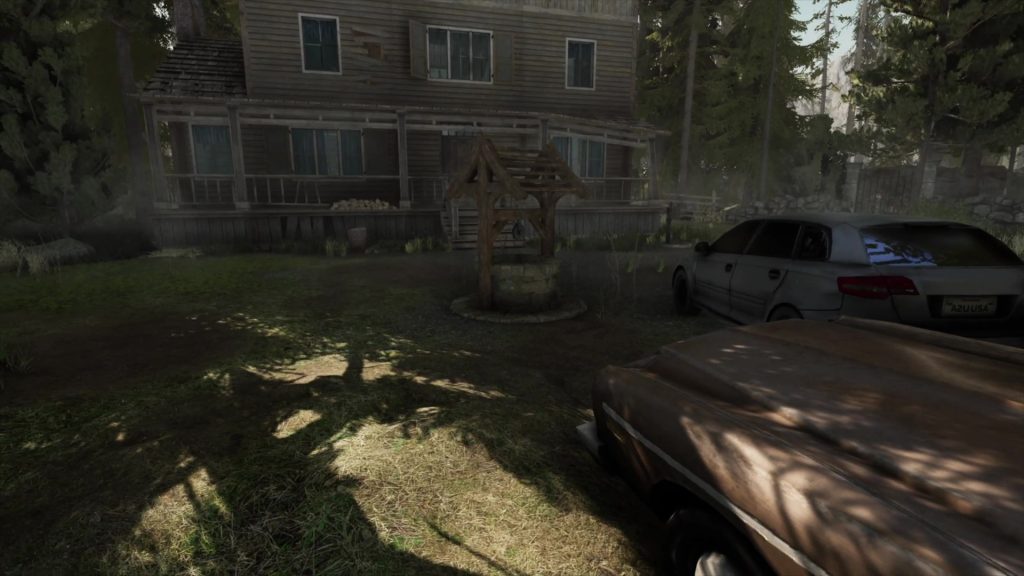
The five chapters last around 30 minutes each, giving a total runtime of 2–3 hours, with each chapter taking place in a new location. You’ll soon notice a recurring theme: most chapters revolve around fully exploring rundown country houses and their accompanying gardens, including sheds and shacks. The only respite comes from a visit to a gas station, resulting in one of the more eventful scenes.
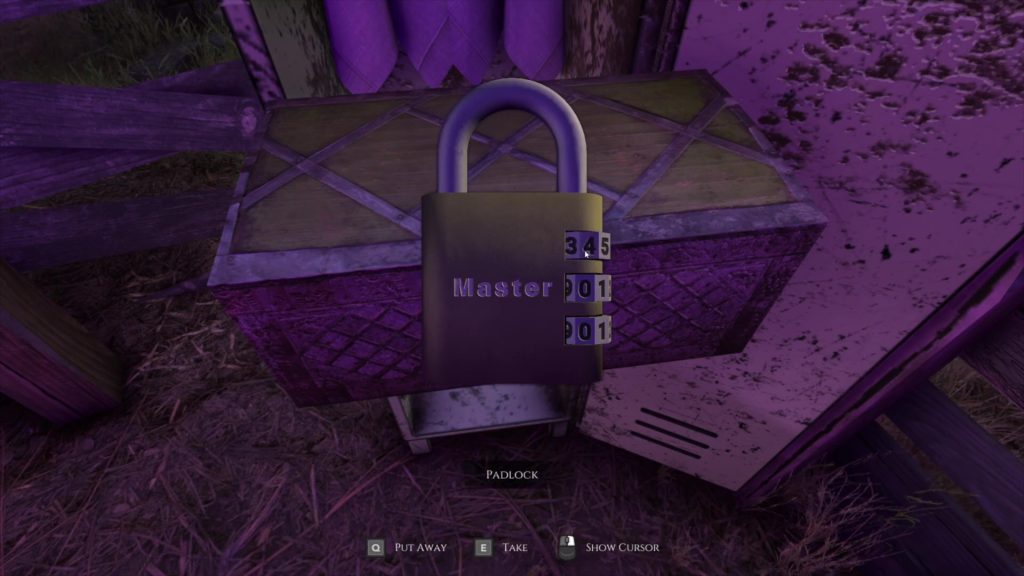
Another recurring theme is progress being halted by a locked door, with the required key inside a padlocked box or electronic safe. The code will be scribbled somewhere nearby, along with a note or similar clue to help you decipher the order. This set-up forms the game’s main puzzle type and is reused several times. Beyond the Evil doesn’t feel particularly well adapted for consoles, with visuals that are either too dark or washed out. This makes entering codes tricky in a few instances, with one padlock shrouded in darkness. There’s no way to adjust the contrast, either; options are pretty limited overall.
It’s viewed from a first-person perspective and is mechanically lean, with no combat system to speak of and an inventory that can hold four items, though it usually contains only one or two. Every item serves a purpose, and a couple of descriptions are rather garbled, such as “the some key to a house.” You’re able to pick up and examine objects, a handful of which can be interacted with. There are also dozens of notes to read: a mixture of deliberately vague puzzle clues and musings left by the family Gary is investigating.
A later puzzle requires you to look up a chimney to locate an item, which I suspect some players will overlook – it certainly threw me for a loop. At another point, Gary is ecstatic to discover a key to a house. “Finally!” he proclaims. What house? One that hasn’t even been mentioned yet, located down a stretch of road inaccessible until this point.
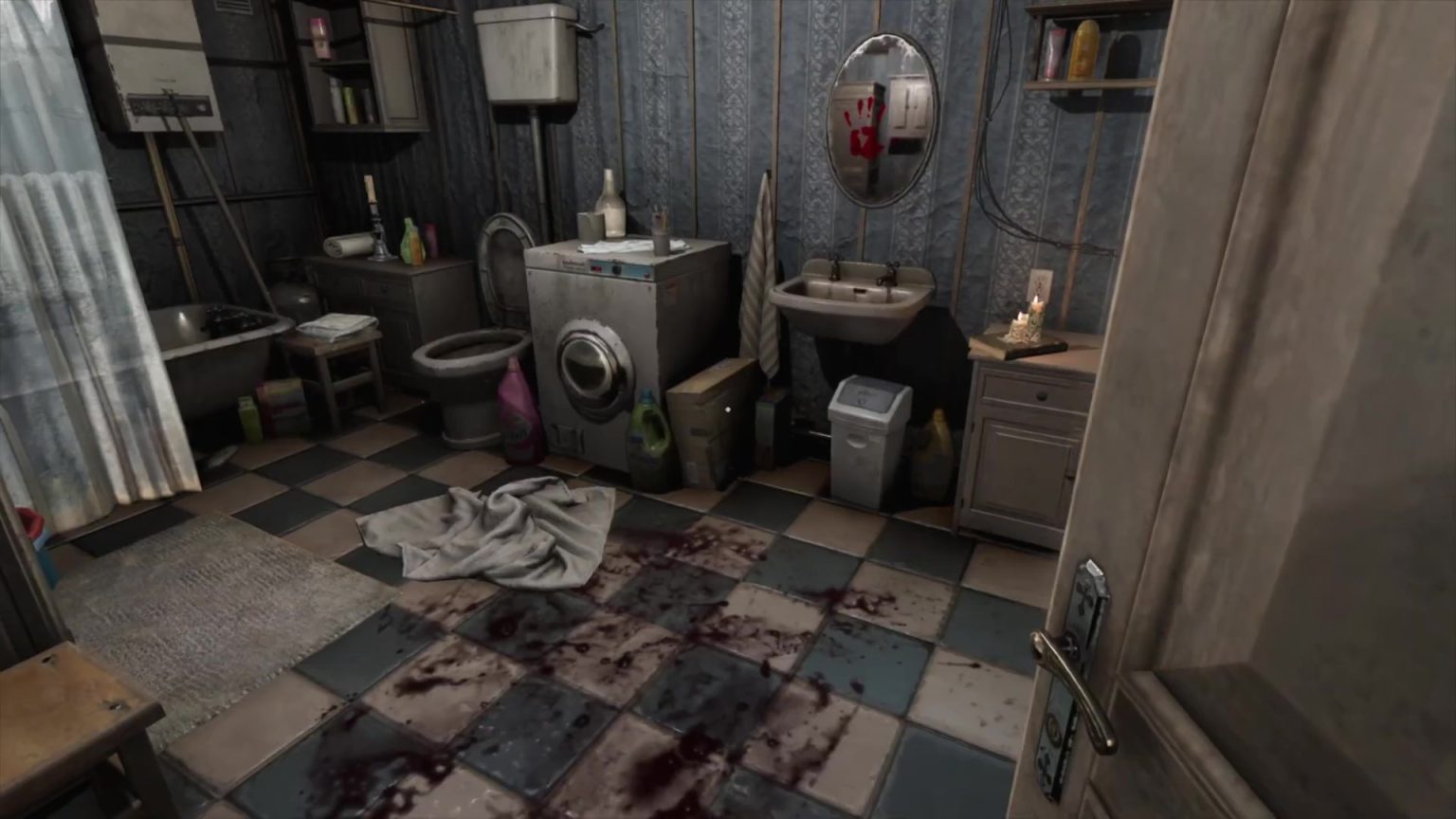
For something billed as a psychological thriller, it’s peculiar that all the psychological moments occur in a single chapter, during a scene in which a village’s layout changes on the fly. It isn’t particularly horror-oriented, either; a couple of dead bodies and the occasional bloody handprint are about all you’re in for here. This is first and foremost a detective sim, despite the artwork suggesting otherwise.
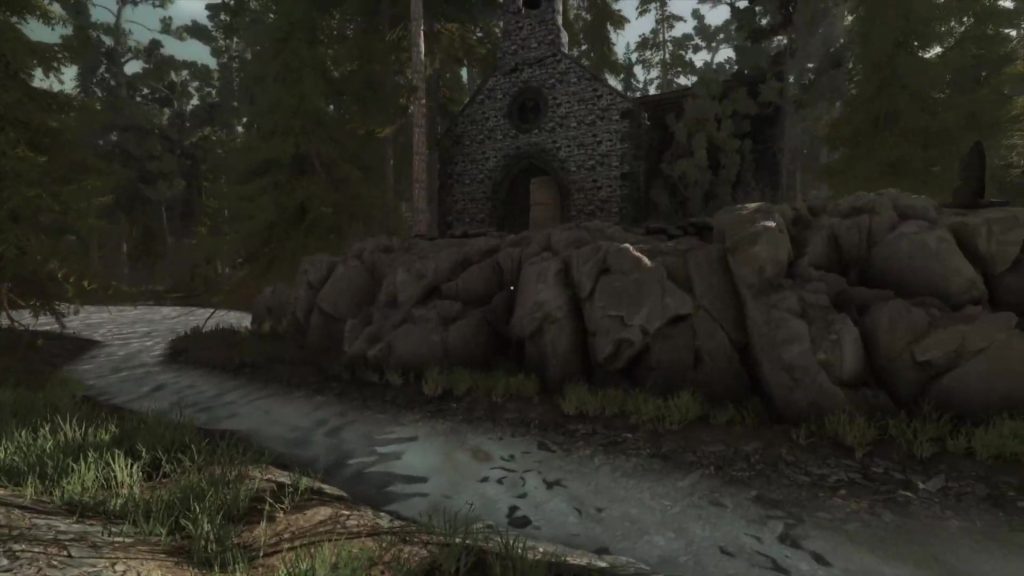
After a couple of hours spent plodding through Beyond the Evil, mostly searching for padlock codes and examining countless random items before putting them back down, the final chapter ups the ante somewhat. The aforementioned masked man patrols a multi-storey mansion, and a choice determines which ending you see, with one requiring a few additional steps to complete. In short, just as the story gets going, it ends.
The end credits reveal the use of various asset packs, which really hammered home Beyond the Evil’s biggest problem. It features sights, sounds and ideas we’ve seen dozens of times before – the opening country mansion, in particular, gave me a sense of déjà vu, recalling recent horror-themed adventures from similar indie publishers. All these games have the same clunky, low-budget feel and similar cut-and-paste puzzles; the only things differentiating them are their storylines and dialogue, neither of which is particularly engaging here. At a push, it’s serviceable for anyone who hasn’t played many indie thrillers. Ideally, though, it needed to do a few things differently and be braver in its execution to stand out in a crowded market.
BlackHawk Games’ Beyond The Evil is out now on all formats. Published by QUByte Interactive.