
It can be difficult to see the value in re-releases of old sports sims. After all, these were the games commonly found in bargain bins throughout most of the ‘90s and noughties. Even now, the vast majority can still be had for £5-£10 if you look in the right places. Helping to justify Jaleco Sports: Faceoffs’ existence is the fact that only one of its four games – tennis sim Racket Attack – was released in Europe, hitting the NES as late as 1993. Further, the NES’ Pro Sport Hockey from the same year is considered rare, selling for hundreds of dollars.
If you haven’t joined the dots yet, this collection also offers more variety than past entries in the Jaleco Sports series, all of which focused on a single franchise. Included here are Hoops (NES, 1988), Pro Sport Hockey (NES, 1993), USA Ice Hockey (SNES, 1994), and Racket Attack (NES, 1988) along with their Japanese counterparts where applicable. If you still haven’t joined those dots, this means we have three sports represented here, rather than one.
It’s presented identically to Jaleco Sports Goal/Bases Loaded, with a rewind tool, CRT filter, screen bezels, manual scans, unlockable box art, and online leaderboards that tally points scored in each game, whether goals or matches won. You can also save anywhere, so you don’t have to jot down passwords as we did back in the day. You’ll also soon find the rewind tool invaluable, giving an instant redo on any shots that fail to go in and allowing you to reposition a goalie better. Yes, that’s cheating, but considering the AI doesn’t hold back, you’ll need all the help you can get – especially in the two hockey sims.
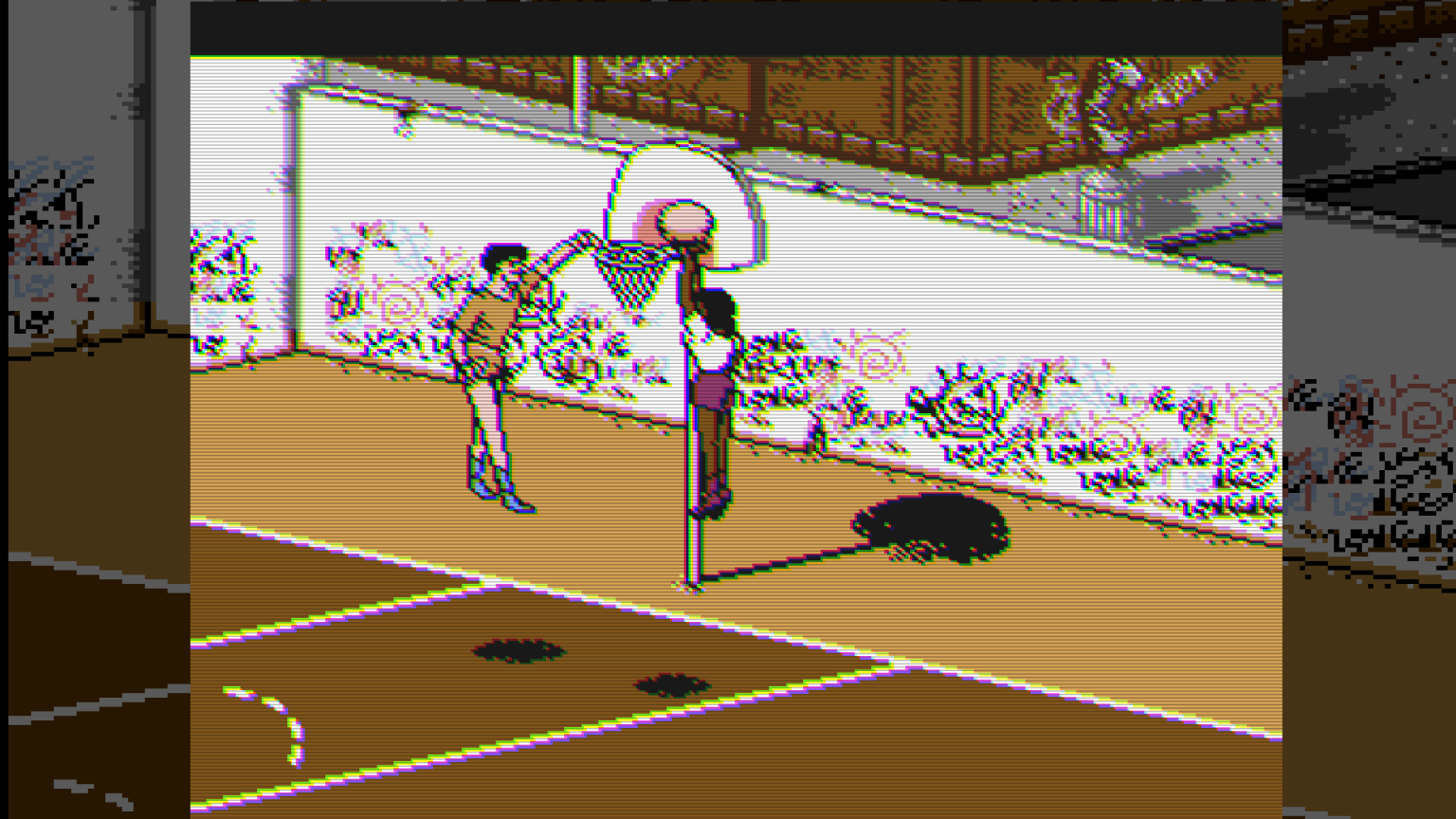
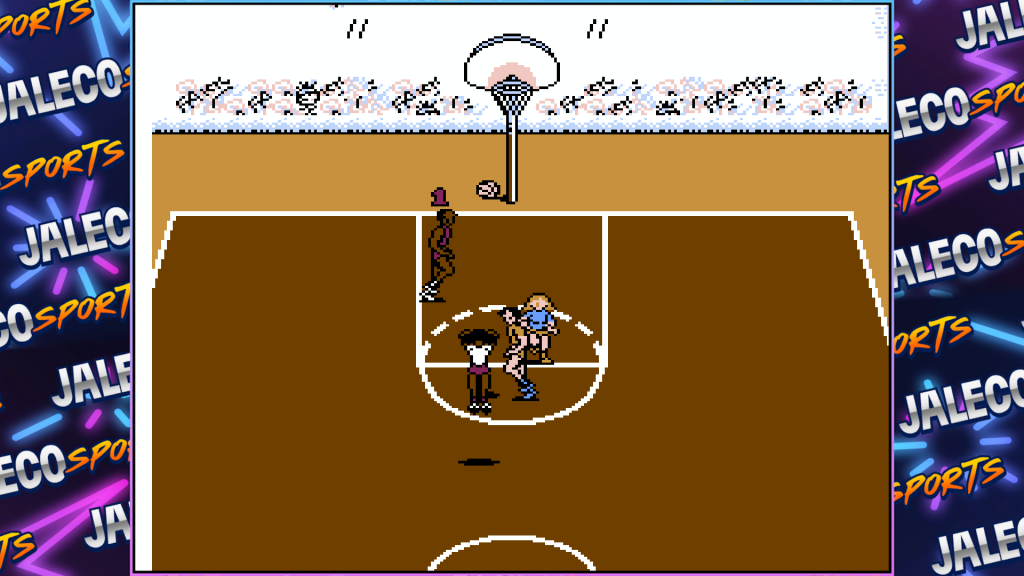
Hoops offers half-court street basketball with one-on-one or two-on-two matches. A ‘Round the World’ mode features too, in which ballers take turns scoring from different positions. Players have quirky names such as Jammer, Zap and Barbie, each excelling in a certain area such as passing or defence. If I were asked to guess the year this was released, I would have assumed either 1990 or 1991 due to its tone and style. It’s quite edgy for 1988 standards. While the controls aren’t difficult to comprehend, partly thanks to the NES only having two face buttons, there isn’t much to it. It uses a crude timing-based system for scoring – stop the moving arrow directly over the net, and you’re golden. Ultimately, it looks better than it plays.
Even though Racket Attack is from a different developer (Tose), the presentation is similar to that in Hoops, with each character being named (say “hello!” to Gibbco, Orchler and Spohn) and having a profile with a cartoony portrait. This too has a screen that scrolls, never giving a full view of the court. Sprites are large yet lack detail, while the handful of speech samples present are surprisingly clear for NES standards. It has a choice of hard, clay, and grass courts, which impact the difficulty. On that note, there is a learning curve. Serving is easy, but lining the racket up with the ball for a return is tricky at first. It’s leaps and bounds over NES black box Tennis but, somewhat predictably, pales in comparison to the tennis sims found on the SNES.
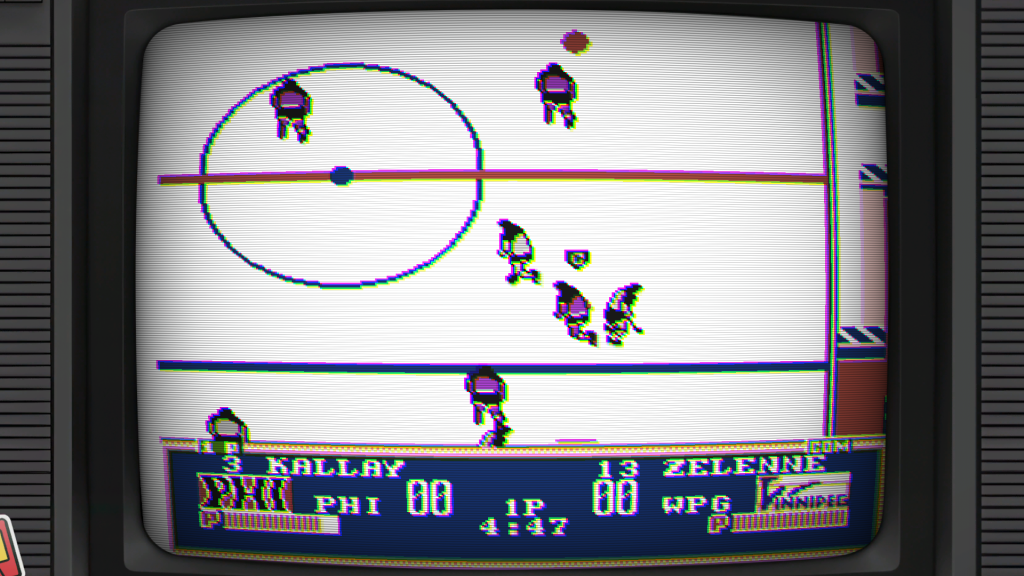
Tose’s Pro Sport Hockey may be the big attraction here, out of grasp for most physical NES collectors. It’s…okay. Obviously, it helps if you’re a fan of the sport, and it is perhaps let down by pushing the NES too hard, with sprite flicker evident. Players also all look the same, which can be confusing when against a team with similar colour kits. The puck is easy to track though, and just like Hoops, the controls are easy to learn. I didn’t even need to consult the manual. It has Super Cup, Exhibition and Training Modes, while the options allow for goalies to be automatic or manual. Penalties and offsides can be turned off too, which is a boon as they regularly interrupt play – it’s very easy to accidentally elbow rivals when trying to steal the puck.
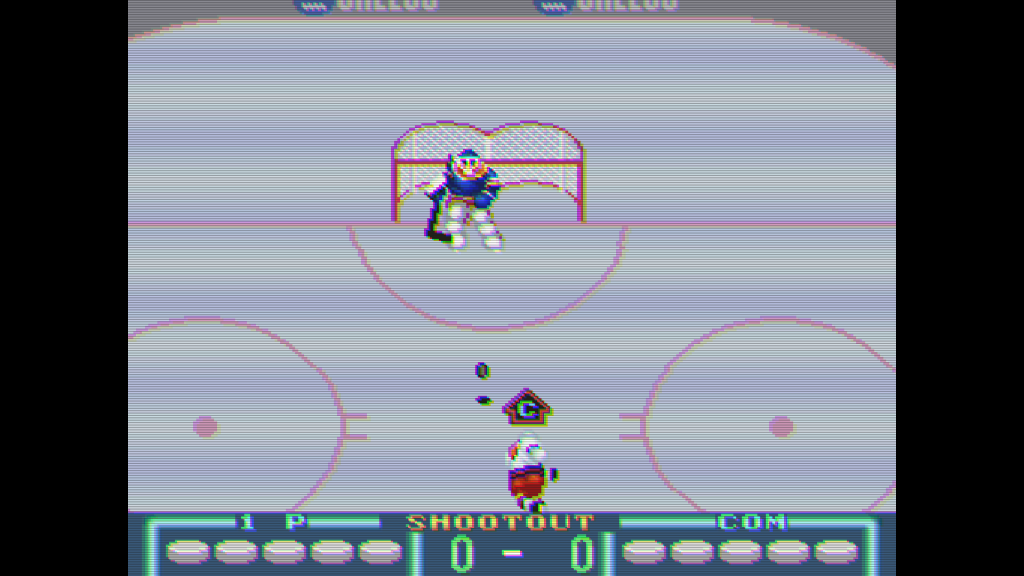
The SNES’ Pro Sport Hockey (known as USA Ice Hockey in Japan) is an enhanced version of its NES counterpart, with similar options, along with visuals more befitting of 16-bit hardware. Practise mode gives the selection of Exhibition and Shootout, while the Season Mode offers up Com Vs Com, a Regular Season or the Super Cup – although it seems that the Super Cup must be unlocked, presumably by winning a regular season first. In the options menu, ‘home luck’ can be selected to give advantages, which I found curiously endearing. I expected this to be the best game here, being the only SNES game present and all, but it’s merely okay. I preferred the NES version more as it does a lot more with the ageing hardware; this is just run-of-the-mill for the SNES, neither looking nor sounding great.
Old they may be, but none of the games here are unplayable due to their age – all four are accessible off the bat. Sure, you’ll probably lose your first few matches, whether it’s ice hockey or tennis, but that just goes to show that there is nuance and tact to their proceedings – you can’t just walk the puck into the goal in either hockey game, button-bash to return the ball in Racket Attack, or barge your way to the net in Hoops. If you can get a friend to play, you’ll get to experience these games at their best. The problem is, their ‘best’ is still pretty middling by NES and SNES sports sims standards. These are four games that are adequate and not much more, even though the trio of NES games showcase a degree of technical mastery. It takes a certain kind of gamer to appreciate that in 2026. If that’s yourself, you fall perfectly within Jaleco Sports: Faceoffs’ target audience.
Rock It’s Jaleco Sports: Faceoffs is out now on PS5 and Switch, with PC to follow. Developed by Sickhead Games.