
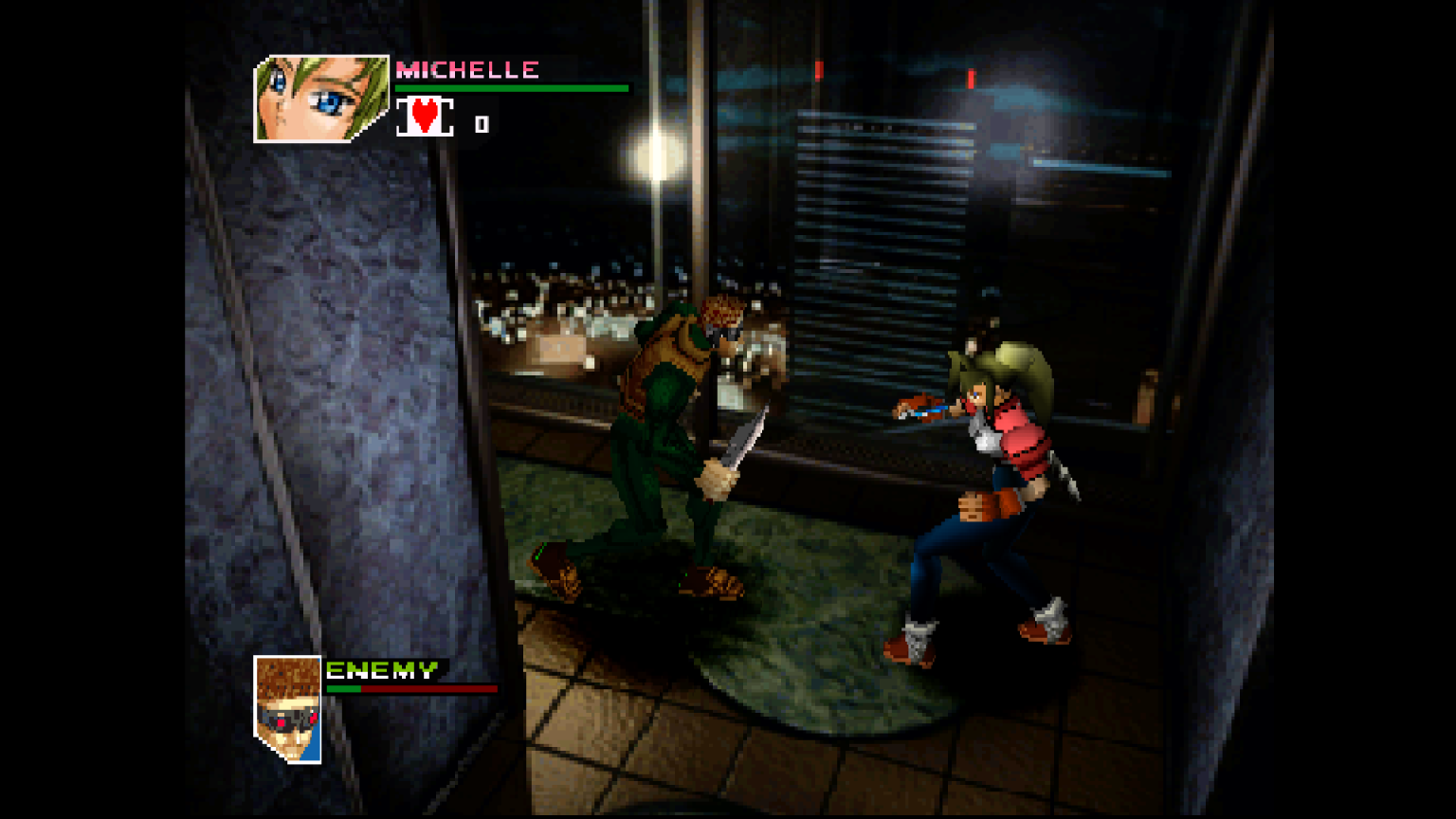
Sunsoft are arguably best known for their range of quality 8-bit licensed games, second only to Konami when it came to delivering the goods with the likes of Batman and Looney Tunes. We can’t ignore how cherished their own IPs, such as Blaster Master and Hebereke, are either. One thing they aren’t remembered quite so fondly for is their PS1 output, which represented a more turbulent and experimental time. Yeh Yeh Tennis and Puma Street Soccer, anyone?
Here to fly the flag for Sunsoft during that era is Hamster, who have plucked 1998’s T.R.A.G. (more commonly known as Hard Edge) from obscurity. This third-person adventure saw Sunsoft chasing trends, bearing similarities to Resident Evil 2 when it comes to presentation, featuring tank controls and 3D characters on 2D backdrops. This is far more action-oriented, however, with each character having a few different moves, the ability to deliver a flurry of kicks and punches, and enemies that drop ammo when defeated. There’s a sprinkling of innovation present, too, as it’s possible to swap between characters freely, rather than at set points, with each following their own path.
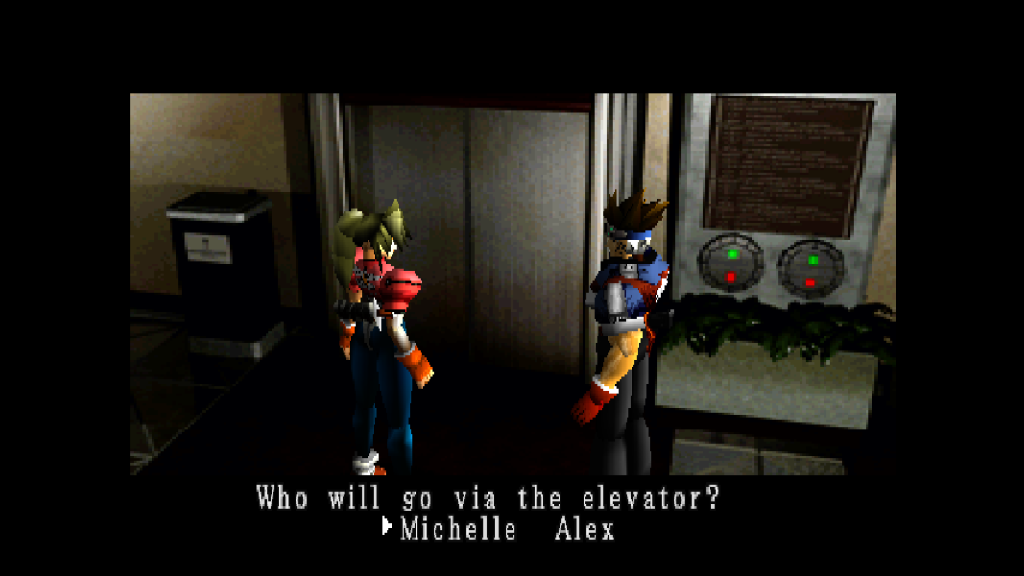
The story takes place in 2046 and sees a terrorist group seize a tower block, taking hostages in the process. You play as part of a specialist division sent in to defuse the situation, only to find various experimental projects let loose. The two starting characters are the spiky-haired Alex, who carries a gun, and the athletic blonde Michelle, who wields a high-frequency knife. They’re soon joined by the pint-sized Rachel, who fights with tonfa batons and can squeeze into small gaps. The final character to tag along is Burns, a detective with great strength. Ammo for Alex’s pistol is commonly found – in fact, they start out with 300 rounds – and you’re more likely to find half-a-dozen health packs at once, rather than one or two. Instead of pausing to access an inventory, slowing the action, a mini on-screen inventory can be cycled through using the shoulder buttons. This does make for a slightly convoluted control scheme, mind.
The map proves to be invaluable, as it’s very easy to overlook room exits and entrances. Like Resident Evil before it, T.R.A.G. uses pre-rendered backdrops. Rooms and corridors are often sizeable, and as the view constantly switches, it can be disorientating. Largely due to the futuristic/sci-fi setting, some doors fail to resemble doors at all and lack a uniform style. Like a lot of games from this era, if you overlook a puzzle piece, key, switch, or anything else important, then you’re going to need to backtrack until stumbling on whatever you’re missing. This issue is amplified by the character switching, as it isn’t always clear if you’ve progressed as far as possible with one character and need to switch to another. It can be quite demanding, forcing you to stop and think about which areas are yet to be explored.
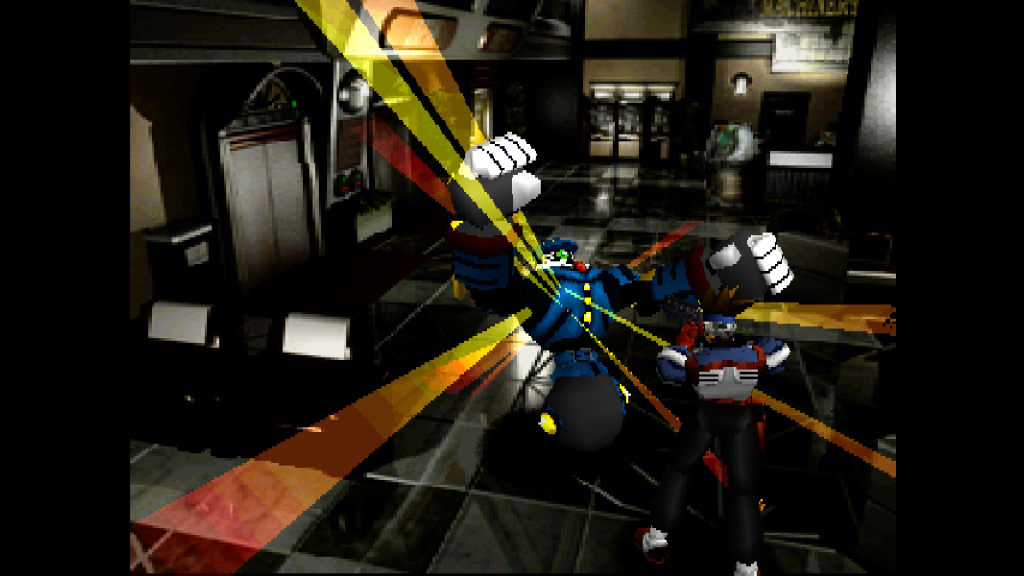
There’s no main quest log, and neither is it possible to highlight every interactable object in a room; two features that weren’t commonplace in 1998. It’s very much a product of its time, which was to be expected going in. Helping to lessen some of these woes is the new save system, allowing you to save anywhere rather than at terminals. This can help prevent backtracking, and is also useful if a combat scene or boss fight doesn’t go to plan. On that note, the combat system isn’t entirely dependable. You’re able to block, dodge out of harm’s way, and perform a few different moves. Having to perform these actions using tank controls, manage a finicky lock-on system, and work within the confines of the fixed cameras can be messy. Thankfully, this isn’t like Resident Evil, where a few hits will see your character fatally wounded, as our skilled heroes can take a pasting – helped by gradually extending health bars.
There is evidence throughout of this being one of the later PS1 games. The character models are large and feature a spot of detail, CGI cut-scenes are common, and the character-switching mechanic – which sees our heroes open paths for one another – is reasonably advanced for the time. Special mention also goes to the meaty explosions. Had this gained an enhanced Dreamcast release – similar to Dino Crisis, which had improved textures – it and may be more fondly remembered. Today, it’s a little awkward to play, but manageable with patience. PS1 diehards who’ve never experienced T.R.A.G.’s odd mix of anime tropes and futuristic themes may want to give it a try, especially in light of the physical version being prohibitively expensive. It’s cheesy, but unquestionably good-natured.
Console Archives T.R.A.G.: Tactical Rescue Assault Group – Mission of Mercy is out now on PS5 and Switch 2. Published by Hamster. Original game by Sunsoft. The Japanese version, Hard Edge, is also included.