
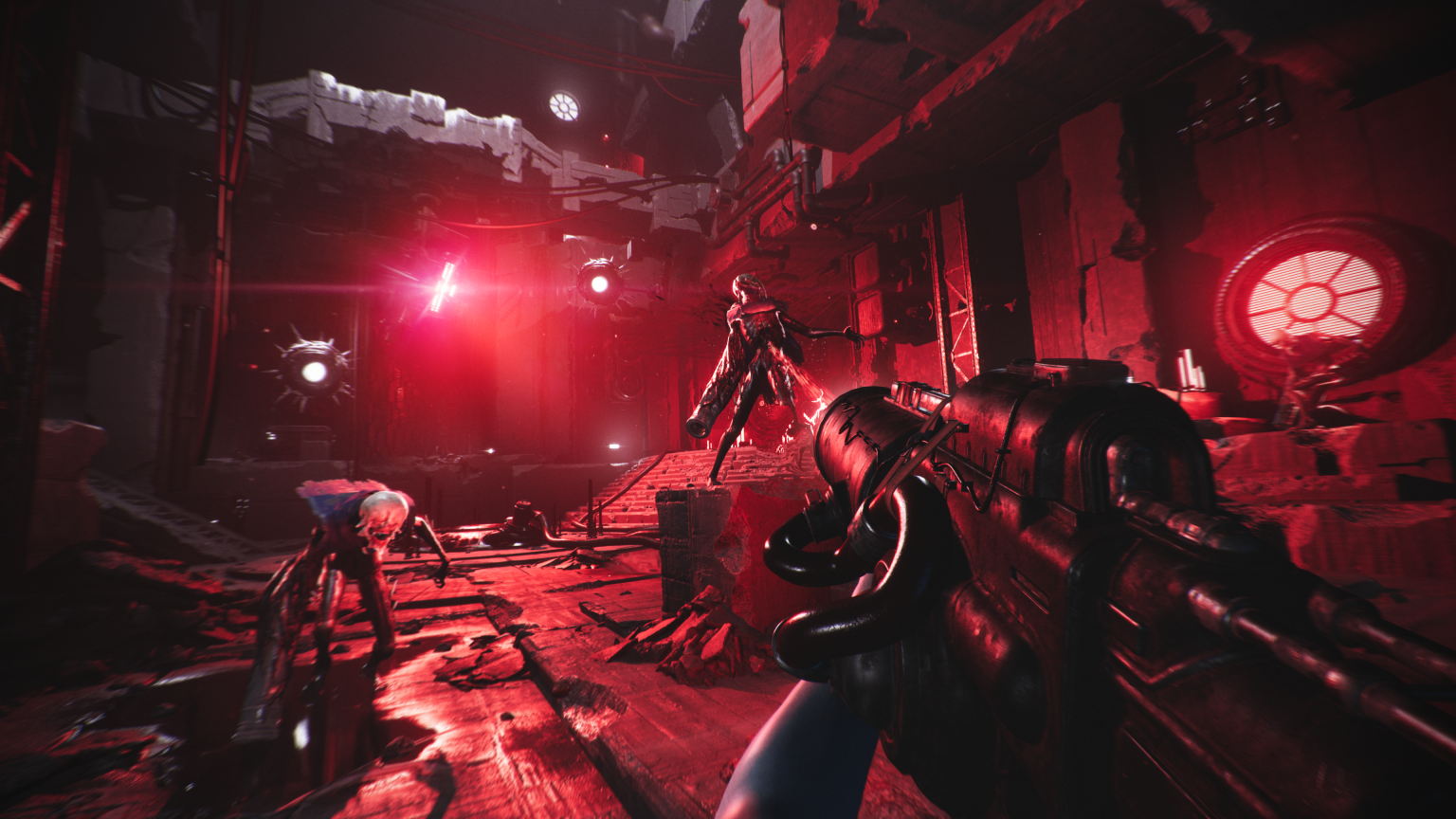
Welcome to the abyss. This moonbase megastructure was abandoned after being consumed by a force known as The Scourge. Now a prison, those incarcerated can knock a few years off their stay by taking on missions considered too dangerous for anyone else. This proposition tempts our heroine, Fawkes, a jailbird with a hefty sentence. It soon transpires that Fawkes is rather adept at staying alive, resulting in her going deeper into the depths than those before her. If she can reach the heart of the abyss and discover its secrets, there’s a chance she can walk free.
Luna Abyss takes inspiration from Housemarque’s Returnal and modern-day DOOM, not just within its visual style, but also its gunplay. We’re cast into a ruined world lit by emergency neon lighting, formed of the floating remains of various structures, remnants of a lost civilisation – including a barely functioning railway – and stretches of a crumbling crimson-hued forest. Enemies are fusions of flesh and machine, spewing bullets in hypnotic waves that must be dodged and later shielded against. Peculiar docile creatures can be found within the abyss too, most of which will gladly pass on valuable information or share a story. Again, these are formed from organic and mechanical matter, making for an experience with a sideline of surrealness.
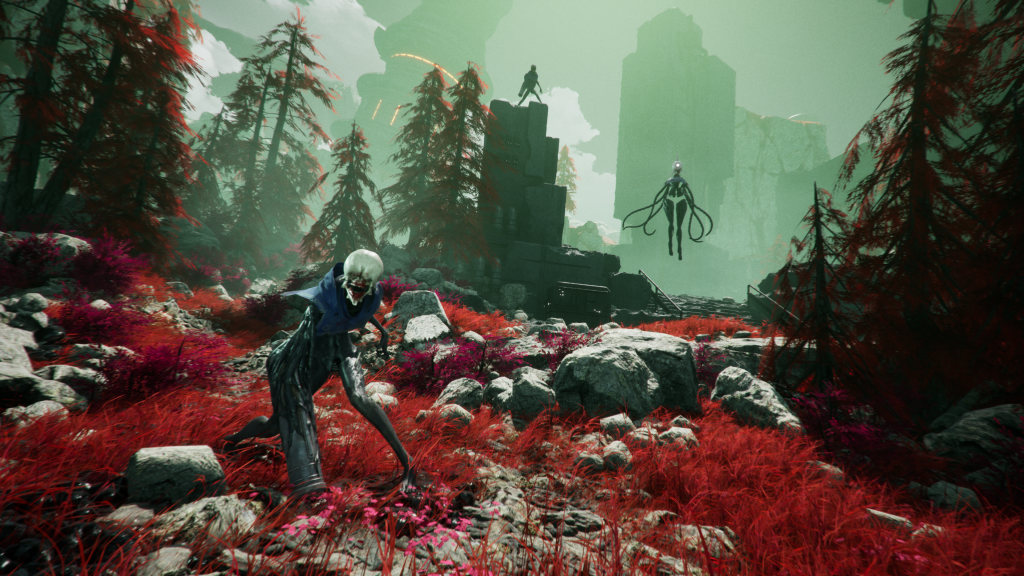
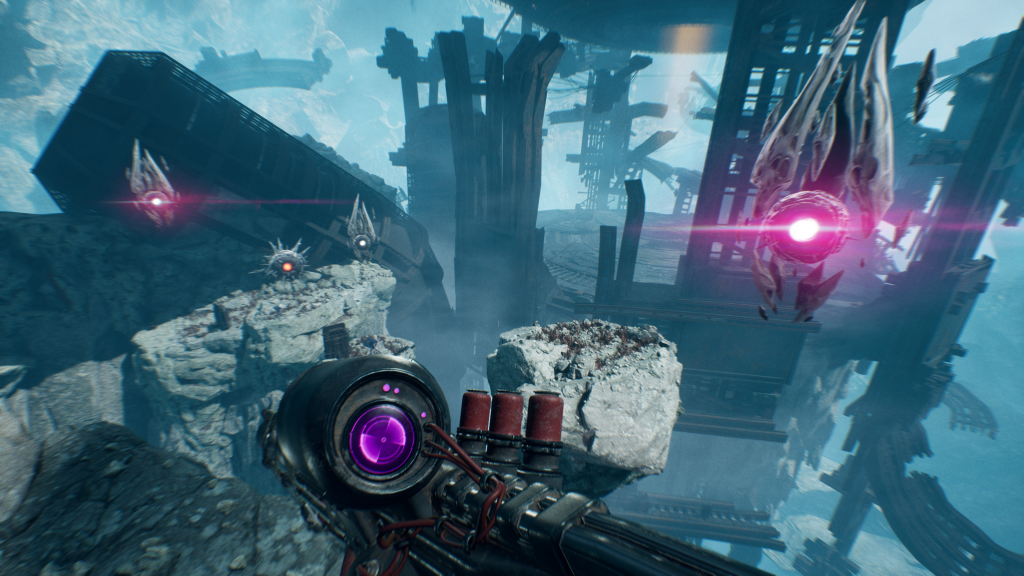
Fawkes must traverse the abyss’s vast voids using a combination of double jumps and dashes, later incorporating grappling and the ability to possess otherworldly creatures. When her feet are on the ground, this also extends to carefully navigating unstable pipework and sliding through the remains of drainage systems. In most cases, it’s clear where to head next due to the waypoint system. Falling into the void drains a sliver of health, which can only be restored at a checkpoint or during combat by performing a finisher. If traversal (or combat, for that matter) becomes too tricky, an accessibility feature can be temporarily activated, allowing for infinite health and sections to be skipped via a flyby.
Combat is kept interesting with a drip-feed of new weapons, albeit a gradual one. Four weapons feature in total, with the last only introduced within the penultimate chapter. These are upgradable, although it’s up to you to seek upgrade chests, as these are extras rather than necessities. Weapons are appropriately meaty, all serving a purpose against certain enemies, forcing you to switch several times during enemy encounters. The assault rifle is a good all-rounder, the punchy shotgun can break plasma shields, while only the sniper rifle can penetrate the armour of airborne mechanical enemies. Ammo is infinite; instead, each weapon has a cooldown, limiting use. In addition to restoring health by ‘finishing’ weakened enemies, they can also be obliterated, harming those around them. All the while, you’ll need to make use of the grapple and other abilities to avoid bullet formations and ground waves.
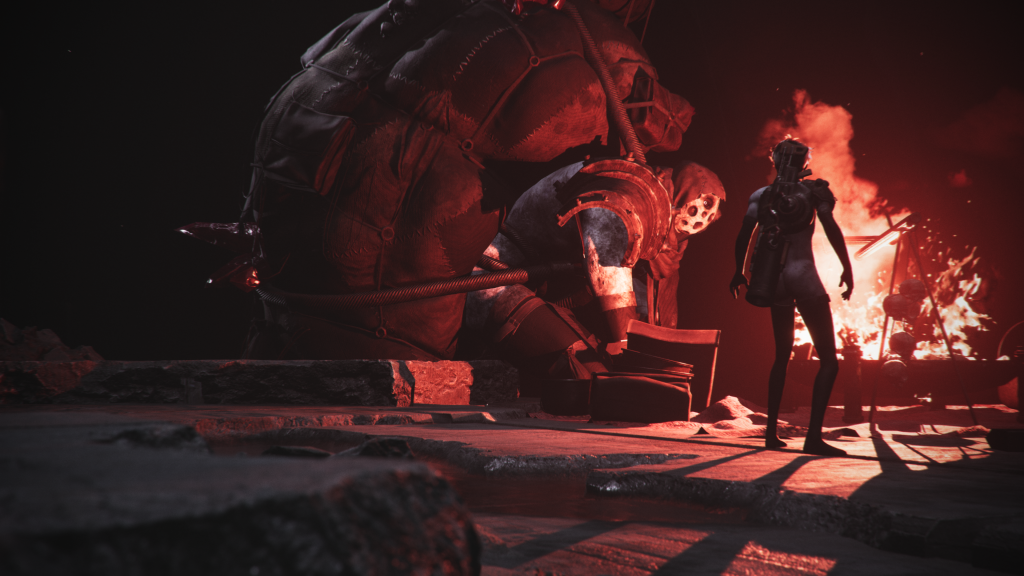
While combat isn’t as visceral as DOOM (there’s no melee attack, oddly), it is still quite crunchy, with shield breaks accompanied by a split-second pause, and music that ramps up when enemies appear in large numbers. If you’re thinking that the weapon selection sounds slim, you’re not wrong – it is strange to play a shooter where only two weapons are available for the first 2-3 hours. However, each serves a purpose, and combat is only half the experience; Luna Abyss is evenly split across traversal and enemy encounters. There is scope to get creative, too, shooting while sliding and when swinging from tethers. Boss battles see a change of pace, forcing you to rely on their minions to restore health while learning attack patterns and seeking safe zones. The last couple of boss fights are appropriately tough, backed by a sinister vibe as you approach their domain.
In addition to the well-hidden weapon upgrades, there are other incentives to explore, such as 100 codex entries – linked to an achievement humorously titled ‘I Am The Lore’ – and hidden drift crystals that increase health. Talking to key NPCs at every chance – some of which can be found in the ruined city hub – will conclude their optional quests too, linked to their backstories.
There’s a lot to appreciate about Luna Abyss. The destroyed world with its freakish NPCs is peculiarly inviting, using bright outdoor locations sparingly to create an impact. Seeing Fawke’s sentence gradually fall adds to the sense of progression too, even if it is entirely scripted. Combat is demanding, as is traversal – which sees large distances covered gracefully and skilfully. Pacing, too, is excellent – had this lasted longer than the 8 hours it takes, tedium would have settled. On top of all this, the experience can be tailored to suit, adjusted to simply enjoy the story and mindlessly blast waves of enemies, or made so tough that every shred of health counts. It also does a good job of tracking progress, backed by a level select option to revisit past chapters and mop up collectables.
This should satisfy those who didn’t care for DOOM: The Dark Ages’ new direction, as well as Xbox fans looking for something similar to the PS5’s Returnal. It isn’t quite as confident within its combat as it is with either its world-building or traversal, but nevertheless, this is a polished shooter with a lot going for it. With the likes of Immortals of Aveum and the Painkiller reboot flopping, experiences such as this are becoming increasingly infrequent, making it all the more enticing. A sequel that expands on the sturdy foundations found here is a heady proposition, so let’s hope Fawkes doesn’t stay on the straight and narrow for long.
Bonsai Collective Limited’s Luna Abyss is out now on PS5, Xbox Series and PC. Published by Kwalee.