
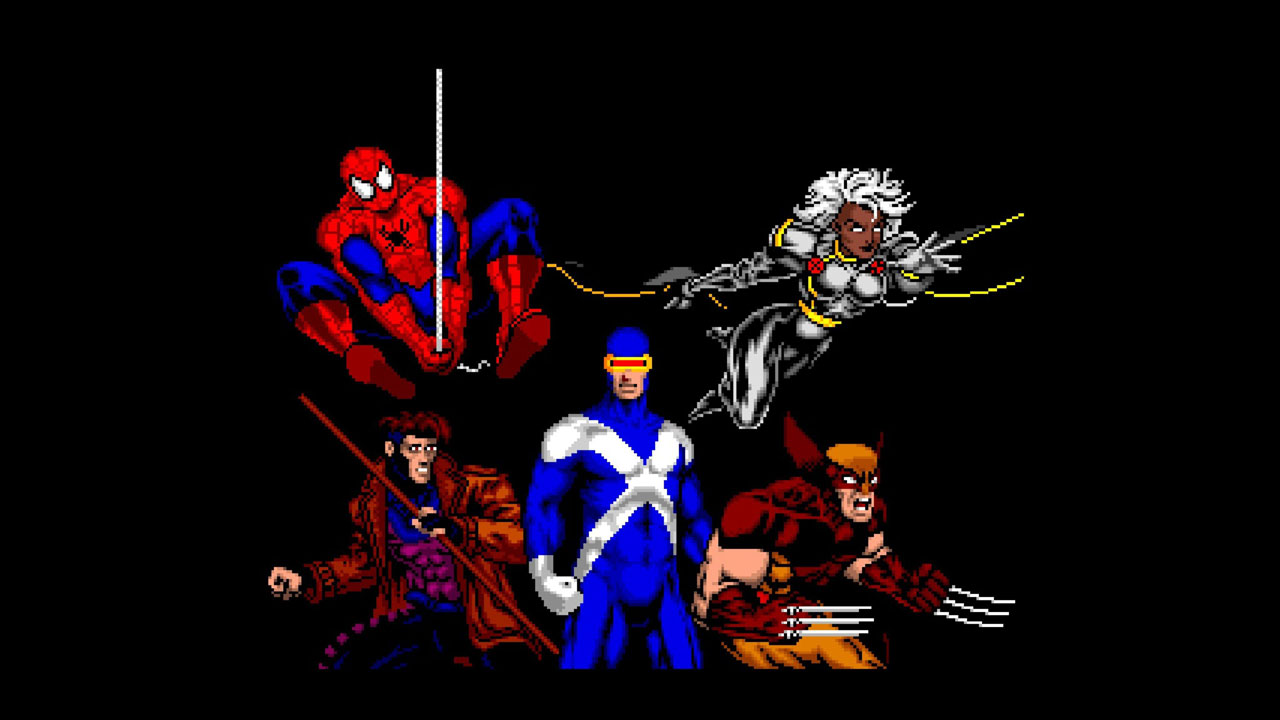
Do you know why so many Marvel video games were released during the ‘90s? The answer is…video games. Rather than buying comic books, American youths started spending their precious quarters playing the likes of Mortal Kombat and Street Fighter II in the arcade, while buying mags such as EGM, GamePro and Nintendo Power to keep up with gaming trends. To keep afloat, Marvel began licensing their superheroes to every publisher and developer who came knocking, even resulting in multi-game deals. While some hits were produced in this era, mostly from Japanese studios, there were a lot of quick-turnaround projects too. This new collection from Limited Run shows just how wildly the quality varied.
What we have here is a generous selection of arcade, 16-bit and 8-bit games released in the early ‘90s. They have the usual assortment of screen size options, filters, save states, and a rewind tool. Just one save state, mind, which isn’t ideal. Another downside is that manuals can’t be viewed from the pause menu, but rather from the main menu – forcing you to exit a game just to look something up. More positively, most games have infinite lives and infinite health cheats, making it possible to see their endings in an hour or so. Helping this collection feel more than just a bunch of ROMs and a flashy front end are the extras, which include box art scans, design documents, adverts and more.
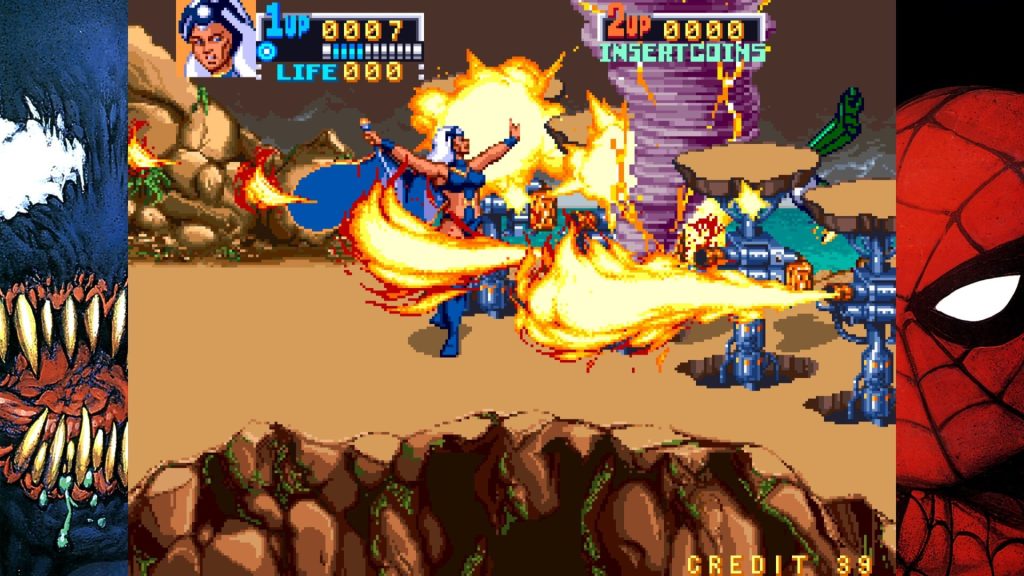
The headliner here is undeniably Konami’s 1992 X-Men arcade game, last seen on PSN/XBLA in 2010 before being delisted. It has online play, a choice of US/Japanese ROMs, and a level select. The six player mode – which used two monitors in the arcade – can be played too, adjusting the screen size accordingly to make the already detailed visuals even sharper. It boasts large cartoon-like characters and plenty of enemies to punch, along with rather nonsensical speech that’s unintentionally amusing. I wouldn’t say this is the best Konami side-scroller however, lacking the imagination and interactivity of The Simpsons and the presentational flourishes found in Asterix. Stylish presentation makes up for most of its shortcomings. As long as you aren’t expecting a huge leap over the classic Teenage Mutant Ninja Turtles arcade game, it shouldn’t disappoint.
Another arcade game present is Captain America and The Avengers, originally by Data East. This one is offline only. The muddier looking Mega Drive version and the completely different NES version – a non-linear action platformer starring Captain America and Hawkeye – are present though. Visually, this arcade game and its Mega Drive counterpart aren’t too impressive, looking closer to 8-bit rather than 16-bit due to the diminutive sprites. Thankfully it plays better than it looks, mixing side-scrolling beat’em up action with shoot’em up sections. It has a respectable amount of boss battles and cameos too. It’s a fun enough time, and there’s also something amusing about Iron Man – who’s armed with all manner of arsenal – picking up rocks and tin cans to throw at enemies. Be sure to try the NES version, as that’s one of the more obscure and interesting games here, featuring a map screen and the need to rescue characters if they become captured. It reminded me of Konami’s original NES TMNT tie-in.
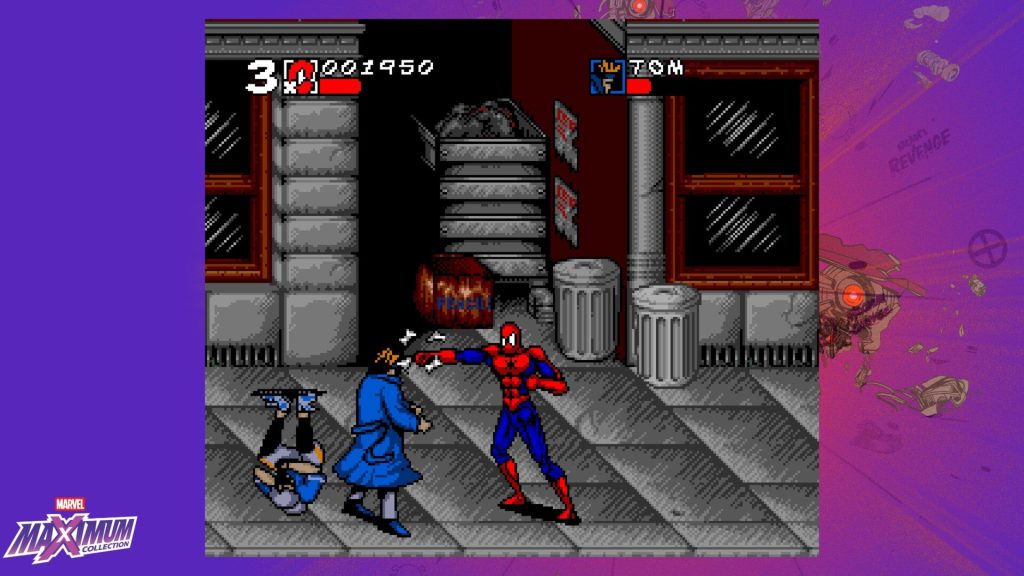
Then there’s Maximum Carnage and Separation Anxiety – two Mega Drive/SNES scrolling brawlers developed by the Manchester based Software Creations, released in 1994 and 1995 respectively. These follow the Spider-Man comic book arc that saw Todd McFarlane’s Venom and Carnage enter the fray, sparking revived interest in the comics. In both, Spider-Man and Venom are playable, allowing for two-player action. Maximum Carnage is the better of the two due to its comic-book panel cut-scenes and summonable side-characters, but even so, it’s still mediocre. Backdrops are recycled, both the enemy and special move roster are slim, and the same bunch of bosses are wheeled out every few stages. Separation Anxiety has improved visuals and music (at least on the SNES) but suffers greatly from repetition while adding nothing new. It’s tarnished by a horrible cash-grab feel, even switching out the original’s nicely drawn cut-scenes for dull static images.
Spider-Man and the X-Men in Arcade’s Revenge was also by Software Creations, launching in 1992 – making it a relatively early release for the SNES. Here, we get the two 16-bit versions, plus the Game Boy and Game Gear adaptations, all of which use the same blueprint. For those wondering, Arcade is the name of a Marvel villain; this isn’t connected to an arcade game in anyway. I’m sure that helped sell a few extra copies. On paper, Arcade’s Revenge sounds great. It’s an action platformer of the ‘seek and destroy’ variety, with levels tailored to each character to provide plenty of variety. Critics lavished praise upon it back in 1992, but today it feels a bit confusing and clunky. Even Spider-Man’s web swinging doesn’t feel intuitive, requiring pixel art precision. As one of the more involving games present, it’s one to sit down and master. Just be warned that it lacks the accessibility and instant gratification of the two arcade games. There’s no infinite health cheat for this either, so you’ll need to abuse the rewind tool to progress.
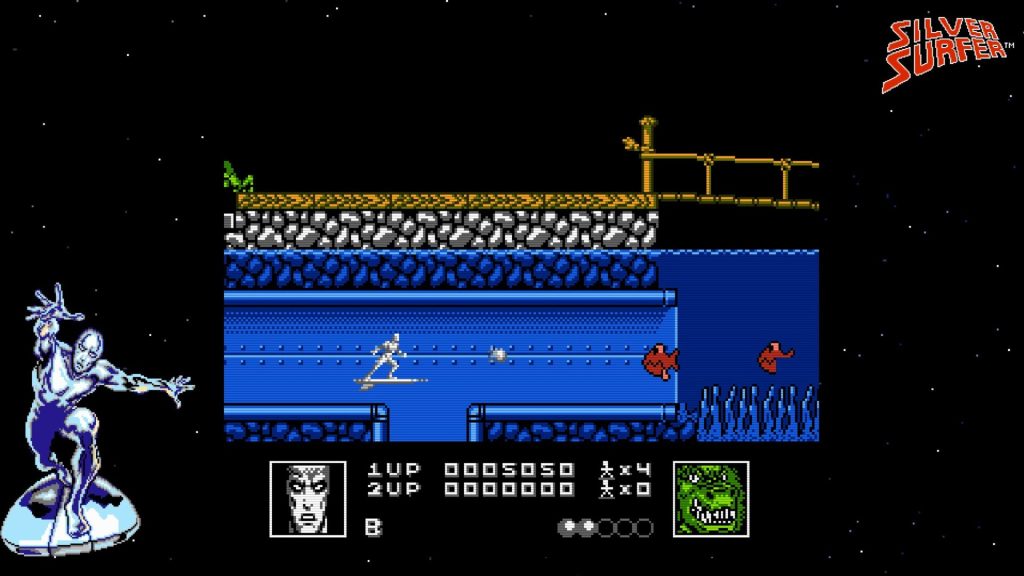
This leaves us with the NES’ The Silver Surfer, again by Software Creations and JLN. Adding some much needed variety to this collection, this is a shoot’em up. You’re able to choose the order of stages, each taking place on a different planet governed by a boss, while the action alternates between horizontal and vertical views. The graphics are tidy (although the assortment of enemies is very odd, including ghosts and jack-o-lanterns), and the music is some of the best on the NES. What’s not to like? Well, it’s nothing short of brutal. Each screen is full of enemies, projectiles, hazards and narrow paths to steer the surfer along. It has even been said that it’s close to impossible to complete without cheats. Thankfully, it’s possible to activate infinite health and blitz through it in around 30 minutes. It’s worth a playthrough for the music alone.
At one point when playing this collection, I was pretty smitten, especially by the two arcade games and their console conversions. Playing through Maximum Carnage and The Silver Surfer with cheats enabled was reasonably entertaining too. The rest of the collection left a bit of a sour taste, Separation Anxiety especially. If you owned Spider-Man and the X-Men in Arcade’s Revenge growing up, nostalgia may put it in a more positive light. It’s neat that a few different genres and multiple versions of each game are present – revealing the NES’ Captain America as something of a lost gem – but the reality is that there are more bad games here than good. Just like the recent Ren & Stimpy Collection, Limited Run should have approached SEGA to get at least a couple of their in-house developed games included. This isn’t a carefully curated package; it’s simply a case of a publisher grabbing whatever rights they could.
The modest £19.99 price tag suggests Limited Run knew a lot of games here had dubious reputations. Conversely, that’s a fair price to play X-Men again with online buddies before trying out the rest to see what sticks, and at the very least, you’ll get half an hour of playtime out of each before tedium or frustration settles. Ultimately, this collection is like buying a gig ticket to see an awesome headliner and a bunch of weaker supporting artists. You might be able to get into their groove; it all depends on the company you bring along.
Limited Run Games’ Marvel MaXimum Collection is out now on PS5, Xbox Series, Switch and PC. Original games by Konami, Data East, and Software Creations.