
If it wasn’t for the fact that this is a sequel, I could believe that the Marsupilami licence was added to this platformer mid-development. Like its predecessor, it showcases platform mastery usually associated with Nintendo and its carefully chosen partner studios. That’s to say, there was clearly a desire here to make a polished platformer, regardless of the licence Microids entrusted developer Ocellus with. It just so happened that the Marsupilami franchise was pretty malleable, seemingly coming without a bunch of stipulations. Show the cast in a heroic light and make something decent, and everyone is happy, be it the licence holders, the publisher, or the players. It’s a win-win situation.
That licence, then. Marsupilami has been around since the 1950s, with the long-tailed yellow fellow sharing comic book pages with Spirou. In the early ‘90s, Disney took a shine, creating a cartoon series for its then-current block of TV shows, which resulted in SNES and Mega Drive adaptations. It’s fair to say that this is where most children in the West — the US, specifically — learned of the character. Since then, various movies and shows have come and gone, mostly airing in Central Europe. This game, like its predecessor, is based on a 2019 CGI series focused on a trio of young Marsupilamis: Hope, Twister, and Punch. Thematically, it’s a little different, mixing music with South American culture. A Mexican twist, in other words, pitting us against a trio of music-playing spectral skeletons and a Queen Mummy. Their infectious music has put Palombia in a trance that only the three heroes can break.
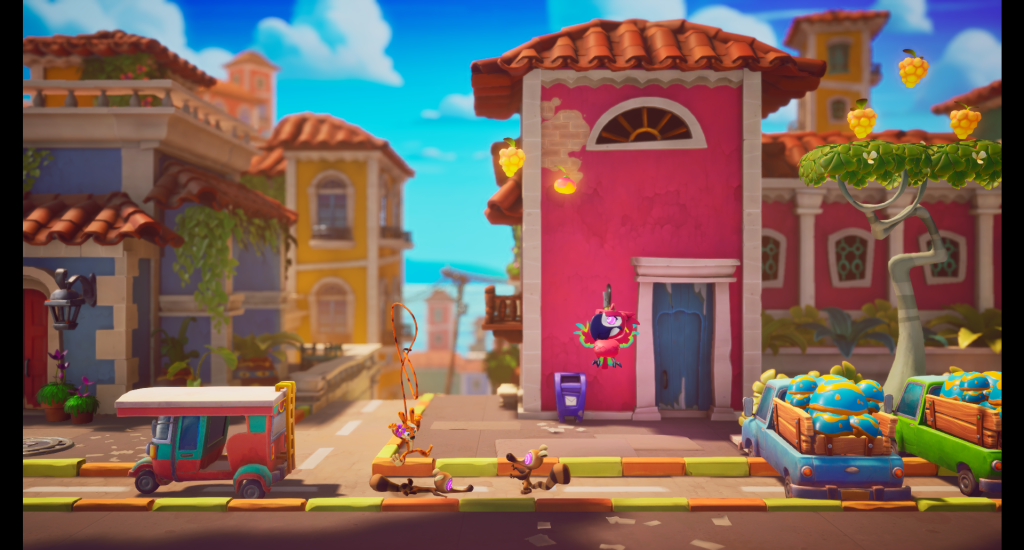
This is a fast-paced 2.5D platformer based around character switching and collecting both fruit and colossal music notes, with the latter usually hidden or requiring a brief challenge to gain. Both these collectables serve a purpose, with each world having one gated-off stage requiring a hefty amount of fruit to unlock, and a minimum quota of 40 music notes needed to take on a boss. To take on the Queen Mummy, you’ll need 60 notes from each world, resulting in replaying each stage. In fact, you’re going to be playing each several times over, as the main new gimmick here is Salsa Mode: a combo-based race through a stage in which momentum must be kept while collecting as much fruit as possible. Music here is more upbeat, lending a sense of urgency. The stages, and even their fruit placements, remain unchanged from their standard counterparts, though, with a couple of the slower-paced areas not lending themselves well to this more speed-focused approach.
On top of this, there are single screen silhouette-styled dojos and challenge rooms to complete, with a hefty number of music notes to gain as rewards. Dojos have a time limit and grant just one life to either collect a bunch of notes or break pots, found both in-stage and accessible from a world map, while challenges require a large outlay of fruit to partake in and are far more varied. Flow challenges, meanwhile, involve clearing a stage without taking a hit. Collecting every note will take a very long time, far exceeding the five hours it takes to see the ending with the bare minimum. The game does a very good job of tracking your progress, indicating stages where there’s still a lot of unseen stuff.
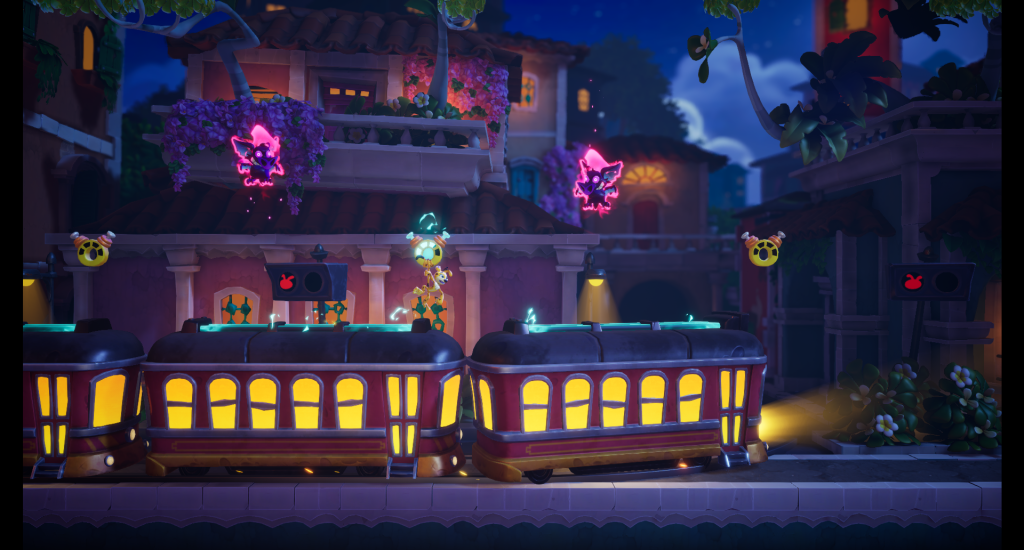
It helps massively that every stage is a delight to play, adding something new. The jungle opening world teaches the basics before shifting to a town with traffic to avoid and electric grids to navigate, ending in a trek across a snowy mountain range with ice rails to grind and harsh winds to endure. Set-pieces are uncommon but used to good effect, including a race against an out-of-control truck and a scene with a freshly defrosted dinosaur. Backdrops are rarely anything less than alluring, including the aurora borealis and a moonlit mountainscape.
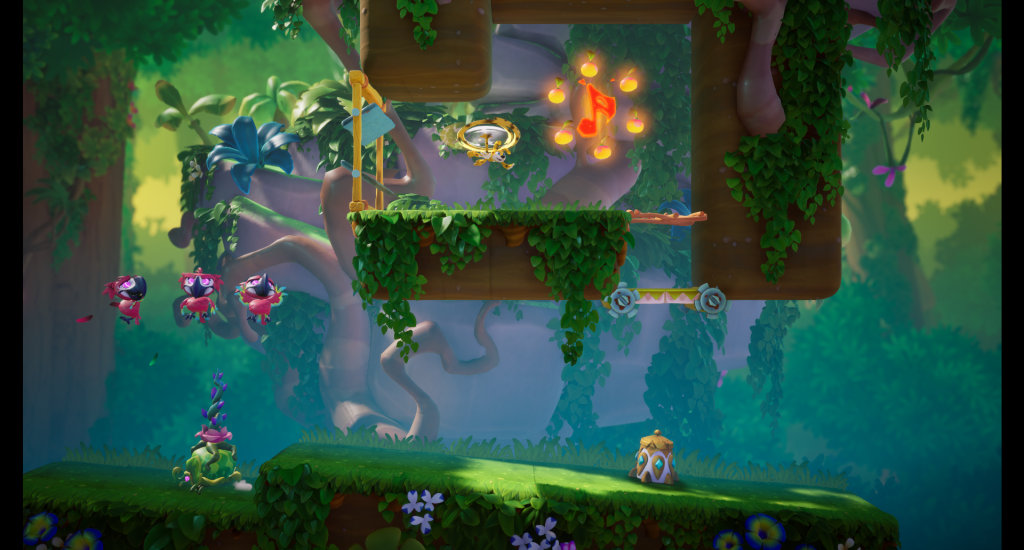
While the stage design rarely falters, it’s within the buttery-smooth control scheme where the mastery lies, recalling the modern Donkey Kong Country games in particular. Every Marsupilami can sprint, wall jump, tail whip, and ground pound, giving them speed, might, and agility where needed. Hope can dash through the air and perform a helicopter glide with their tail, making trickier platforming sections a tad easier. Spikes can be crossed safely by Punch turning into a bouncing ball, which also breaks blocks, while Twister can bounce off enemies with purple auras, which become more frequent over time. Two Marsupilamis feature per stage, with hazards relating to their skill sets, and a two-player Duo mode also features. Deaths feel fair, and the difficulty is well balanced, with checkpoints common and the ending obtainable without taking on the more difficult challenges. There’s an easier difficulty mode for inexperienced gamers too, granting infinite health.
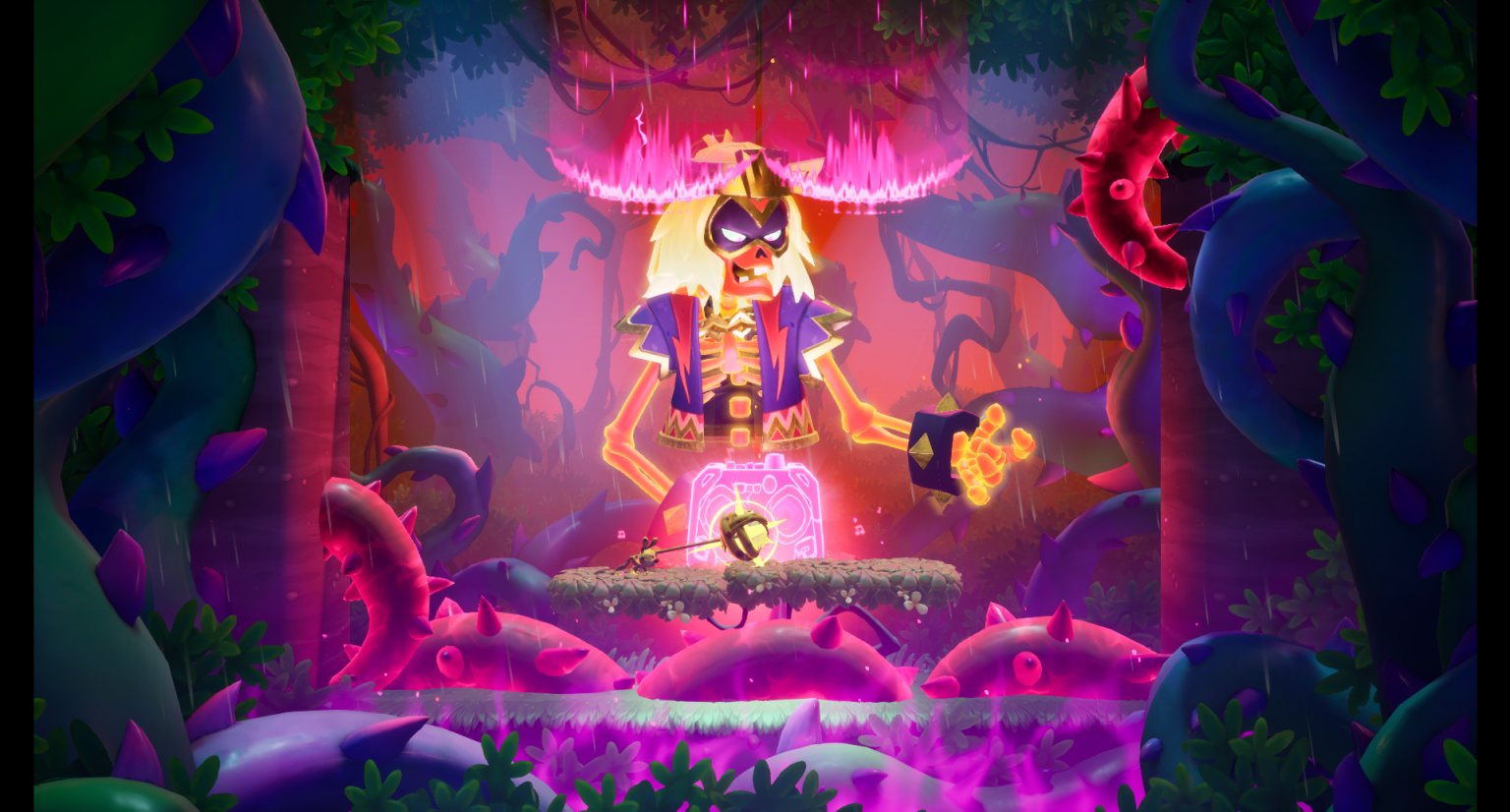
Chances are the bosses will provide the stiffest challenge. They follow a formula that soon becomes predictable, each with a boombox to destroy gradually while you avoid their projectile attacks. No boss can be harmed directly — they jive away in the background while jarring techno music plays, leaving you to leap around the screen and attack the boombox once its shield vanishes. You won’t find any dialogue pre- or post-boss fight; in fact, there’s no dialogue here at all, with characters remaining mute throughout aside from the occasional grumble when taking damage. The impact of this is that the trio of heroes are never able to carve out an identity for themselves. Rolling back to the opening paragraph, this is a very well-considered platformer that just so happens to have a rather unintrusive licence attached.
As a sequel, Marsupilami 2 does tread some old ground, but it never suffers for it: it’s a vibrant and welcoming experience that manages to remain enticing throughout. Its brevity is perhaps an indication that this project didn’t have the biggest budget or longest development cycle, but while it was hit with the resource limitations most licensed games face, it never feels like one. Hope, Twister, and Punch may as well have been characters designed by Ocellus, given how brief the cut-scenes are. I’d really like to see this studio let loose on a bigger project, but for now, this will do very nicely. Whether you’re a platformer veteran or looking for something to occupy a younger gamer, it’s bound to put a spring in your step.
Ocellus’ Marsupilami 2 – Salsa Palombia is out 3rd September on PS5, Xbox Series, Switch and PC. Published by Microids.