
In a rare departure for this reviewer, I’m reviewing a Switch game. Other than the fact that screenshots are a huge pain to copy off the system one at a time via the smartphone transfer, or bulk copy via the microSD card, it has been quite fun to dust off my Switch to play something other than Rhythm Paradise Groove.
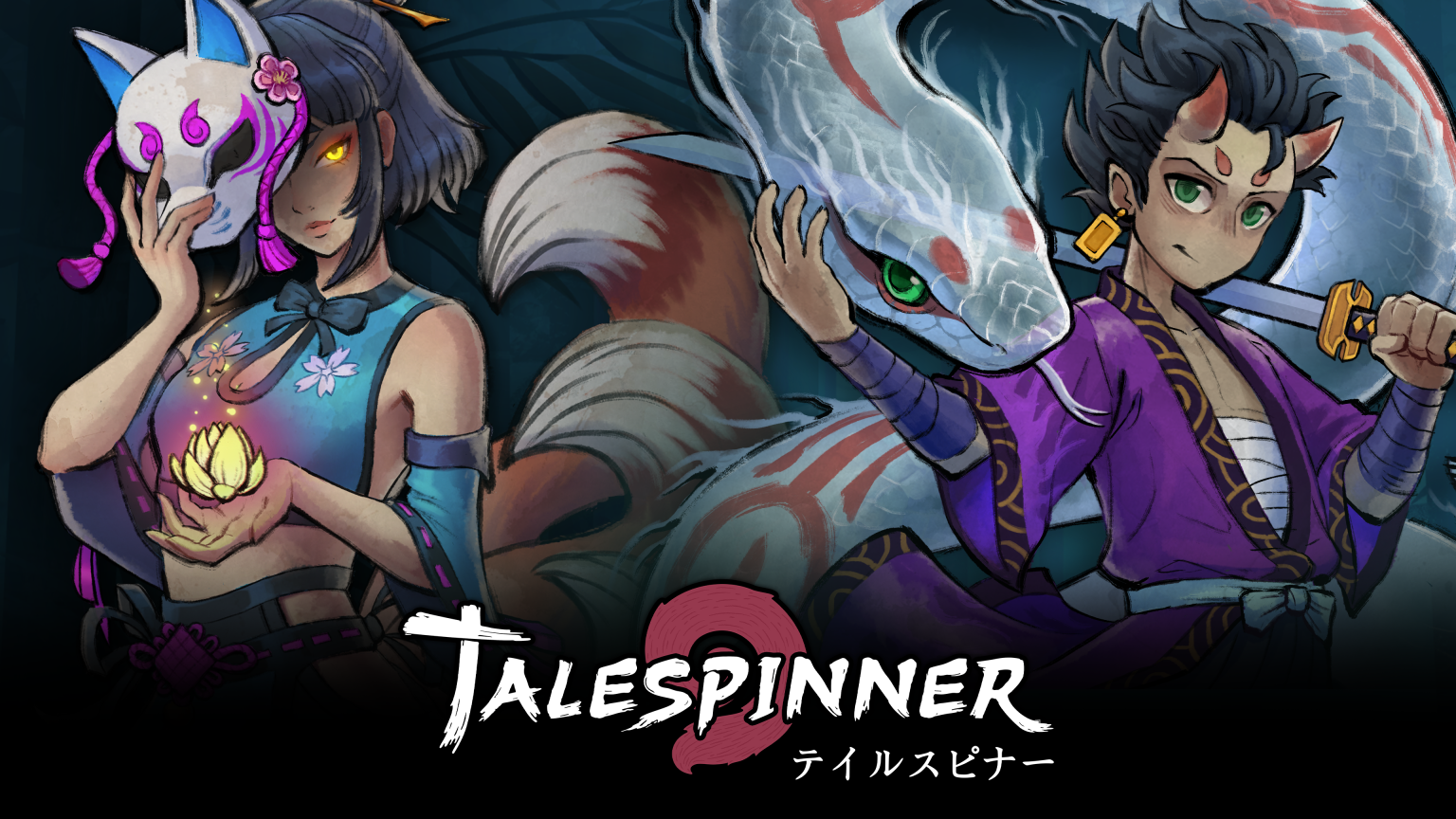
On the face of it, Talespinner looks like any other card battler, notably Slay The Spire, but your path through your quest is determined by which one of the three classes you choose, being the monk Gyokushin, the kitsune Rinka, or Himura – a duo of a warrior with her snake companion. As you beat bosses with each, you’ll unlock additional cards and also get the hang of their respective strengths.
Gyokushin is more of a heavy hitter tank type, Rinka is more nuanced and has lotus flowers that can be charged and used in the midst of battle. Himura is able to shield and perform joint attacks with their snake, but has a lower health threshold than the rest. It made them the toughest of the lot where I was concerned, especially since if one of your two characters succumbs, your run is automatically over. It can feel a little harsh.
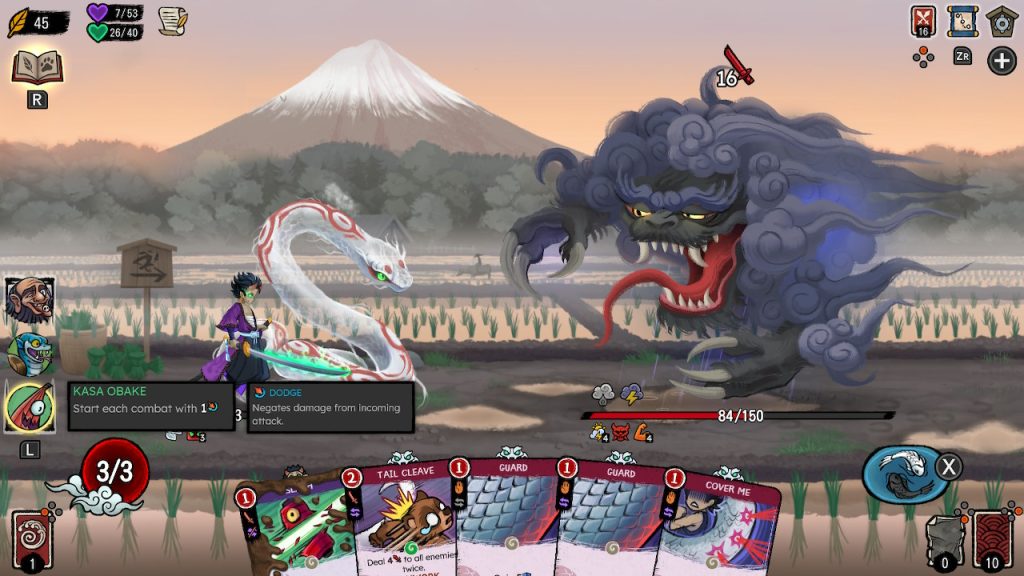
Each chapter has five encounters ranging from standard battles to fights against elites for better loot and random encounters that yield curses or loot. Finally, you have a campfire that’s generally your last attempt to regain health before the boss encounter at the end of each chapter. You’re given the choice as to which you opt for, but in my case, I generally always save the campfire until the last possible moment. It’s a little like the superb Dicey Dungeons in terms of the agency it gives you.
The ebb and flow of battles is generally one of using your action points to get a couple of attacks in, at least if you have the cards available to do so, then using shield cards to ready yourself for the enemy turn. Unlike the aforementioned Dicey Dungeons, you don’t retain your shield to the next turn unless you have that particular ability unlocked.
As you complete each respective chapter you’ll be given the option as to which route you want to tackle next. I chose the easy path for the most part, but despite multiple playthroughs and attempts at the third boss of each respective sequence, I came up short. That’s due in part to the RNG that lurks beneath the surface as on several occasions I faced a boss that I simply couldn’t get past despite having a decent card loadout. One boss in particular had a special attack that rips and effectively disables cards that left me in the lurch, and I inevitably succumbed to their attritional approach.
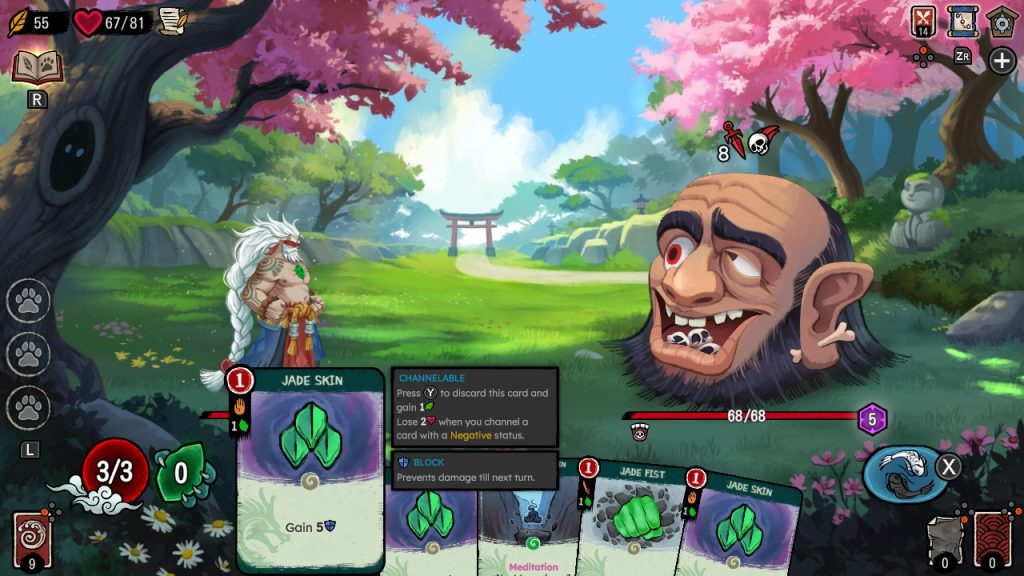
After each enemy encounter, you’ll unlock extra cards for use in that particular run as well as buffs or abilities. They are depicted as companions and are either passive or usable on demand, the latter having a cooldown period. The cards and companions gained are often the key to a successful run as you’ll sometimes feel like you’re on a hiding to nothing just by virtue of the loot you garner.
If I’ve any complaints, it’s that the UI text is a bit on the small side, particularly in handheld mode. Given this is how many people play games of this sort, rather than docked, it’s a bit annoying that there’s no apparent option to change the UI scaling. Yes, it’s more of a problem for those without sharper vision, but it’d be nice if you could remedy that.
Talespinner is a compelling game though, and the ability to save mid-run makes for a good game to play on a long train journey or flight, Switch battery life notwithstanding. I’m sure to be returning to it, especially if it gets a port to PS5 so I can get Trophies as I’m used to.
Flash Cat Games and Kwalee Gaming’s Talespinner is out now on Switch and PC.