
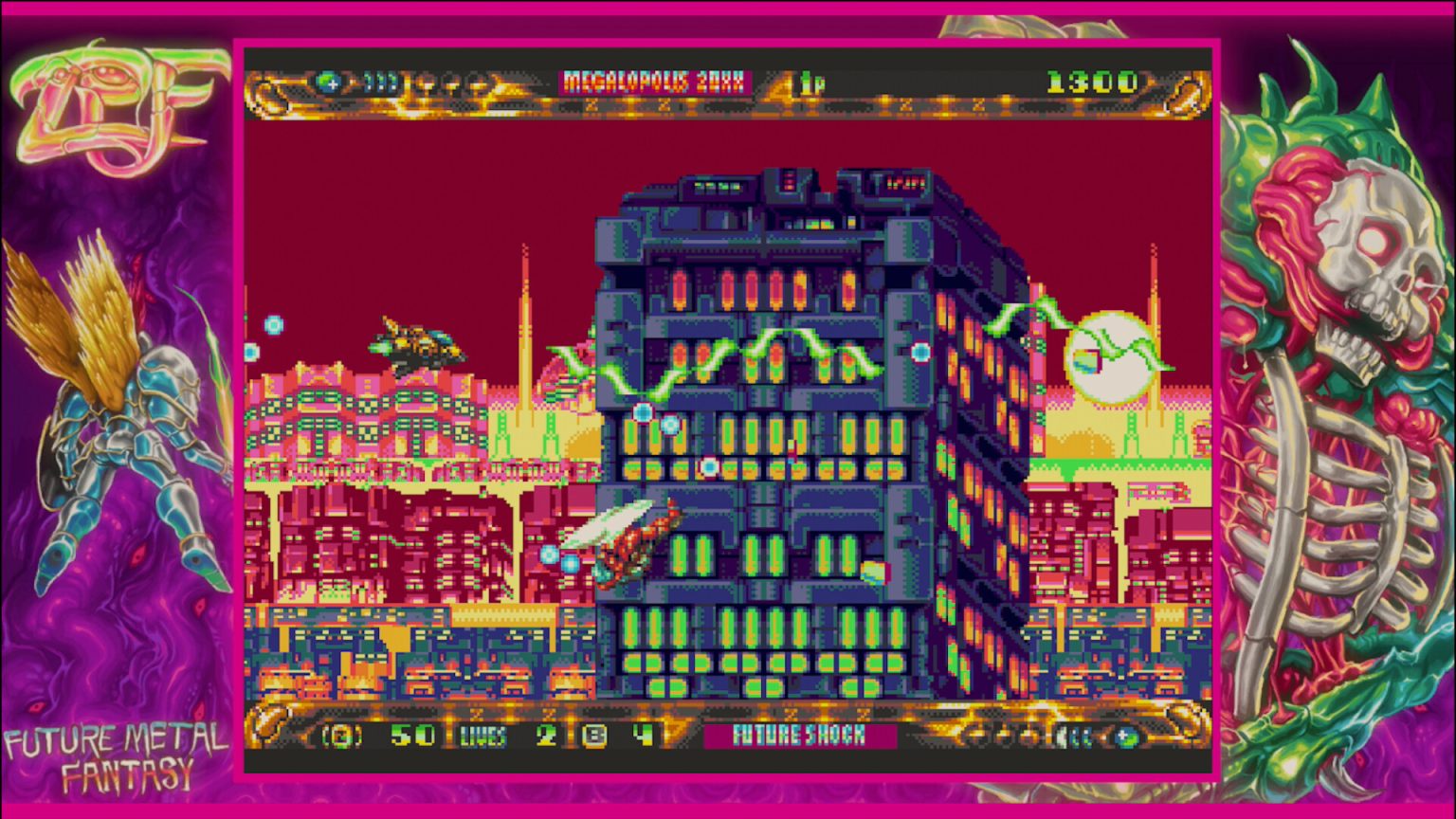
Back in 2024, a Kickstarter launched to fund this brand new Mega Drive shooter – one intended to push SEGA’s humble 16-bit system and delight dedicated fans who still have a Mega Drive (or Genesis) hooked up to a dusty CRT somewhere. News of ZPF’s campaign spread through the retro gaming community, helping to smash its targets by a considerable margin – in no small part due to its lavish looking screenshots and speedy action. This included reaching additional goals for this conversion to Switch, Xbox One and Xbox Series, consequently bringing ZPF to a wider audience, and at a more affordable price of around £8.
What we have here is a horizontal shooter channelling the likes of Thunder Force, Zero Wing, and Gynoug, mixing sci-fi, fantasy and heavy metal themes. It features three playable craft, one of which is a winged knight – hence the Gynoug comparison – and they each have distinctly different bullet formations, ranging from a spread shot to wavy lightning. They have unique close range melee attacks too, which you’ll need to use proficiently to survive, and although smart bombs don’t change between the trio they are appropriately devastating. There’s a choice of three stages from the outset, with the fantasy themed endeavour being the easiest, and between levels it’s possible to switch craft – meaning you aren’t locked in from start to finish.
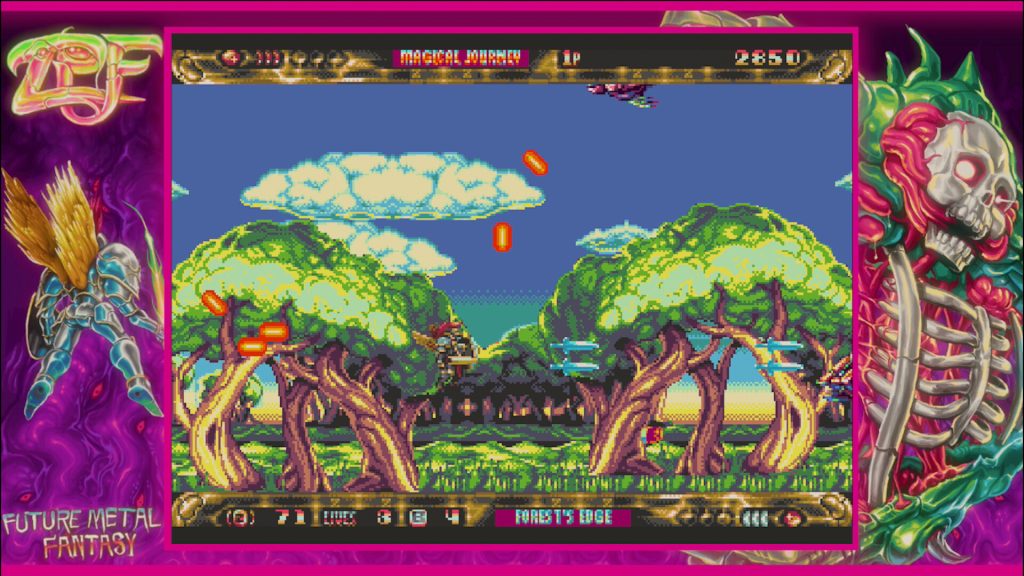
It sports a colour palette not usually associated with the Mega Drive, formed of delightfully clashing pink and blue hues, fluorescent shades of green and more. While garish at times, it’s constantly vivid, occasionally rousing the imagination too. Backdrops whizz past and change every few minutes with sudden screen wipes, while enemy projectiles are brightly coloured and mostly gradually spread on slow fixed trajectories. Music is upbeat and energetic, complementing the fast pace well, likewise showcasing technical mastery.
A few modern elements are present, including a shop with around a dozen options, allowing great scope for experimentation. If it wasn’t for this, ZPF would be quite an uncomplicated experience, relying heavily on its technical know-how. Shop purchases allow for enemy bullet spreads to be halved, a main shot upgrade, melee damage increases, and an extra continue. The number of automatically gathered credits – earned by defeating enemies – can be doubled as well, along with a score multiplier. Topping the scoreboard isn’t much of a challenge though; you’re going to be besting your own scores here rather than those set by the developers. Also, there’s no ability to save scores.
ZPF’s difficulty level is, more or less, tied to the shop – ergo how many credits flow your way throughout each stage. It’s a rather challenging experience, using a one hit death system that feels somewhat out of place nowadays. Invincibility frames are few, and no continues are granted when starting out. Defeat can come swiftly and suddenly, throwing you back to the title screen with no progress saved. While it’s possible to alter the number of lives and bombs, increases are minimal rather than generous. I can’t imagine a playthrough where you wouldn’t tackle the easier fantasy stage first to fill your coffers with shop credits.
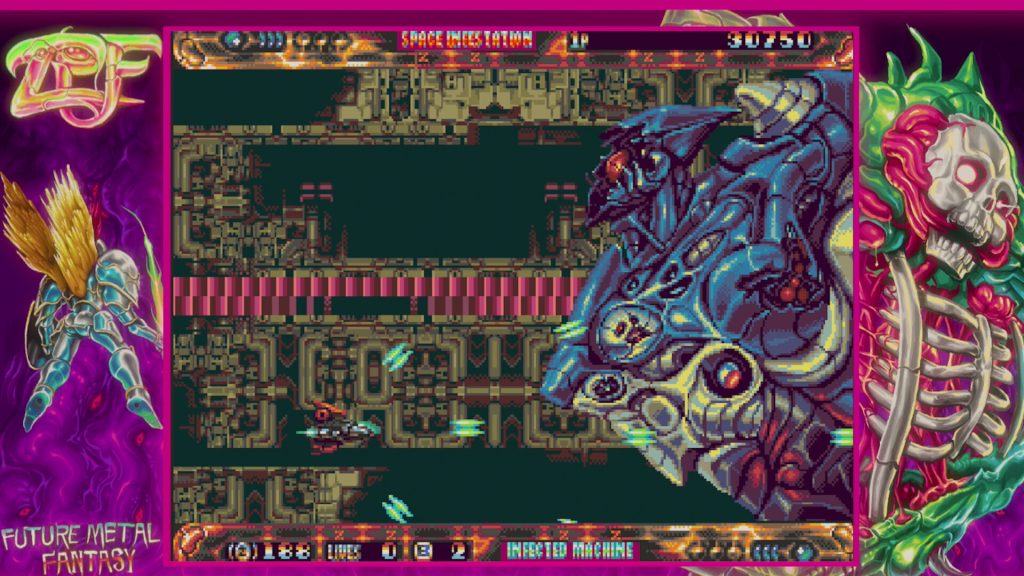
Bombs are best saved for bosses, leaving just the melee attack to master and the enemy bullet formations to memorise. Peculiarly, there is no actual level design to speak of – no twisting tunnels to carefully navigate, hazards requiring timing to avoid, or raised terrane that limits room to manoeuvre. You’re always free to dart around the entire screen, with enemies surfacing from both the left and right, along with the occasional backdrop element that can be destroyed in return for credits. Perhaps the developers were secretly Toaplan horizontal shooter fans, as most Mega Drive shooters offered a lot more variety with their stage design. Instead, it relies on the bosses to provide a change of pace, being a mixture of mechanical terrors and organic beasts formed from flesh and bone.
Stylish visuals, a fast pace, and the shop’s flexibility combine into a fun and curiously moreish experience. If one strategy isn’t working out, there’s always something else to try. It’s hard not to argue that ZPF doesn’t present a fair challenge when enemy projectiles are as readable as they are. The mix of fantasy and horror makes for something memorable, too, boasting more style and flair than most modern retro shooters of late.
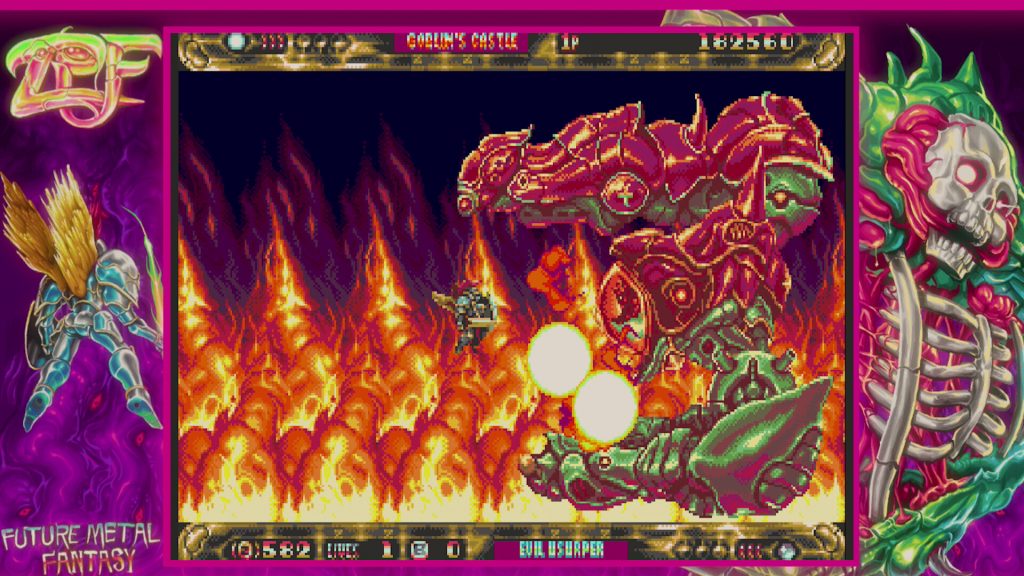
I’m sure there’s a reason for it, but this console release doesn’t have any of the features we’ve come to expect in retro re-releases. It seems that it might have the usual functions initially, as evidenced by the addition of a new overlay menu, but these are limited to merely a button configuration and the ability to alter the volume. There’s no rewind tool, save states, screen size options, and a complete absence of a digital manual. The screen border artwork and Xbox achievements are the only new things here. A lack of an online leaderboard really harms the replay value, while the overlay menu’s small text gives the package a slight slapdash feel.
I can only assume Mega Cat Studios had extremely limited resources to bring this to consoles, be it time or money, or felt that it should have parity with the Mega Drive release, so as not to make this feel like the superior “upgraded” version. A rewind tool would have perhaps removed most of the challenge too. Either way, it’s very peculiar to play a modern console release that doesn’t offer any additional functionality over its 16-bit counterpart. This isn’t the definitive ZPF experience; it’s merely a cheaper way to play it without having to dust off or purchase a Mega Drive. You’re going to have to grind this one out the old-fashioned way. But at least the achievements will feel like genuine accomplishments now, right?
ZPF Team’s ZPF is out now on Xbox Series, Xbox One, PC and Switch. Published by Mega Cat Studios.