
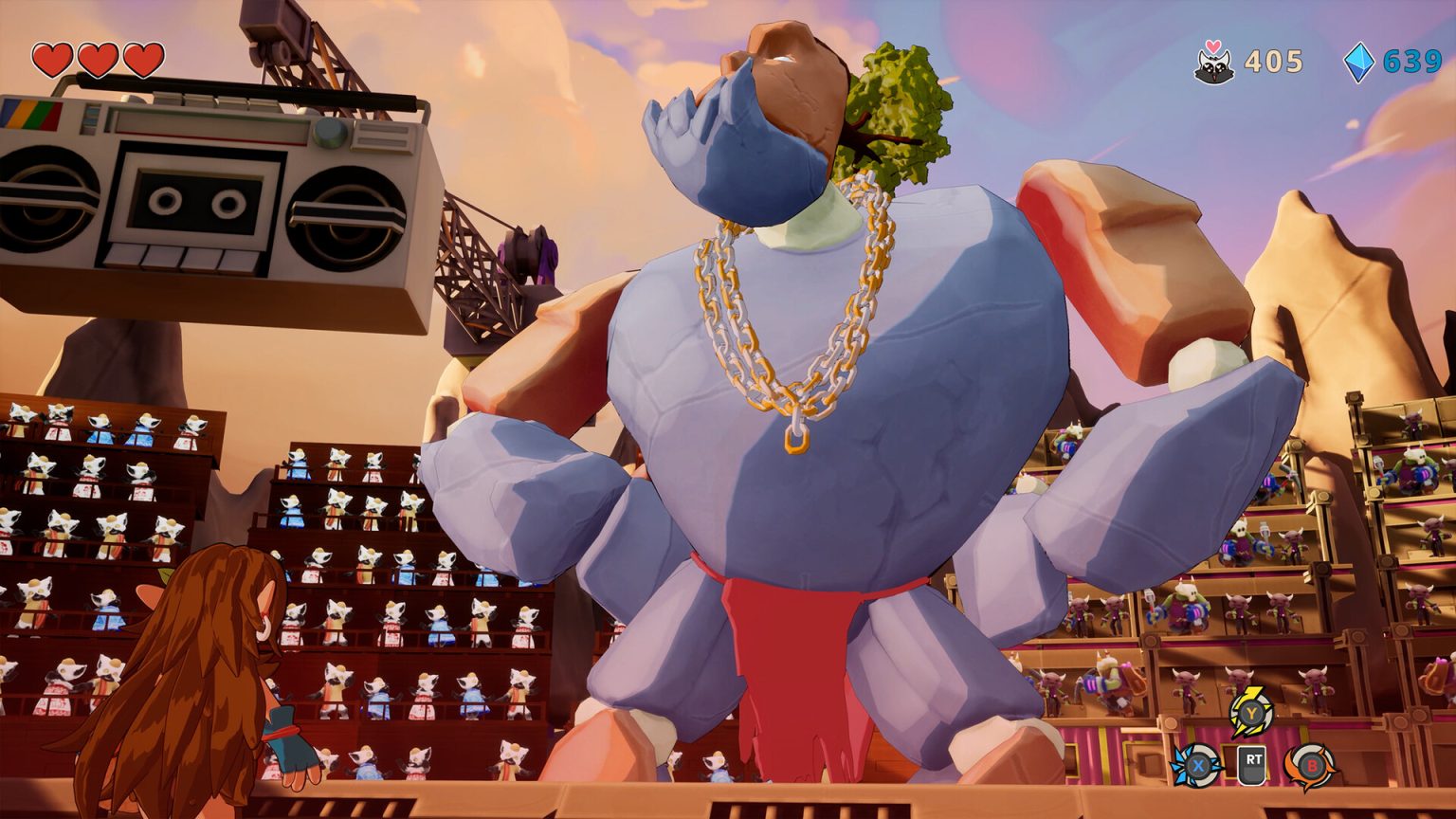
Kalanoro is a harmonious thing. Not just because it’s about a music-playing Madagascan forest spirit, but also because it’s a Madagascan-developed game, being Red Raketa’s debut.
The main antagonist in this adventure platformer is a capitalist witch from overseas, Raneny – which is the Malagasy word for mother, so perhaps there’s an excerpt on the cutting-room floor that reveals she’s in fact Kalanoro’s mum. Mere speculation on my part.
Kalanoro’s main weapon is their hair, which you use to whip enemies and stun them, as well as to smash objects. But don’t leave it too long before the cream sets: you must whip it. As you proceed through your adventure across the pseudo-Madagascar represented here, you’ll unlock extra abilities to help you on your way, though I have to be honest: some of the implementation leaves a little to be desired.
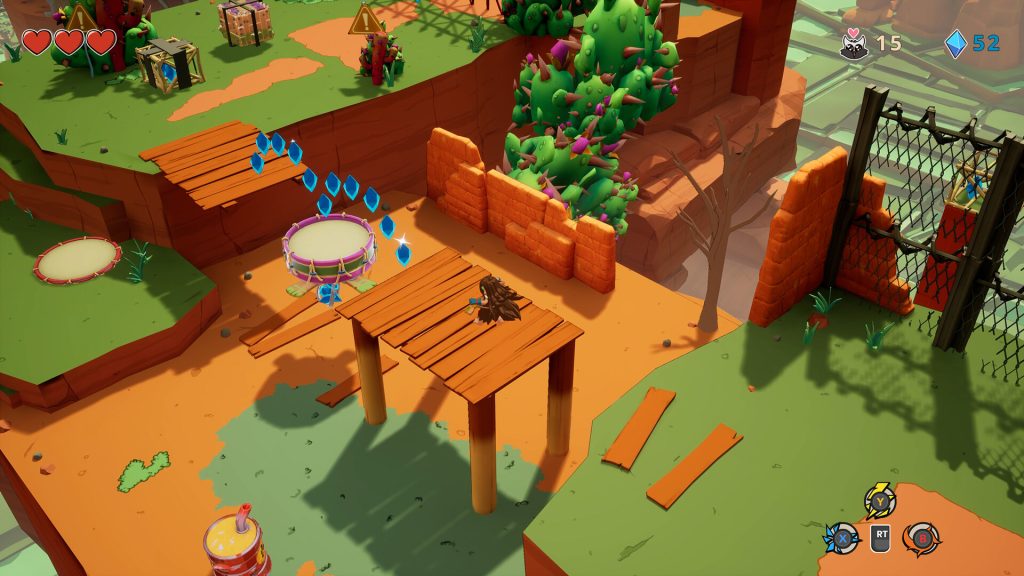
The rank-and-file foot soldiers you face are ostensibly employees of Raneny’s capitalist empire, PAMS Industries, but it feels a bit harsh to be beating them down on the regular when it’s just their day job. The allegory is pretty clear here: fight off the evil capitalist outsiders from the tropical island paradise and maintain the status quo. That’s fair enough, given that the real island’s biodiversity is a big draw for conservationists.
You’re tasked with seeing off Raneny and her pals by way of music. Quite how this works as a vanquishing force isn’t entirely clear, but rather than spoil a late-game plot point, I suggest you roll with the conceit. You bop around the island in a Mercedes-Benz-style tour bus and get the band back together.
Seeking out the individual band members is your main task, and as you grow your group, you also must gain fans by promoting your gigs. The promotion involves putting up posters over Raneny’s propaganda. Additionally, you need to defend ghetto blasters playing music in a short horde mode in which you see off enemies. Get enough hype, and you gain fans, then play a gig. This part feels pretty underbaked, as it doesn’t really deviate from pushing X in a generous QTE and seeing off the occasional enemy who wants to gatecrash.
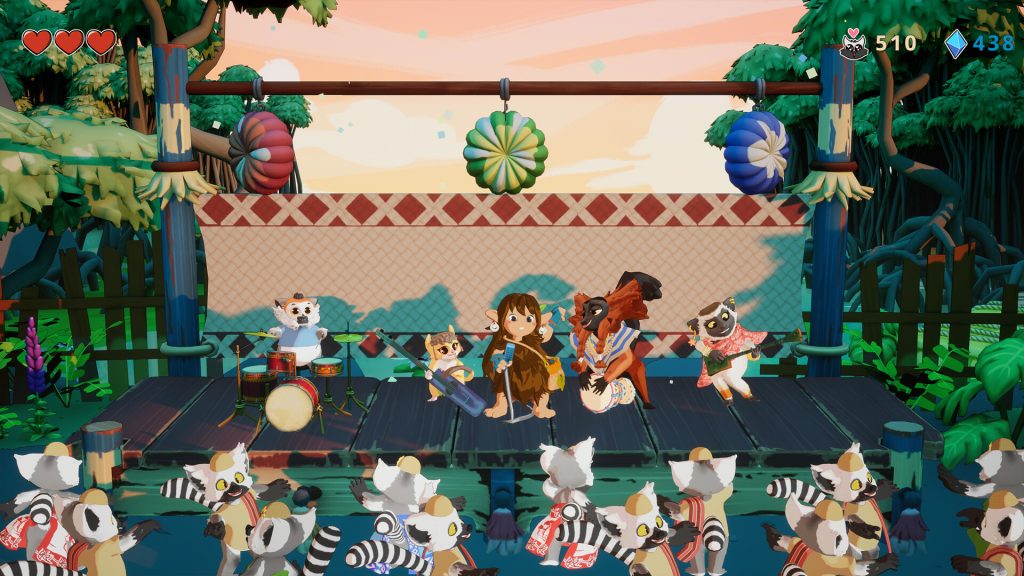
Kalanoro acts as a lead singer of sorts, but it soon becomes clear that you aren’t actually singing. Some synchronisations with the music would inject a degree of challenge, but as it stands, there’s none to speak of.
In between gigs, your band members languish on the bus, and it’s down to you to keep them fed lest they wander off and get recaptured. This only happened once I got bored of the interminable requests, which seemingly didn’t have any discernible effect. Their presence is only really needed when you’re about to perform a gig anyway, so it’s not a big issue if you neglect the cooking part altogether.
After a while, you realise the cycle is the same over and over: hype, cook, platform a bit, rescue another member, gig and repeat. It’s not the most enthralling gameplay loop.
Mercifully, the only collectables you have to worry about are the game’s lore items, depicted here as scrolls. The map screen is genuinely useful for showing whether you’ve missed one. You’re not beholden to finding anything else, and the hype thresholds are pretty generous, so you don’t have to put up every single poster to unlock the next gig.
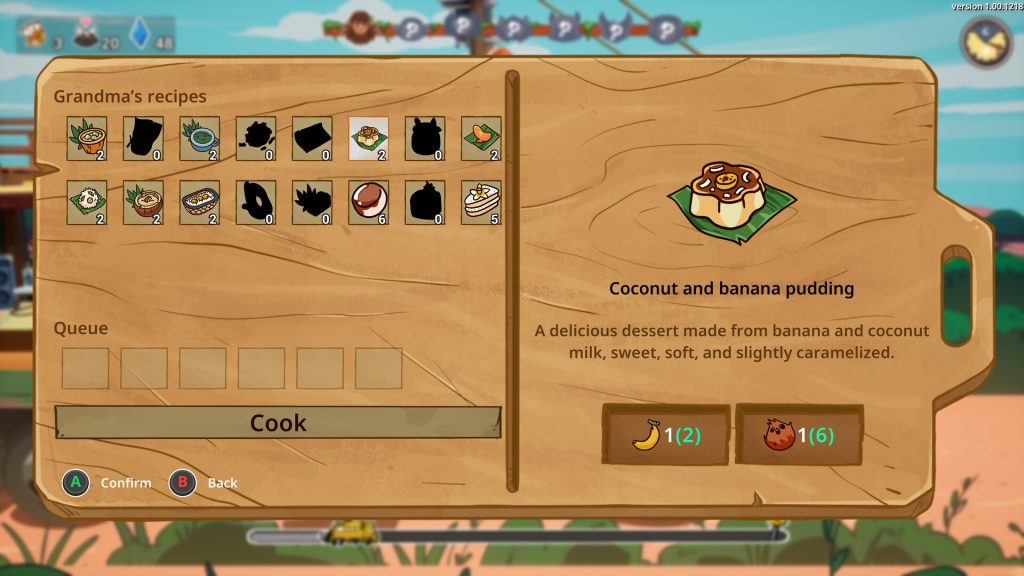
Cooking is another underdeveloped component, requiring little more than gathering ingredients through normal gameplay. I never had a problem obtaining the required ingredients at any point. It’d be nice to see what the actual recipes were beyond their names. Perhaps a short recipe would be enough to encourage a player like me to try their hand at some Madagascan cuisine. Not to mention the fact that the perfunctory QTE is so easy as to be insulting.
You’re required to make your own posters via a short crafting menu, though oddly you can’t make a large batch of them in one go, instead needing to do them one at a time. Yes, there’s an associated trophy, but it feels like busywork for the sake of it. When you need twenty-one posters for a batch of three levels per gig, it gets boring quickly.

Bosses are faced occasionally, and these actually present a decent challenge. They’re a bit jarring compared with the otherwise relaxed gameplay, but are generally entertaining diversions. The end of the game, such as it is, happens so abruptly that you wonder whether there’s anything you’ve missed, but there isn’t. Apart from a couple of map items, the entire south-east sector of the map is sparsely populated.
I feel like I ought to cut Kalanoro a little slack, but the fact that it took me the best part of two weeks of sporadic play to complete what should’ve been done in a weekend tells its own story. I suspect the game will land better if you’re part of the wider Malagasy diaspora, as will the cultural nods that passed this reviewer by.
The music is fun enough and the real-life recipes are interesting, but this is going to be little more than a curiosity for many, me included. There’s not much to Kalanoro, and it feels underbaked, whether you’re cooking or performing. The core gameplay loop isn’t all that inspiring, although it might work better on Switch than on PS5 because it’s better suited to shorter sessions.
Red Raketa’s Kalanoro is out now on PS5, Xbox Series, Switch and PC. Published by New Tales.