
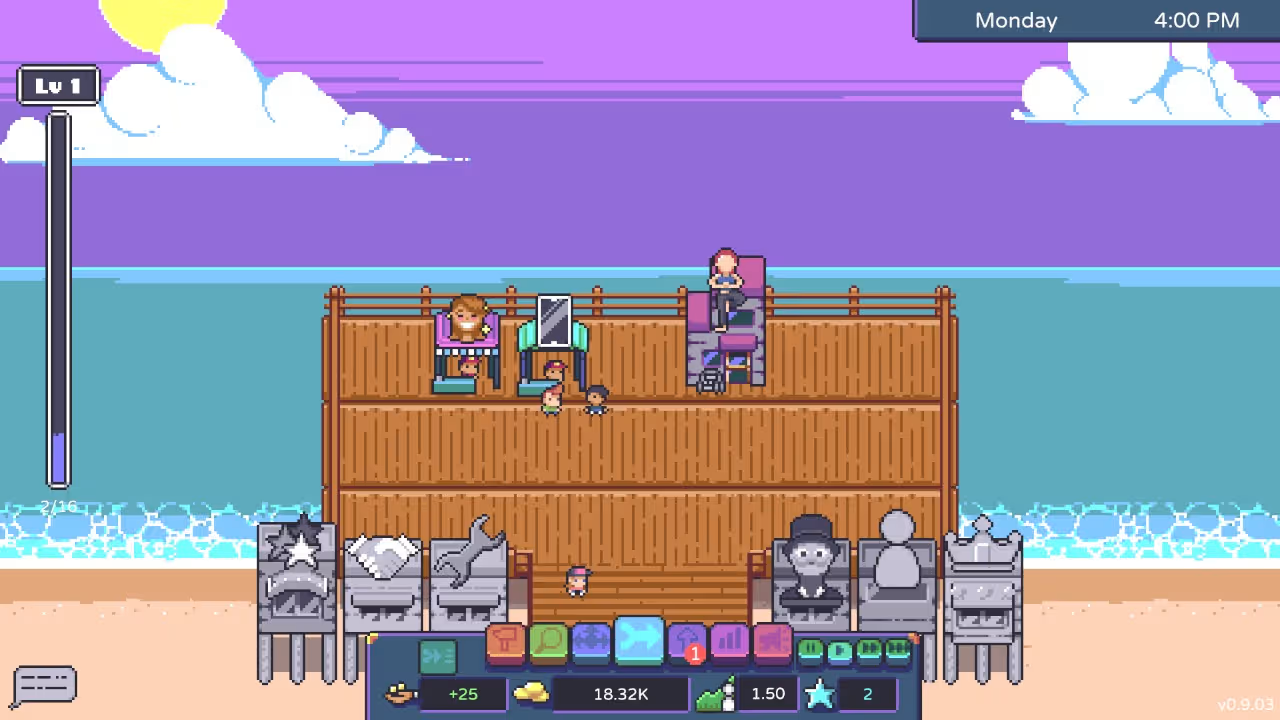
History has a habit of repeating itself. As the humble Amiga entered its twilight years in 1995, British studio Vulcan released Hilsea Lido – a business sim in which you managed a quintessentially British beachside promenade, placing shops and stalls to keep sunburnt punters happy. Now, as the Switch approaches its tenth birthday, Boardwalk Builders revisits that premise with an American boardwalk setting – hence the absence of “Lido” from its title.
Boardwalk Builders is priced at £6.99, and the lack of modes reflects that low entry point, in the sense that there’s only a single mode to jump into. It begins with a brief 5–10-minute tutorial that shows how to place attractions, be they rides or shops, while detailing the icon-driven interface found at the bottom of the screen. It’s streamlined, in the sense that there are no pages upon pages of menus and stats to wade through, with most vital information easily garnered. Visually, it uses pixel art. Characters are small and rather nondescript; attractions fare better, especially rides that use sprite rotation in fun ways.
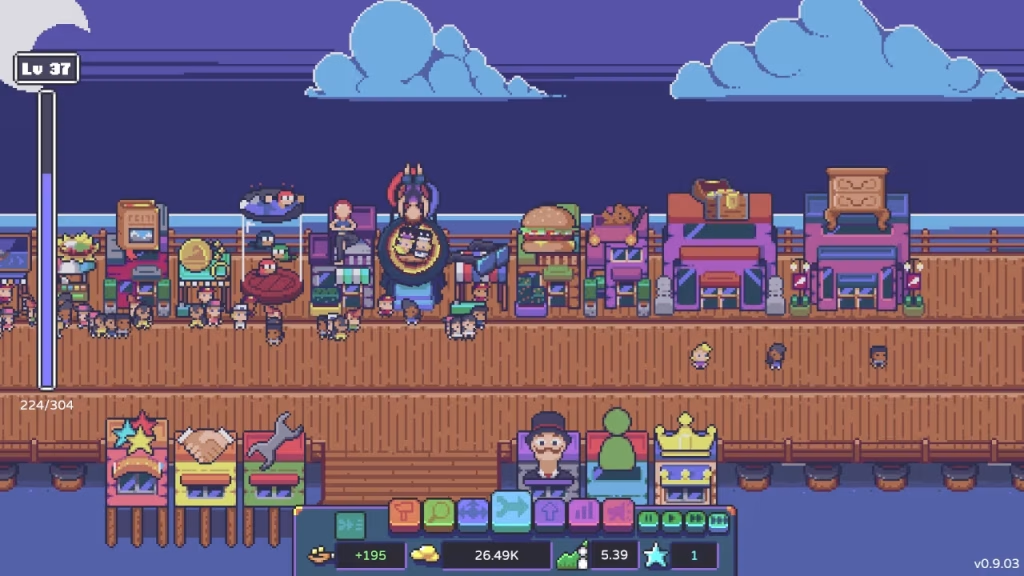
It’s your job to make money, lure in customers, expand the boardwalk, and experiment to gain new attractions – essential for progressing and boosting popularity, with a screen full of new shops and rides to unlock. This is achieved by combining two attractions of the same tier to create something new, albeit at a small outlay and while ‘sacrificing’ the duo about to be merged. You begin with just a handful of basic businesses – which are split into seven types, ranging from gift shops to food shacks – and can unlock more using fame points. Some combos make sense – such as combining driftwood and sand bottle art shops to unlock a ship-in-a-bottle store – while others are far more random.
Fame points are also essential for increasing ticket prices – something that cannot be adjusted any other way – automating repairs, and more. You’ll soon notice how incrementally stats are increased, which makes this feel more contemporary than a classic of yore such as Theme Park. Every marketing campaign, for instance, be it TV, radio or social media, will see your popularity rise by a meagre 0.25 percent. You can also gradually increase your standing with three other businessmen, who will shower you with bonuses periodically, and can slowly decrease the serving times of each shop and ride, making them more efficient.
There are a few other areas to dive into, such as hiring a celebrity to tour your boardwalk. They fall into different types (foodie, fashionista, etc.) and will grant an exclusive blueprint if they’re satisfied with the facilities you have on offer. Festivals, meanwhile, will increase trade for certain businesses, and it’s possible to hire entertainers who make money. Oddly, though, there doesn’t appear to be a way to fire them – so go easy on the ‘hire’ button. Another peculiar omission is the lack of decorations. Perhaps it was felt they would result in unnecessary clutter.
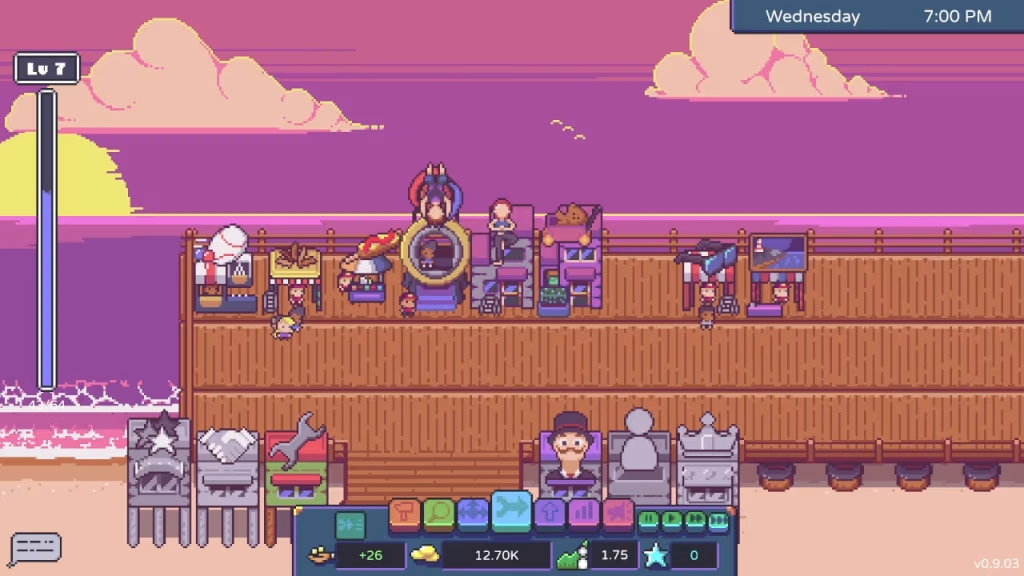
Managing the boardwalk is mostly enjoyable, seeing you move buildings around to maximise their potential, respond to trends, try to find new attraction combos to populate the catalogue, and adjust the quality of goods to increase profitability. Placing a new business and discovering that it has become a roaring success is quite satisfying, and it’s never long before you level up and unlock a bonus – including boardwalk extensions and permanent discounts on attraction running costs.
One thing Boardwalk Builders won’t provide you with is guidance. It’s up to you to balance attraction types and move them to different locations to see what works. At one point I had all my attractions placed opposite the entrance, only to discover later that they became more profitable once spread apart. You’d think a burger bar next to a milkshake shack would do a roaring trade, but no – two food stalls next to one another can be a financial burden. It seems that variety is the key, helping to appeal to a wide demographic, but as soon as demand drops, some businesses will run at a loss. It’s a difficult juggling act, and I don’t think I’ll ever fully understand how the economy works here. In the end, I resorted to shutting shops when demand for that type dropped, then reopening them once it picked up again.
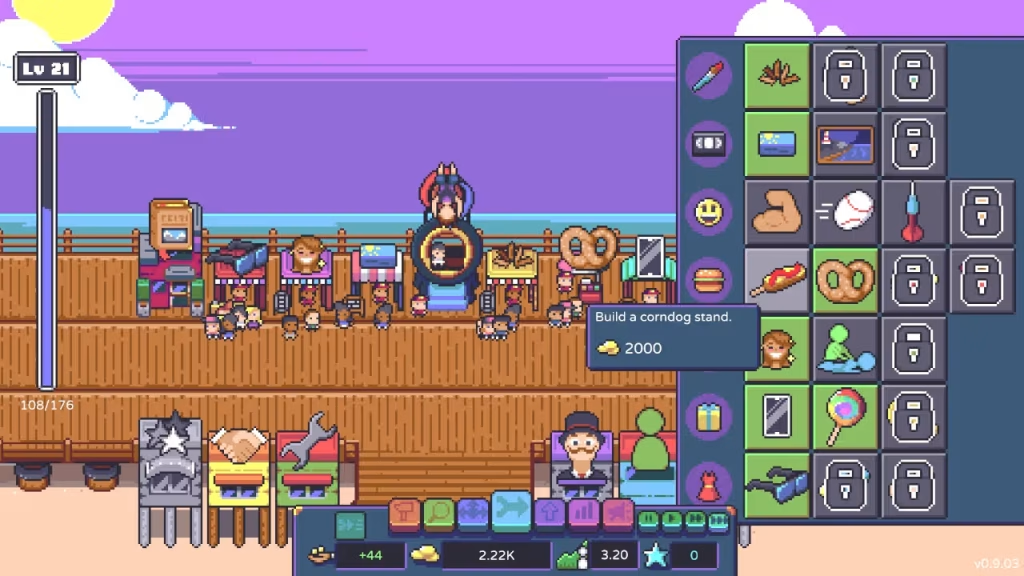
It’s also very tempting to keep expanding the boardwalk – extensions are provided as rewards, remember – but if you have nothing new to populate it with, then there’s no point. Basic attractions such as a corn dog stand seem to become undesirable over time, so you can’t just place a mixture of them on a new extension and watch the cash roll in. It’s all about maximising appeal and giving the punters something new, such as the later-unlocked arcade and cinema.
Boardwalk Builders has a retro look but plays like a modern business sim, similar in structure to something you’d find on mobile devices because of its incremental stat increases. It can be slow to progress – unlocking the crowd-pleasing Ferris wheel is something that’ll take several hours – and it shouldn’t be mistaken for an idle game, as interaction is regularly called for. It’s an experience deeper than the simple visuals let on, requiring an investment of time to be truly rewarding. If you’re looking for something more traditional, it might not satisfy. Go into it expecting a few modern, mobile-style tropes, though, and chances are you’ll find it just the ticket.
Studio Primitive’s Boardwalk Builders is out 24th Sept on Switch. Published by Flynns Arcade. A PC version is also available.