
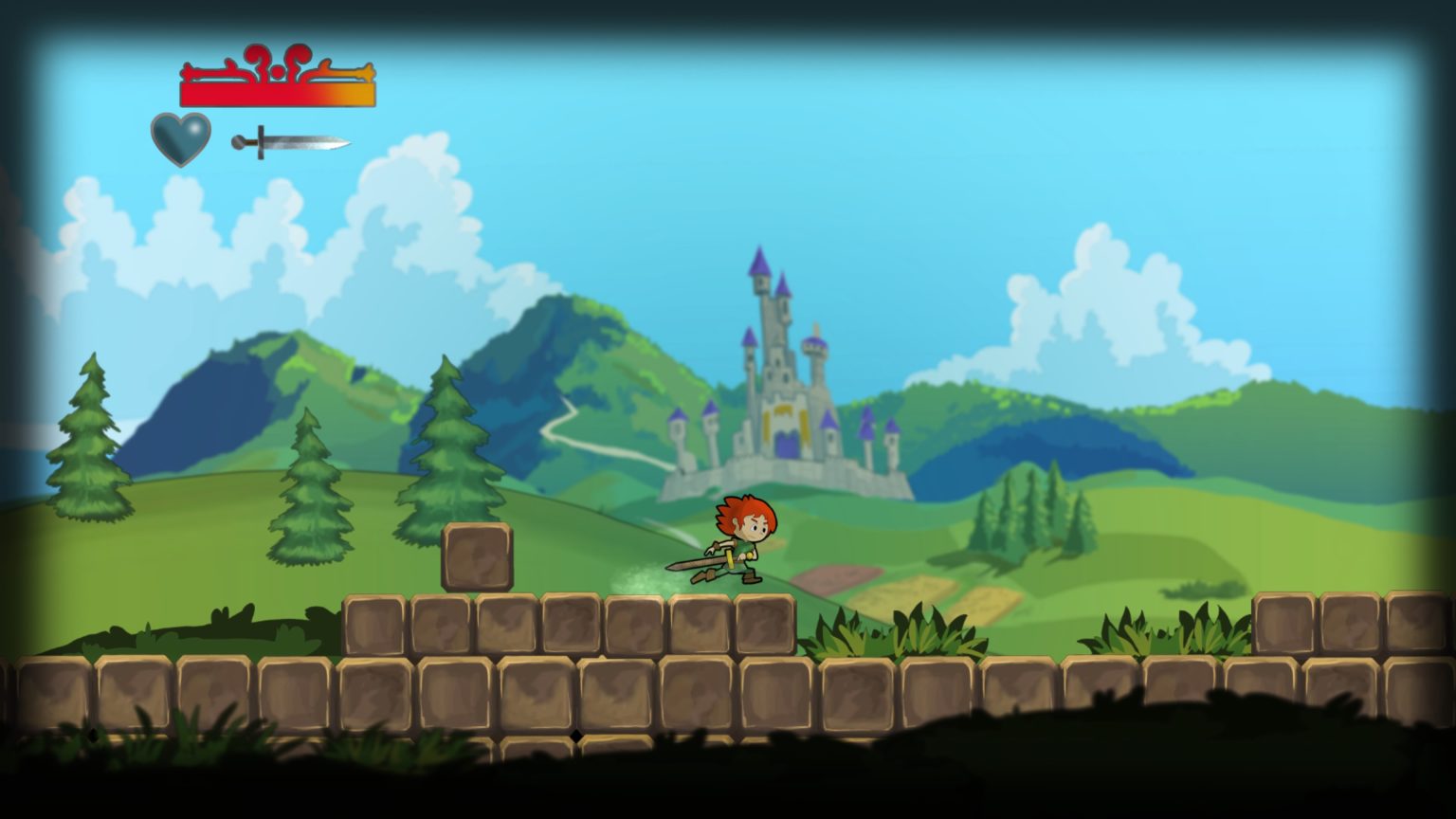
Clarity, or to use its full name, Clarity: The Seven Demons of Vanguardia, from developer Team Quantum Games and publisher eastasiasoft, is pretty descriptive. It’s down to you to defeat the titular seven demons across a sprawling map in the grand Metroidvania style, even if it is actually not much more than an ordinary platformer.
Across the first six levels you’ll encounter all sorts of enemies and multiple collectibles that aid your progress, from consumables you can redeem in the shop tent to talisman fragments and chess pieces that on their own are fairly useless. But once you have six, they will imbue bonuses that will come in handy when facing the main boss in a lightning themed level.
The first six levels are all elemental, although I struggle to see why lava and fire were kept as separate biomes. I was also trying to rationalise with my friend in the pub yesterday whether Clarity qualified as a Metroidvania or not, but the reality is that your toolset is basically unlocked at the outset.
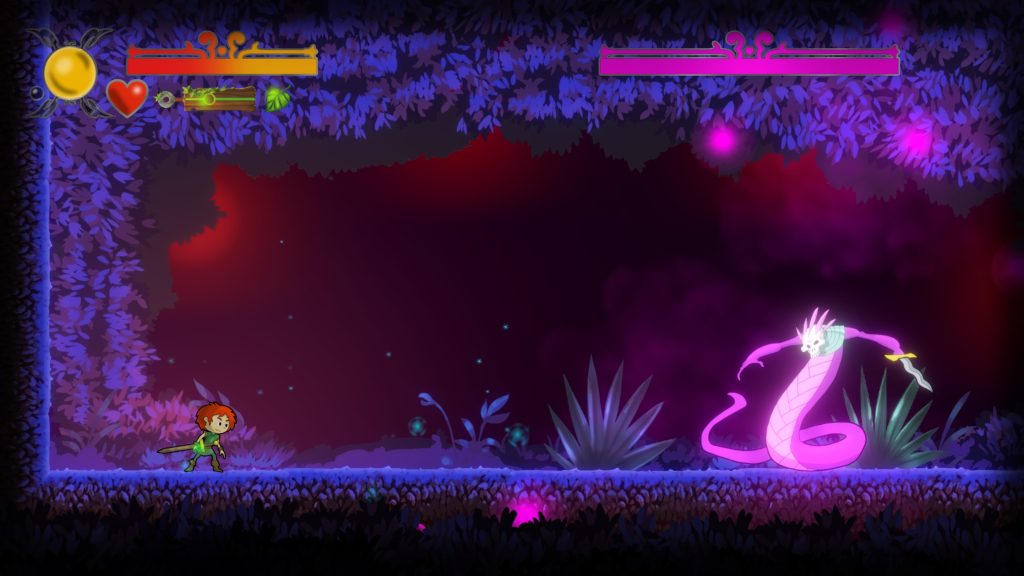
Yes, you might well gain elemental abilities when beating bosses in terms of resisting instant death when you fall into the elements in question or face enemies that are vulnerable to said element, but beyond that your choice of blade is largely irrelevant.
Traversal is a generally fluid affair with the double jump, roll and dash moves available from the very beginning, but beyond the occasionally tough pits of poison or lava pits you might struggle to get past, there’s nothing horrific to overcome.
As well as the collectibles mentioned, each level has an ability that aids progress moving forward, though you can only have two active at any one time. The most useful early on is the ability that reveals the map and makes finding secrets a mere formality.
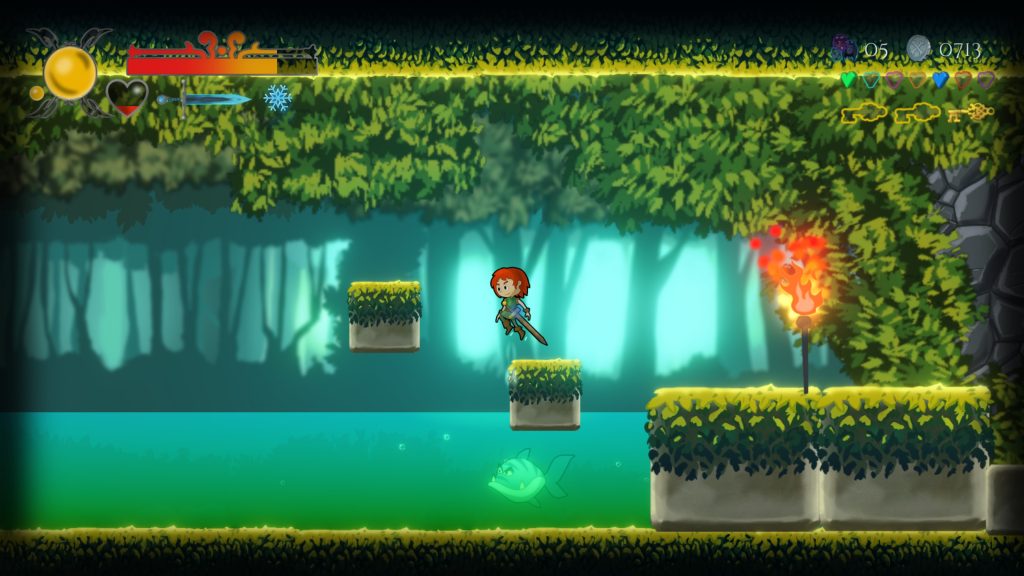
In the tutorial, Clarity introduces what could well have been an intriguing mechanic in terms of gates where you can’t get past without having full health. It is literally used just once in the entire game. The heath recovery system has you hold triangle while you recharge your health from a secondary heart container that’s filled upon defeating enemies, so it mitigates not having to replay sections over and again just to get your health back up, but it can’t help but feel like a missed opportunity.
That said, enemies don’t respawn unless you die and return at a checkpoint, at which point your health is replenished anyway. So, it’s a bit like Jeff Minter’s 1980’s masterpiece Revenge of the Mutant Camels in that your shields are all well and good but the best way to recover the status quo is simply to die. Just without less ungulates and trippy psychedelic visuals in the equation.
The enemies themselves are largely no great shakes and can generally be overwhelmed with a magic attack using your clarity, aka mana reserves. The bosses are more of an undertaking, but the only one that we found overly taxing was the fire boss, mainly due to the instant death state when he switches platforms to the same one as you.
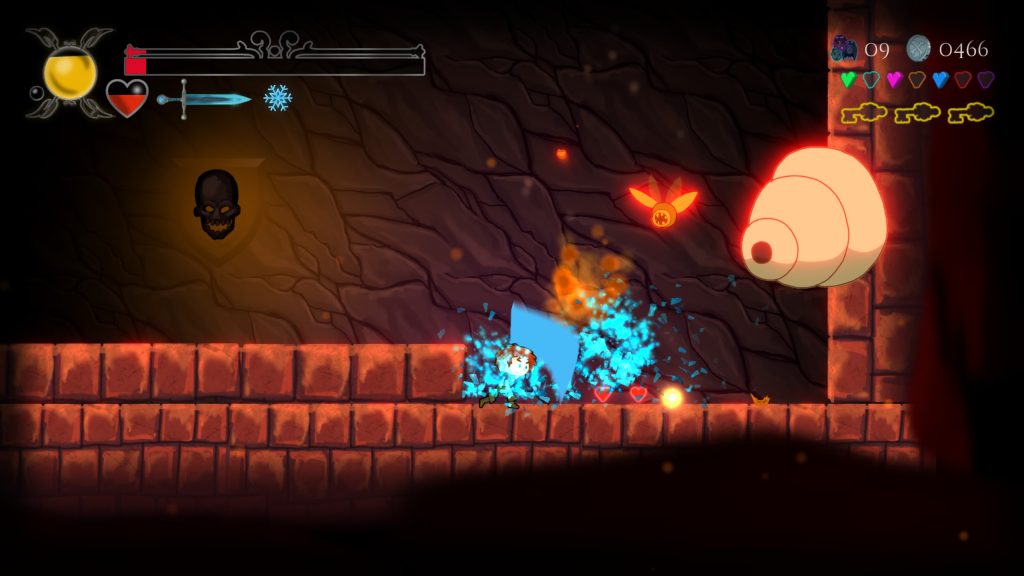
The plot, such as it is, is pretty rote and not exactly revelatory, but your redheaded protagonist is quite literally putting her demons to bed and dealing with her supressed grief. That said, upon beating the final boss and unlocking the platinum trophy, the room suddenly got a bit dusty. We’ll spare you why specifically, but it might’ve been down to my being sick of the hot snap the UK endured the past week, but in that moment at least, I felt something.
In conclusion, Clarity: The Seven Demons of Vanguardia is a fairly standard platformer with what might be some interesting mechanics introduced early on, but for whatever reason, aren’t fleshed out. It feels like it should be a Metroidvania in terms of the design, but for whatever reason the developer chose the easy option of a standard platformer instead. The PS4/PS5 crossbuy aspect is welcome, but I can’t see myself returning for a moment of clarity any time soon.
Team Quantum’s Clarity: The Seven Demons of Vanguardia is out now on all current formats. Published by eastasiasoft.