
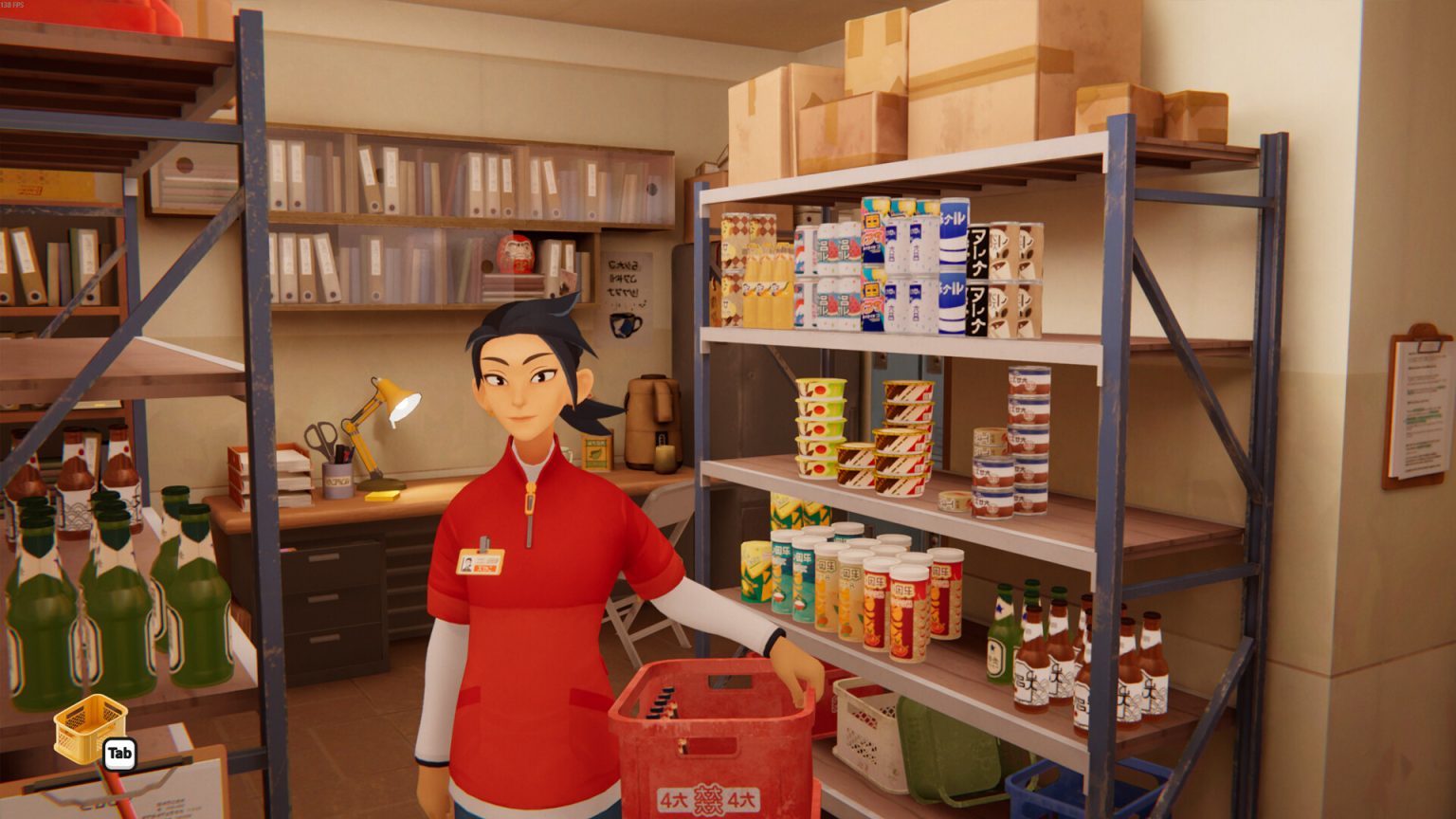
Even though I worked weekends at a newsagent while in college, I was a little worried that inKONBINI’s unique brand of nostalgia would be lost on me. It takes place in a Japanese convenience store during late 1993, and as such, features products and imagery inspired by that era – from magazine racks lined with Mangas and Japanese lifestyle magazines, to freezers full of frozen gyoza. It’s the mirror opposite of stepping into a musty UK convenience store circa 1990 and being greeted by posters for Walls’ ice creams, a newsstand mostly consisting of lude red top newspapers, and a spotty faced teen (myself) standing behind the till.
Yet, inKONBINI remains relatable. Japanese culture has permeated the Western world through anime and video games, to the point where some of the products found on the shelves here are recognisable. I feel like I could confidently talk about the heated rivalry between chocolate mushrooms and bamboo shoots – two off brand iterations of which you’ll find for sale within inKONBINI’s store. Of course, it helps that most towns have Asian food markets these days.
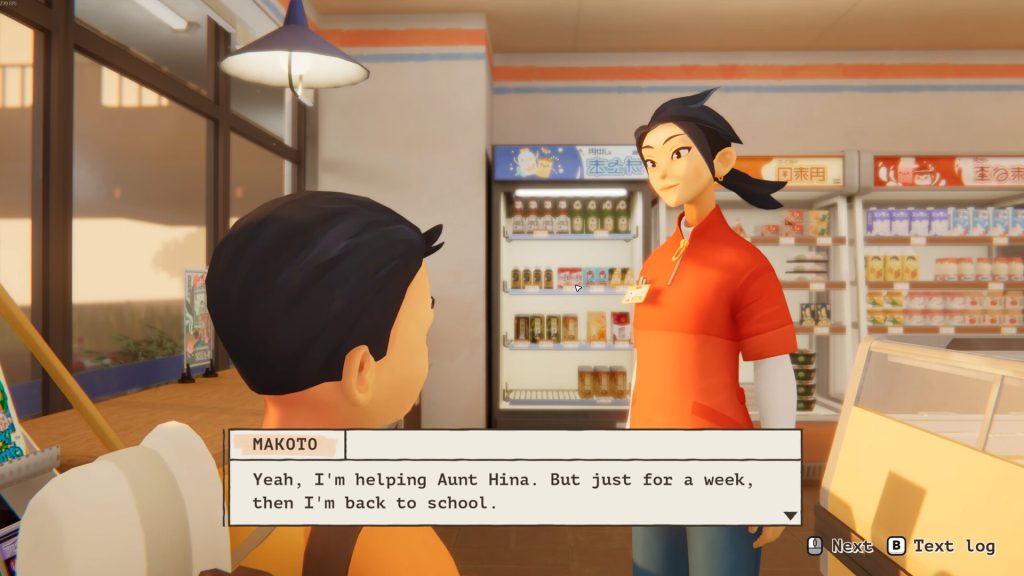
‘90s nostalgia is the initial lure here. After being introduced to college student Makoto and shown the ropes of working in her aunt’s quiet Honki Ponki, convenience store, inKONBINI casts aside its rosy retrospection, revealing itself as a unique way to tell a cleverly intertwined story.
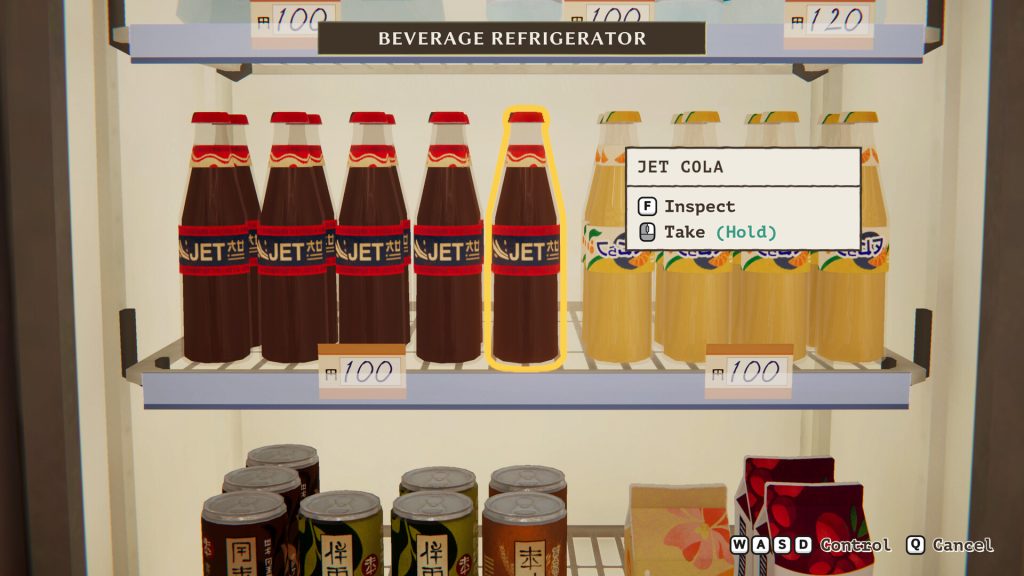
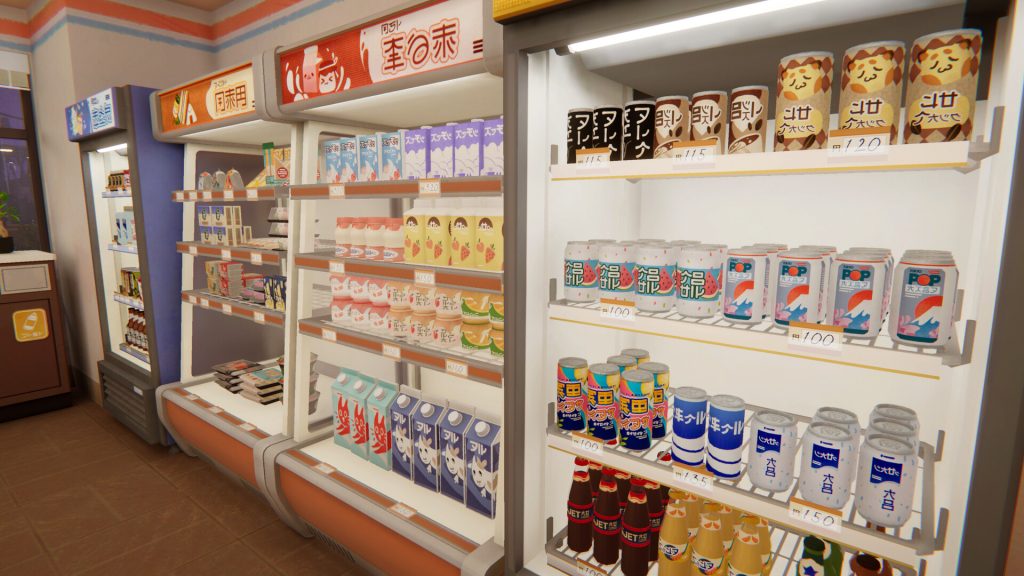
Makoto is filling in for a week, working nightshifts. As such, the store is calm and in need of a tidy before restocking the shelves for the next day. Day staff leave helpful notes and reminders, and there’s a landline to call Makoto’s aunt directly. A shift lasts around 45 minutes, always commencing with using the limited inventory available to fill shelf gaps. Items must be placed appropriately while rectifying the day staff’s slip-ups, like putting ice cream in the refrigerator and chocolate mushrooms in with the salty snacks. There’s a discount shelf to replenish too, and often a special order to box; items for which can be hidden or require same-day delivery.
While stacking shelves may not sound too thrilling, there is a degree of satisfaction to be had by filling a shelf neatly, right down to facing labels forward. Over time, you’ll learn which products go where, making the process quicker and easier. There’s no pressure here either. Sure, customers may grumble about missing items, but there’s no penalty as such. Transforming the store overnight, tucking chairs away, placing new posters, and rearranging the shelves has its own level of satisfaction too. It isn’t as if the customers won’t notice.
The customers are the stars of the show; fleshed out personalities with traits and backstories to discover. If you’ve played Coffee Talk, you’ll have an idea of what inKONBINI was going for. There are four returning customers in total, and throughout inKONBINI’s duration, you’ll get to impact their lives positively in some way. There’s a young boy who turns up at sunrise to run errands for elderly folk – before spending spare change on a capsule machine – a newspaper columnist in need of reassurance and inspiration, a tall mysterious man who doesn’t speak, and an elderly gent struggling with the modern era. They enter the store one at a time, making themselves known before sharing an anecdote, often asking for product recommendations – with your choices impacting outcomes. After selecting a few items, they then head to the counter, at which point barcodes need to be scanned and the correct change given.
Gradually, a story unfolds, resulting in an eventful final shift. It’s not only a very refreshing way to tell a story, but innovative too. Each shift also has a few different challenges, from power cuts to a faulty fridge. You’ll sometimes need to phone for help or seek assistance elsewhere, such as within the back office’s wall of manuals and notepads. This also assists with worldbuilding.
The real beauty of inKONBINI lies not within its chunky yet detailed visuals, but within its pacing. Restocking shelves only just starts to become tiresome towards the story’s end, resulting in a conclusion perfectly timed. Any longer, tedium would have settled. There’s scope for a second playthrough too, as some story elements will have likely been missed the first time, and there’s a bunch of achievements linked to performing daily actions. Moreover, the Honki Ponki store is simply a comforting place to dwell, from the hum of the extractor fans to the sound of rainfall outside. It’s very much an experience for the modern age, mixing innovative storytelling with sensory satisfaction – all in a concise fashion. A modern convenience, if you will.
Nagai Industries’ inKONBINI: One Store. Many Stories is out now on PS5, Xbox Series and PC. Published by Beep Japan.