
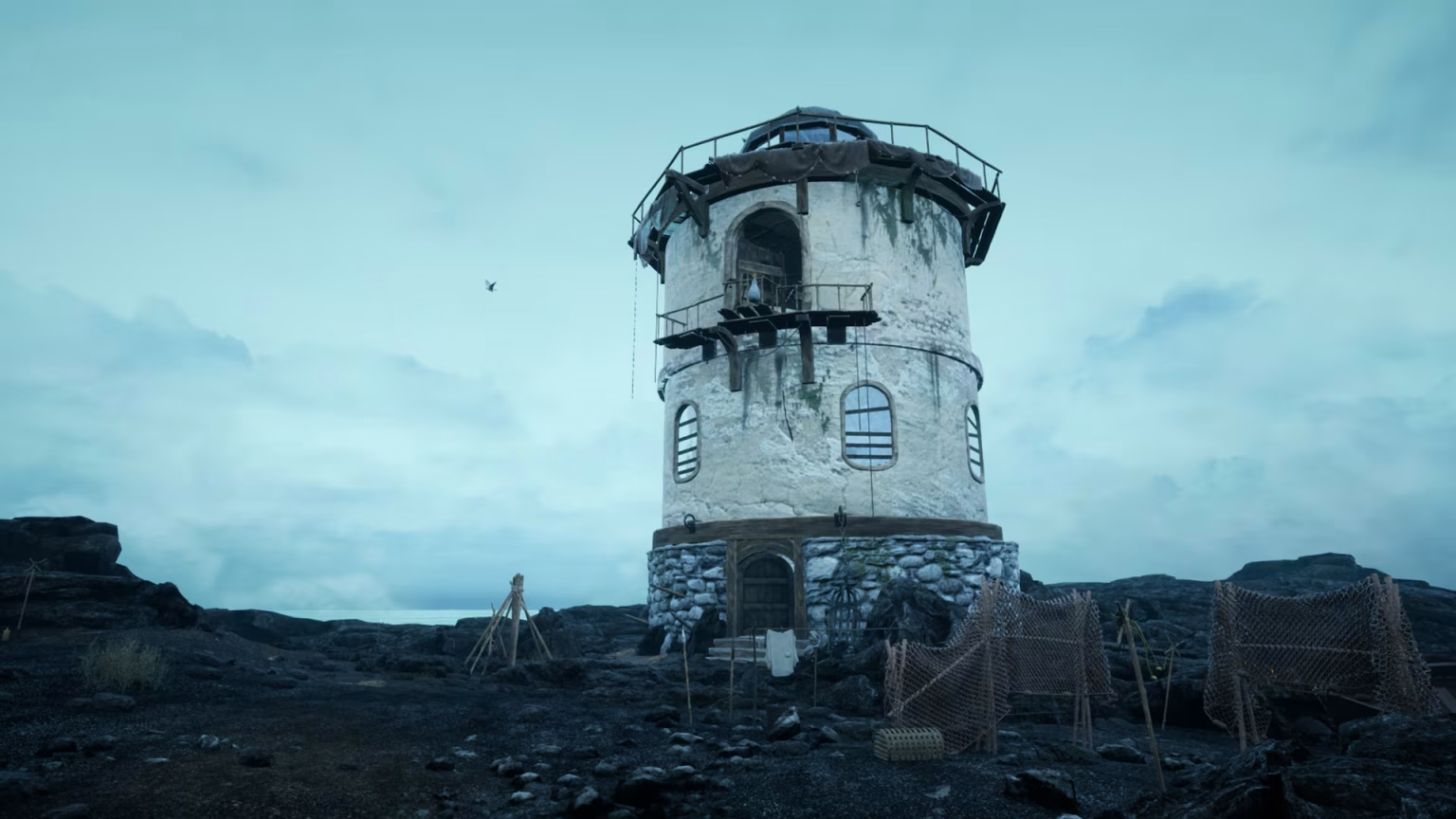
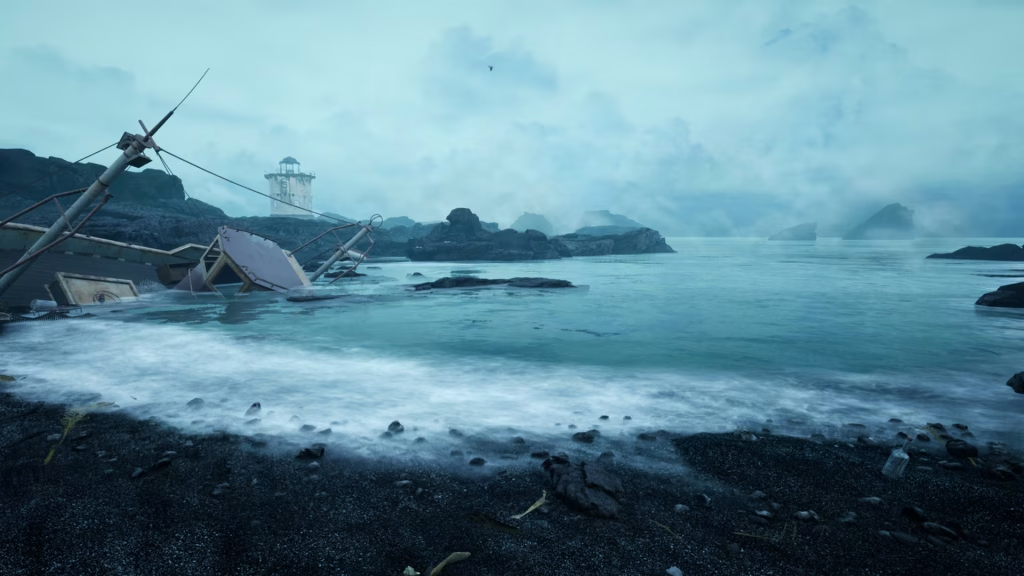
True to its name, this Lovecraftian-inspired horror commences on a shoreline. Setting the tone of dread and despair, the shore is peppered with wreckage from small fishing boats, skeletal remains from former crew included. Such sights no longer faze protagonist Andrew, the last inhabitant of this accursed island. Every attempt to return home has resulted in their vessel being smashed against the rocks, leaving them to wallow in misery, with grief further fuelled by the loss of their daughter. Even attempts to contact the outside world have fallen flat, with notes stuffed into bottles eventually washing back ashore.
The opening is one of self-discovery, giving a chance to explore the grounds surrounding a lighthouse. As there are no current mission logs, or even vocal prompts, it’s up to you to figure out how to progress. Confusing matters further, within the vicinity are a couple of set-pieces – including an ominous void-like sphere – that seem as if they’re connected to puzzles but are merely there to heighten the sense of intrigue. Gradually, though, an inventory starts to amass, at which point the means of progression becomes clearer – especially after finding plates that can be inserted into statues, giving access to other parts of the shore.
All the while, Andrew learns of cosmic forces and past attempts by the island’s former inhabitants to summon them. Soon, a pact is made to awaken dormant otherworldly entities in return for Andrew’s daughter. It isn’t long until the finer points of this deal come to light, however, and let’s just say they aren’t exactly in Andrew’s favour.
What follows are 2-3 hours of brief truncated sequences set in a mixture of otherworldly yet familiar locations, including a jaunt underwater. There are a few mazes to navigate, usually while being chased, a bunch of small rooms that contain symbol matching puzzles and nothing else, and a few grander locations that require objects to be found and placed accordingly. There are no hints at any point whatsoever, not even visual prompts for items that can be interacted with. You’re left entirely to your own devices, which can lead to backtracking and a spot of head scratching. I wasted a good ten minutes in a small area searching for a small grey stone puzzle piece…which was eventually found on a grey stony beach. I’d struggle to recommend this to anyone visually impaired, as the main menu screen also features white text on a white background, while the main cursor is black – as are most interactable objects.
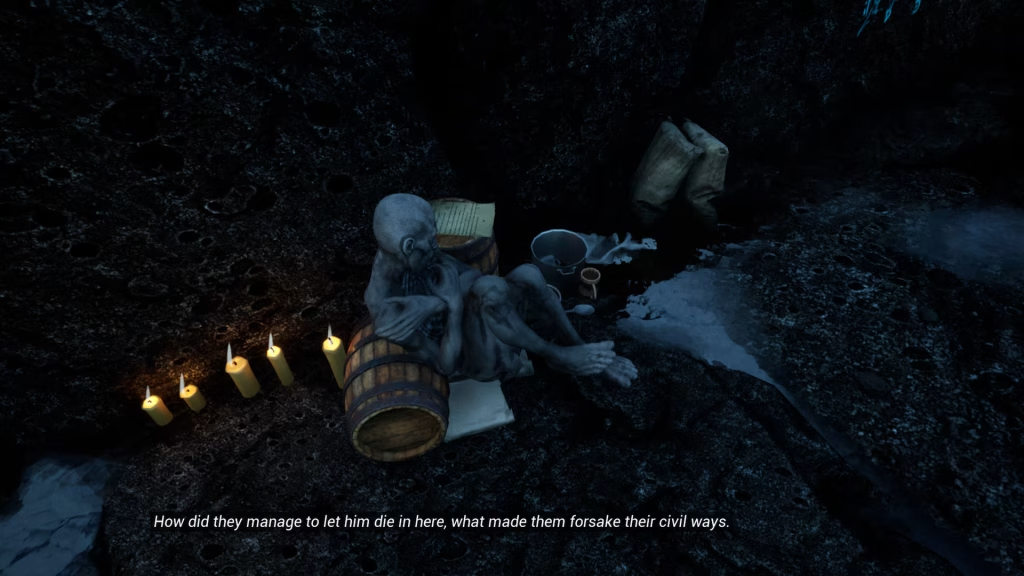
A few other areas frustrated, chase sequences especially as they mostly require you to run backwards through mazes while defending yourself. I died quite a lot, and rarely did those deaths feel fair. Becoming snagged on background elements or running into an invisible wall while being chased were common occurrences. Thankfully, none of these sequences lasts for very long. The fact that every five minutes you’re placed into a new location with a new objective doesn’t work massively in The Shore’s favour, though, making for something rather disjointed. The shoreline is the only location with a degree of tangibility. Perhaps that was intended, considering this is a cosmic horror experience.
Taken as a whole, it does fare a little better. It’s visually appealing, sporting semi-realistic textures, soft lighting, and a surprising amount of detail within interactable objects. It also sounds the part with a grand, sweeping, musical score that clearly had a lot of attention put into it. The opening sequence is surrounded in intrigue, and the storyline does unfold at a steady pace – even revealing more about Andrew’s past in its final moments – but ultimately, I didn’t get much out of this experience. The tension usually associated with horror games is entirely missing, leaving just the desire to bring the story to its foregone conclusion to spur you on.
Ares Dragonis’ The Shore is out now on PS5. Published by Dragonis Games. It first launched on PC in 2021.