
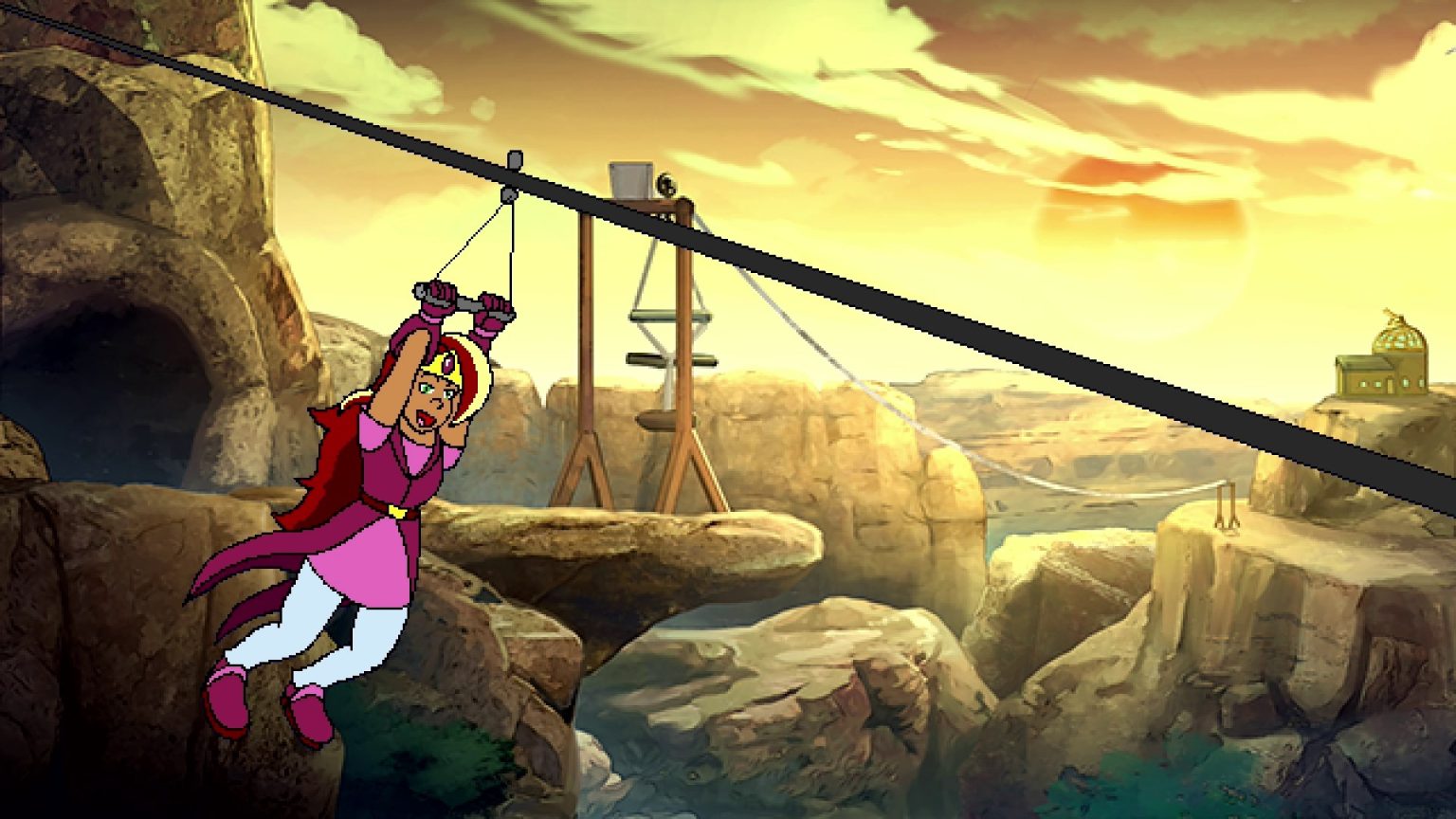
One reoccurring topic on social media is that movie studios should remake bad movies, not good ones. It’s a noble suggestion, but I’d wager cinema goers would be sceptical of paying to see a bad movie twice, should things also not pan out well on the second attempt. Ideas that made the original movie bad may not be fixable either. This brings us to Arzette: The Jewel of Faramore, a homage of the notorious Zelda/Link CDi games published by Philips. Essentially, it’s a remake of a bad game – and proof that misguided projects can be turned around.
It aims to preserve the original’s dubious delights and fix its many faults to deliver something that makes good on the original’s squandered potential. It’s also a very tongue-in-cheek experience. The Zelda/Link CDi games are often mocked and ridiculed online, becoming the stuff of memes, and so it embraces the shlock of the originals too. The result is a game that looks like it could have existed in 1993, only it plays more like a modern platformer, while bearing a more contemporary and irrelevant sense of humour. It’s very self-aware of its inspirations, and those likely to play it.
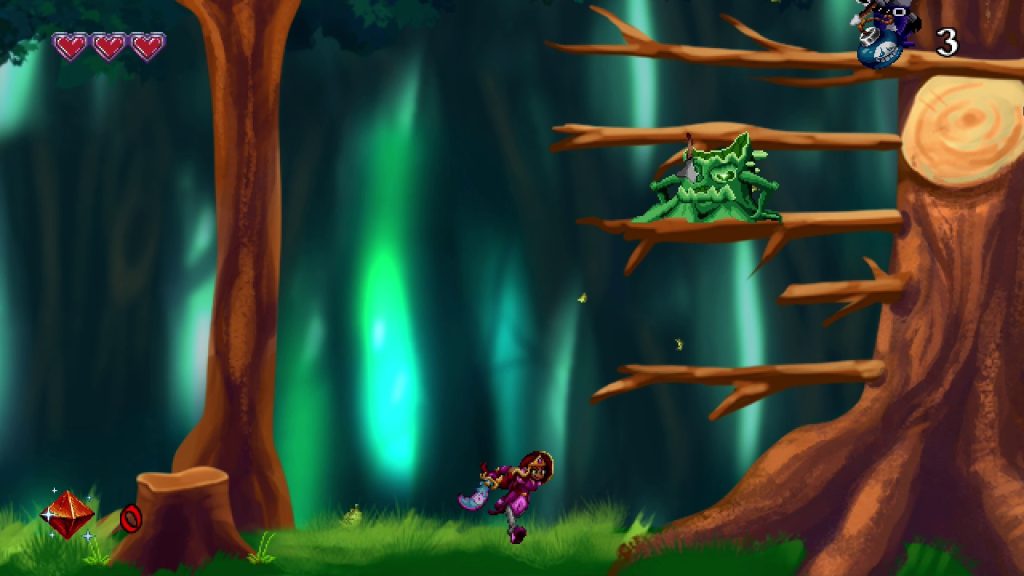
Weirdly, it even references events that occurred in Zelda: The Wand of Gamelon and Link: The Faces of Evil, with the storyline building off that. Evildoer Daimur has returned, and the feisty princess Arzette is the only one able to stop him. His minions need to be tracked down and defeated to retrieve their pointy magical shards, beacons must be lit to weaken Daimur’s power, and magic candles must be discovered to set path-blocking tapestries ablaze. If that wasn’t enough to be cracking on with, the local town is full of peculiar folk with fetch quests to fulfill.
Talking to said characters commences a short animation, seemingly drawn in MS Paint just like their CDi counterparts. Whereas animations in the original games were either downright cheesy or unintentionally creepy, here they flitter between being daft and comical. Expressions are exaggerated, and they often end with a random ‘extreme close up’ of something unexpected. The developers haven’t skimped here either – every location has a handful of individuals to talk to, while full screen cut-scenes occur at key points.
The Jewel of Faramore also preserves the original’s softly drawn backdrops, oddball assortment of enemies, pleasingly ill-fitting sound effects, and early ‘90s style CD soundtrack. In some locations, the music doesn’t suit the experience at all – such as a volcano stage with an upbeat tempo – but it’s all the better for it, helping to spur you on. A little bit of ‘jank’ has crept in though, with the vertically scrolling sections calling for leaps of faith, and some platforms hard to spot within the backdrops. Even so, these issues aren’t too problematic as the difficulty level is forgiving, especially on casual mode where almost every other enemy drops a health token upon defeat.

Structurally, it’s impressively designed. There’s the town hub where extra equipment (bombs, lamp oil, etc) can be purchased, and the assortment of stages (spread across grasslands, castles, crypts, and swamps) is regularly expanded, and each must be revisited several times over once new items have been gathered. Backtracking never fatigues as the number of secret areas is vast, and controlling Arzette is a joy – ‘duckwalking’ and all. Over time, new and speedier ways to get around are unlocked, too – tying neatly into the speed running aspects. It also does a good job of charting progress. Every stage has a bonus round to beat (with one type inspired by the CDi’s Hotel Mario), candles to find, extra items to reach, and a hidden coin to collect. Areas with a quest to fulfil are highlighted on the map screen too, which is likewise handy.
Levels have been designed so that during the first visit you’ll only be able to progress so far, or a boss room will be unreachable until more candles are acquired. At a couple of points I was left aimlessly wandering, but was never off the beaten path for more than a few minutes. It helps that stages are only a few minutes long each, making scouting for any overlooked extras a straightforward task. Bosses go down surprisingly quickly too, with one of the later villains beatable simply by defecting their attacks while standing still. Platforming veterans may be expecting more of a challenge in this area.
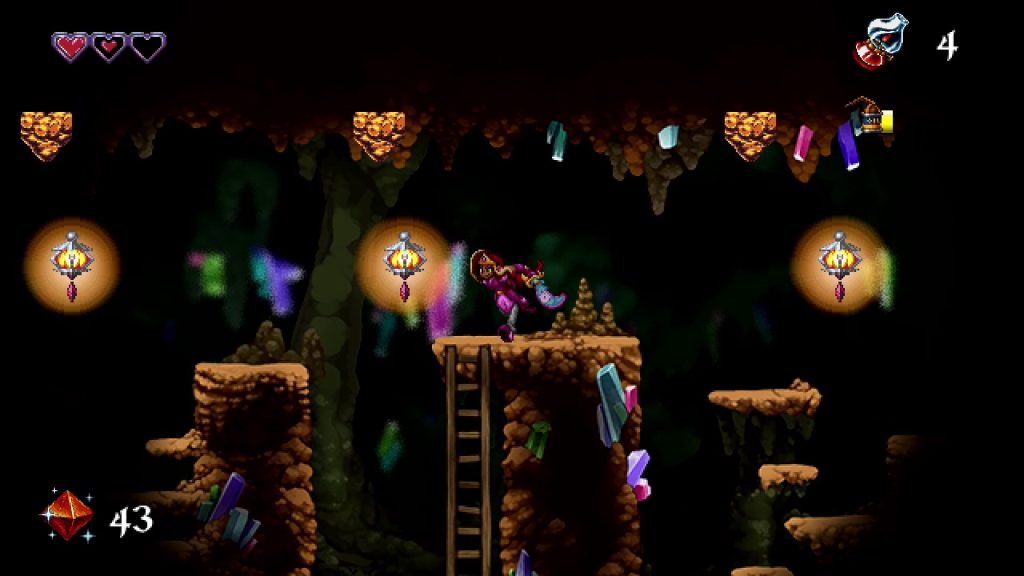
When the ending credits rolled, I had just under three hours on the clock and a mere 61% completion percentage. It’s possible to return and mop up side-quests, and with a full set of extra abilities in tow, it turns out to be quite an enjoyable pursuit. A few extra modes also unlock upon completion, including a boss rush, helping the package to feel whole.
Arzette: The Jewel of Faramore is one of those rare games where it’s possible to tell that the developers had a lot of fun creating it. That passion and energy is able to carry the experience from start to finish, forever evident. No, it isn’t a masterclass in platforming in the same manner as Super Mario Bros. Wonder, but it is a joy to play and constantly entertaining. I’d love to see the studio tackle more ill-fated games that never reached their potential.
Seedy Eye Software’s Arzette: The Jewel of Faramore is out now on all formats. Published by Limited Run Games.